

This article was up to date on 13 May 2020, we'll try to keep it updated for you if advice changes.
Before we get started, how many schemes can you apply for?
You can apply for both the business support scheme and the salary support scheme.
You cannot apply for the MERA with either of the other schemes.
The Business Support Scheme
This is a £3,000 grant to help your business (whether you're self employed or an employer) manage during the COVID-19 pandemic.
Here's what the government will check:
That your business has been operating on and since 28 February 2020 (this will be proven by tax and national insurance)
That you have no overdue payments of more than three months, relating to income tax
That you're over 18, but you can be any age above this
That you employ 1-100 people
That you're in one of these sectors listed here.
That you have a good intention to be trading following the pandemic (you agree to this)
That your business has been affected by the pandemic (you agree to this)
Sound good? Click here and hit apply.
Here's what you'll need to hand:




Your trading name
Your national insurance number (if you're self employed)
Your VAT registration number and company registration number Bank account details Address of retail premises (if this applies to you)
Now that you've done your application, here's what you can spend your £3,000 on:
It's for your business' cash flow
You can pay a salary, but national insurance and tax will have to be paid alongside this
You can pay your bills Your grant does not have to be returned ever, even if your sector goes back to work
Salary Support Scheme
This scheme is aimed at encouraging businesses to retain their employees during the pandemic, although this might require the employee to work less hours if the salary can't be topped up. Each employee is entitled to £280.
Here's what the government will check:
That you have one or more employees
That you've paid them £8.25/hour prior to the pandemic
That you haven't laid off any employees during this period That you continue to meet contractual obligations by continuing to pay employees during the period
That you've been in business since the 28 February
That you're likely to be operating in the foreseeable future (you agree this)
That you've seen a significant drop in business (you agree to this)
That you're not in any excluding sectors listed here
Still with us? Click here to apply.
Here's what you'll need:
Your trading name
Your national insurance number (if you're self employed)
Your VAT registration number (if you are VAT registered) and company registration number
Bank account details
Address of retail premises (if this applies to you)
A copy of your payroll documents to fill out the government's template, which is available to download on the application form
You're able to claim for three periods; 02/03/20 to 29/03/20, 30/03/20 to 26/04/20, 27/04/20 to 26/05/20
Note: Employees on zero-hours contracts are eligible: attach a payroll document showing what that contract would have been in a normal month in March and the government will adjust accordingly. The maximum they will pay for is 35 hours per week.
This is what you do once the money arrives:
Pay your employees and put it through payroll. The business still needs to pay the national insurance and tax, that includes any extra you contribute on top of that. So, note the employee won't get the full £280
If you are a director and pay yourself in dividends only, the scheme does not support you
If you are a director and you pay yourself a small wage each month, as long as you work 35 hours per week (which is probably an understatement for most directors) then they will award you the full £280 per week
The Manx Earnings Replacement Allowance (MERA)
The MERA is for displaced employees and the self-employed, and is an allowance of £200 a week to replace lost wages.
Here's what the government will check:
That you have been earning over £200 per week on average in at least 13 weeks of the last six months
That the self employed are registered as such
That you have paid class two national insurance in the last year
That you are over 18 and under state pension age
That you're not working and available/capable of returning to work
Note: You won't get paid MERA for any week where you earn over £50.
Your savings and assets do not affect your entitlement.
Do you tick the boxes? Click here to apply.
You'll need to know the date you're claiming from, the earliest being 6 April 2020
You'll need your name, DOB, national insurance number, telephone, email and bank details
They will ask if you're claiming jobseeker's allowance or child benefit
You'll need to agree that you have not earned over £200 per week on average while the lockdown is in place
You'll need your previous employment information for up to three employers. If you're self employed, put your name and occupation down, and they'll ask for the revenue you've made from those jobs
What happens next?
If you're accepted, you'll get the first week's payment first, and after that it's a payment every two weeks in arrears
You do not have to pay tax or national insurance on this money, and you do not need to pay it back. It is to replace your salary
You must notify [email protected] when you return to work
You will get an additional two weeks MERA payment after you return to work, this is additional to the payment in arrears
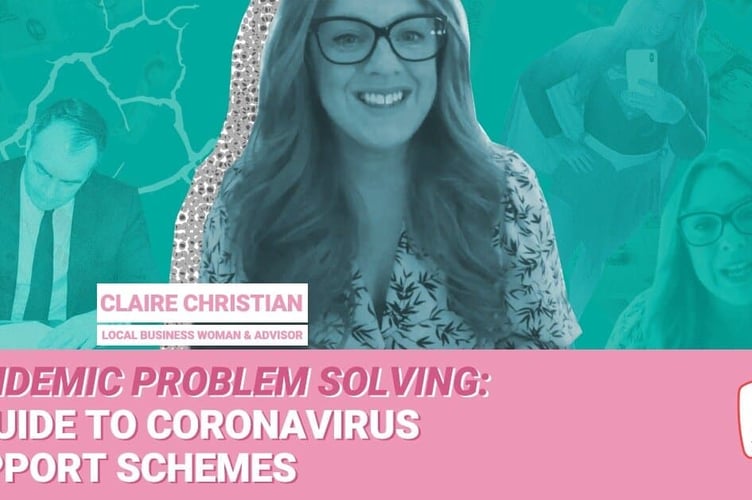
So there you have it - Claire Christian X Gef coronavirus support schemes. We hope you found this helpful!