

Three Isle of Man-based directors cleared of fraudulent misrepresentation over a failed luxury homes development will not face a retrial.
The appeal court ruled that a retrial was not in the interests of justice, saying litigants were not normally entitled to ‘two bites of the cherry’.
In June, the appeal court overturned a high-profile high court judgment after ruling that the trial Deemster had erred in law.
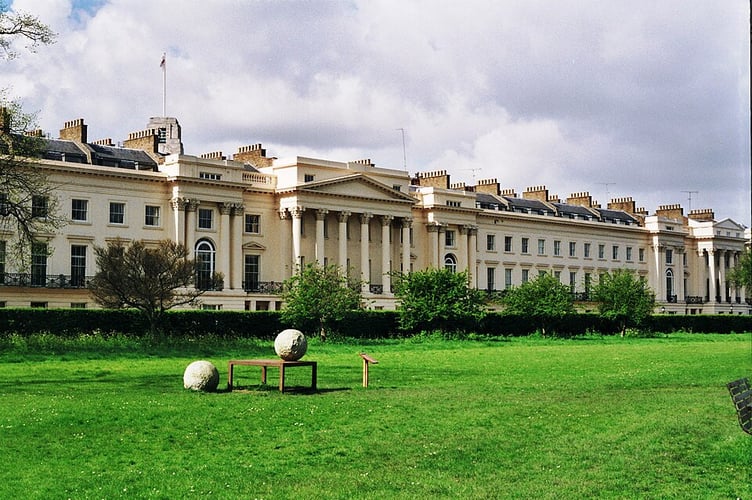
The case involved the £200m-plus redevelopment of Grade I-listed Cornwall Terrace on the edge of London’s Regent’s Park.
Developers the Isle of Man-based Oakmayne Group were behind a scheme, dating back to 2007, to convert the building into prime residential properties to sell to high-net-worth individuals.
But instead of making a profit, the project was hit by increased building costs and construction delays, resulting in a loss of some £43m.
Claimants Matthew Wickers, Dennis Lavin and John Tinsley had been persuaded to invest sums totalling £1.2m, £1.25m and £1m respectively.
Each lost their money when the project failed.
Following a six-week trial, Deemster Alan Gough handed down judgment last year in which he concluded the three claimants had been duped into investing.
Deemster Gough found the investment opportunity brochure was a ‘fraudulent document’ which mis-stated facts and deliberately omitted or disguised matters, not least a £3.7m ‘success fee’.

.jpeg?width=209&height=140&crop=209:145,smart&quality=75)


Defendants David Humbles, Michael Riddell and Guy Wiltcher, all directors of Oakmayne Properties (Regeneration) Ltd, now in liquidation, were subsequently ordered to repay the claimants’ respective investments plus £4.35m in other costs.
But the defendants were exonerated when the appeal court ordered Deemster Gough’s judgment to be set aside.
It concluded: ‘There is a demonstrable failure by the Deemster to consider relevant evidence which was sufficiently serious to undermine his finding.’
The three investors then sought a retrial.
Their lawyers argued: ‘If no retrial is ordered, the claimants’ claim will have been dismissed because of judicial error, without any decision on the merits, through no fault of the claimants. This would represent a denial of [their] rights as litigants.’
But the directors argued that a retrial would be unfair and prejudicial.
The appeal court agreed that ordering a retrial would be a last resort given there had already been a substantial trial.
Judge of Appeal Anthony Cross KC, sitting with Acting Deemster Sir Nigel Teare KC and Acting Deemster Rosen KC, concluded there was a case for a retrial, but that it was outweighed by the burden it would place on the appellants.
It would also allow the respondents to ‘recast’ their claim in light of the problems highlighted by the judgment on appeal.
They ruled: ‘Litigants are not normally entitled to two bites of the cherry.
‘The court is therefore persuaded that in the particular circumstances of this case a retrial is not in the interests of justice.’
In a separate judgment, the appeal court ordered the investors to pay the directors £2m in costs relating to the appeal and original trial, noting the litigation was of ‘some size and complexity’.