

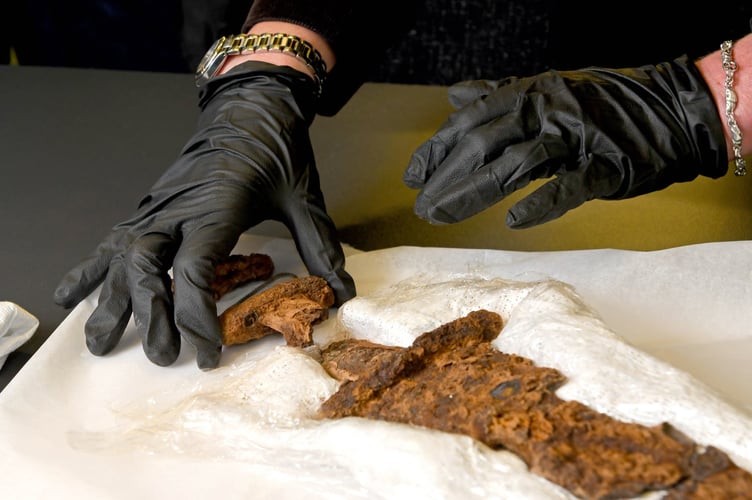
A remarkable collection of Viking objects, including an elaborately decorated sword, rare women's jewellery and previously unseen trading weights, has been declared Treasure in one of the most significant archaeological discoveries on the Isle of Man.
The collection, dating back more than 1,100 years, is believed to have come from a double Viking burial dating to around AD900 and offers new clues about the lives of some of the Island's earliest Scandinavian settlers.
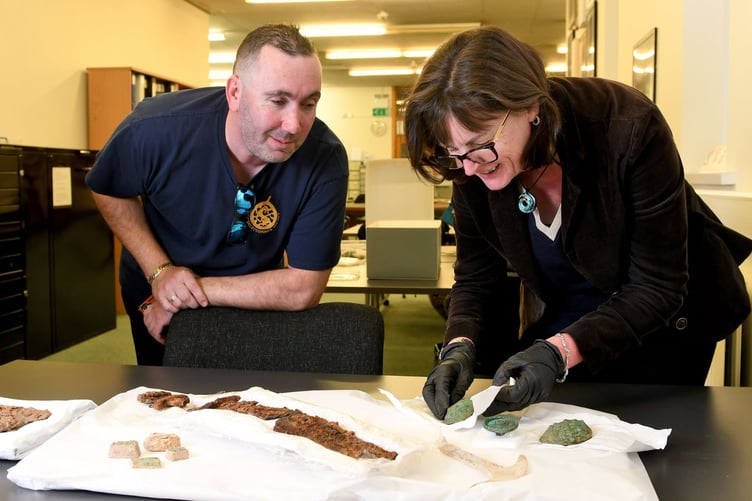
Discovered by metal detectorist Daniel Crowe, the finds include three decorated bronze brooches, a Viking sword, trading weights and scales, a bronze ladle and an axehead.
The objects have now been formally declared Treasure by the Coroner for Inquests in recognition of their exceptional historical and archaeological importance.
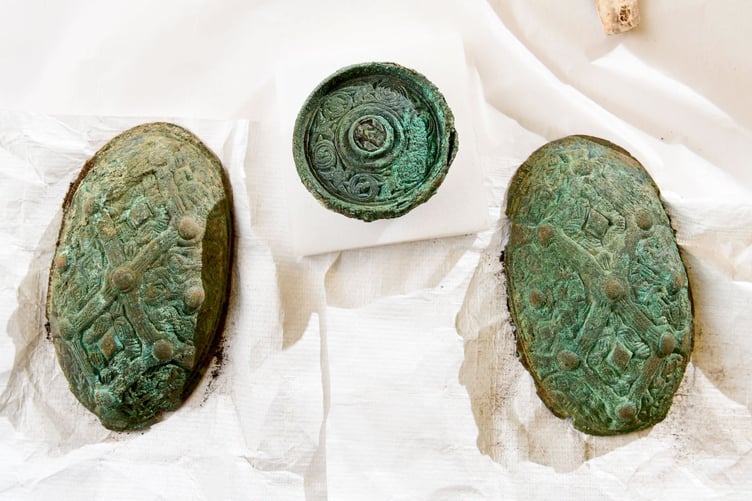
Among the most significant discoveries are two oval brooches decorated with intricate patterns of interlocking animals, a distinctive feature of Viking art.
Such brooches were typically worn by women, and only one other pair has previously been discovered on the Island. In an extraordinary family connection, Daniel's father, John Crowe, was one of the people who discovered that earlier pair, alongside fellow metal detectorist Craig Evans.
The newly discovered brooches could be around 50 years older, potentially making them evidence of the earliest known female Viking Age burial on the Isle of Man.
A third brooch, originally gilded and decorated with spirals around a glass centre, is also the first of its kind found on the island.


The collection includes the 13th Viking sword to be discovered on Man, with around two-thirds of it surviving.
X-ray analysis has revealed parts of its hilt feature fine silver inlay and twisted silver wire. Only two other Manx Viking swords have been found with comparable decoration.
The sword appears to have been deliberately broken, possibly as part of the burial ritual, although some damage occurred after it was buried.
The presence of jewellery typically associated with women alongside a sword traditionally associated with men raises the possibility of a double burial, although separate graves from the same period cannot be ruled out.
The original burial site was disturbed at some point during the past thousand years, meaning the precise circumstances remain uncertain.
Other finds offer evidence of Viking trade and connections across the Irish Sea.
Decorated lead weights and fragments of bronze balance scales would have been used to weigh precious metals and coins. The weights are the first of their type discovered on the Isle of Man, while a bronze ladle, possibly used for feasting or ceremonies, is another previously unrecorded find.
Allison Fox, curator for archaeology at Manx National Heritage, described the collection as 'one of the most significant groups of Viking Age objects found on the Isle of Man'.
She said: ‘The brooches are especially important because they appear to represent our earliest known female Viking Age burial.’
Mr Crowe deliberately avoided cleaning the objects, preserving valuable archaeological evidence for professional examination. Fellow metal detectorist Rhett Britton also assisted with the search, discovering the axehead and part of the balance scales.
A selection of the newly declared Treasure will go on public display in the Viking Gallery at the Manx Museum from Wednesday, November 11.
Further conservation and research are expected to reveal more about the people who owned the objects and their lives on the Island more than 1,100 years ago.
Comments
We've recently changed our login process. If you have an account for commenting, you will need to re-register on the login window.
This article has no comments yet. Be the first to leave a comment.