

.jpeg?trim=0,0,3,0&width=752&height=523&crop=752:523)
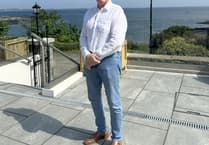
A former government minister has warned against the UK’s ‘toxic’ debate on immigration seeping into the Isle of Man.
Dr Alex Allinson insists that inward migration plays a vital role in addressing the island’s skills shortages and natural population decline.
He said: ‘In the UK concerns about illegal immigration have led to a more toxic debate around the movement of people, race and culture.
‘Because of Brexit and fewer people coming from Europe we’ve had to import some skilled workers from further afield - Africa, South East Asia, India and Pakistan.
‘Unfortunately, the immigration debate, and the toxicity of it, has seeped in from the UK. However, the Isle of Man has always had a diverse population.’
Since 2021, a total of 4,362 entry clearance visas, not including visit visas, have been issued. These include a significant number of child dependants.
The island’s birth rate has fallen to its lowest level in more than 100 years, with the number of deaths outstripping births every year since at least 2017.
Statistics in the Isle of Man Population Report 2025 show a net loss of people in the 20-34 age group as young workers seek opportunities elsewhere for better pay and further career development.
This age group accounted for 41% of those leaving the island in 2024.
A 2025 CoMin paper on inward migration warned that without continued inflows of skilled individuals, the island risked stagnation.

.jpeg?width=209&height=140&crop=209:145,smart&quality=75)
Dr Allinson, who is not seeking re-election in September, said: ‘We have always relied on people coming to the island to re-balance the population and bring skills with them to meet the shortages in certain sectors.
‘Medical and health services continue to be a significant driver for inward migration. The average age of those taking up residency is 40.
‘Whilst last year 45 people were accepted for on-island nurse training, and we also have local GP training programmes, we need a range of skilled people to help support our NHS and local businesses - especially trained chefs for the hospitality industry and those with compliance and IT skills to support the finance sector which is crucial for our economy.’
A number of those new arrivals cannot be classed as skilled workers, however.
But Dr Allinson said: ‘I am aware that some of the people coming over to support our social care system may be only receiving the minimum wage, they are essential to ensure that services continue to be provided to the wider island population.’
He said that during the current administration, changes have been made to immigration regulations and controls.
Changes were passed by Tynwald earlier this year to restrict the number of worker migrants and further strengthen the pay and conditions they must comply with.
Under the updated rules, only those in higher-skilled roles are eligible to bring their partner or spouse and children.
Dr Allinson said: ‘What the government have been doing is to emphasise the need for integration and the 2025 report set out a clear pathway to achieve this through education, community dialogue and cultural exchanges.’