

Controversial new rules preventing Tynwald members from debating planning applications are set to come under parliamentary scrutiny again.
In July, Tynwald rejected a call to reverse a change to standing orders approved in 2025 that extended sub judice restrictions to cover live planning applications.
The change has prevented parliamentary discussion of major planning proposals, including the Mooir Vannin windfarm and Westmoreland Village development.
Opposing the motion to revoke the rule, Gary Clueit MLC told Tynwald that debating a live application risked prejudicing the final decision.
He claimed the Isle of Man was not an outlier and that Tynwald had aligned itself with established constitutional conventions across the British Isles.
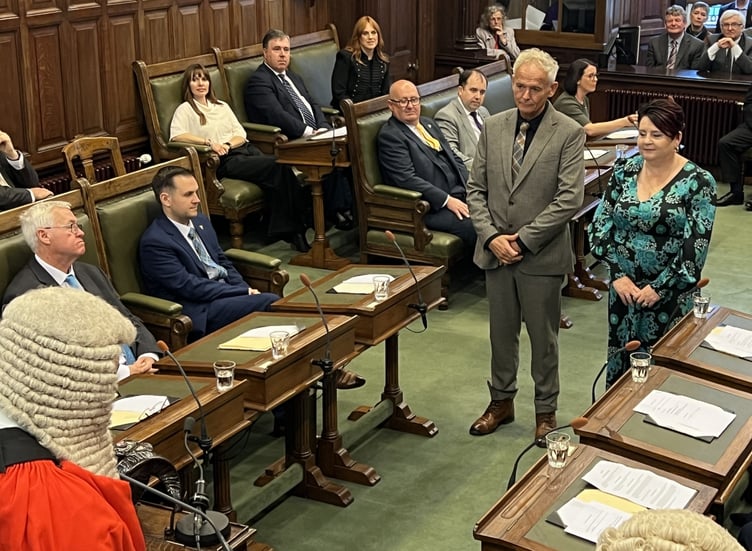
But newly elected Garff MHK Richard Henthorn has tabled a motion for November’s Tynwald sitting in another attempt to revoke the rule.
He has received information from the Clerk of Tynwald’s Office explaining how sub judice restrictions apply to live planning applications in other jurisdictions.
And the guidance suggests they generally do not.
In the House of Commons, the sub judice rule does not automatically apply to live planning applications, although it may apply to subsequent court proceedings.
However, a minister may be unable to discuss an application if they have a decision-making role. This does not prevent other members from debating it.




In England, most planning applications are determined by local planning authorities, while most appeals are determined by planning inspectors acting on behalf of the Secretary of State.
Where planning decisions are challenged through judicial review, the sub judice rule applies once proceedings become ‘active’.
The Speaker of the House can, however, permit discussion where a case raises issues of national importance.
Restrictions may be imposed to reduce that risk, such as allowing discussion of general principles rather than the details of a particular case.
In the Scottish Parliament, sub judice restrictions also do not generally apply to planning applications unless legal proceedings are active.
Similarly, in the Welsh Senedd and Northern Ireland Assembly, the restrictions do not automatically apply, although ministers responsible for determining applications or appeals may need to limit their comments to avoid prejudicing decisions.
The same applies in Jersey, where the States Assembly’s sub judice rules do not automatically cover live planning applications.
And in Guernsey, there is no general prohibition on discussing live planning applications.
Mr Henthorn is also seeking a general debate at November’s Tynwald sitting on government policy for generating revenue through seabed rental.
Ørsted is proposing to install around 87 wind turbines between six and 12 nautical miles off the island’s east coast.
The company says Mooir Vannin would deliver around £2bn in financial benefits to the Isle of Man.
The independent panel examining Ørsted’s offshore windfarm application is expected to submit its report and recommendation to the Council of Ministers by early December.
The Council of Ministers then has 30 working days to reach a decision.
The Attorney General has advised that ministers with a predetermined position, either for or against, must declare a conflict and withdraw from the decision-making process.
Mr Henthorn has also tabled a motion calling for the Department of Infrastructure to release the complete, unredacted 2015 agreement for lease awarded to Ørsted in November 2015, and circulate it to Tynwald members.
Comments
We've recently changed our login process. If you have an account for commenting, you will need to re-register on the login window.
This article has no comments yet. Be the first to leave a comment.