
Payment of government support and lost revenue as a result of the Covid crisis are well below the forecast estimates.
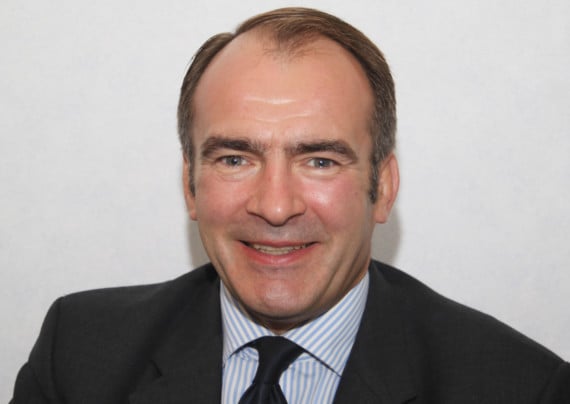
Treasury Minister Alfred Cannan told the Public Accounts Committee that his department was now focusing its attention on the island’s economic recovery.
Asked how long Treasury can continue to provide support along the same lines before reserves are exhausted, he replied: ’We could afford it - if that’s the right word.’
Giving evidence to the emergency scrutiny hearing, Mr Cannan said the potential negative out-turn for 12 months was currently forecast to be up to £300m.

.jpeg?width=209&height=140&crop=209:145,smart&quality=75)

It had originally been envisaged that the total cost of the support packages in the first six months would be up to £300m per quarter.
But Mr Cannan said that the cost of all the support schemes was currently estimated at £60m over their first three months.
Chief financial officer Caldric Randall said the net cost in the first month, April, was also projected at £60m, with support expenditure totalling about £25m, and loss of tax and other income estimated at between £30m to £35m.
Mr Cannan said: ’The reality of the situation is potentially we are well below that estimate. But I must tread with caution as there are a number of uncertainties around any forecasts.
’Claims are still coming in. We don’t effectively close the first stage of salary support schemes until the May payroll.’
The costs of the support schemes and income loss are expected to reduce in the next two months as the economy begins to recover.
The Treasury Minister said it had been 10 weeks since the enormity of the challenge became apparent.
On March 10 he told Tynwald that £7m of contingency funding had been made available.
A week later £40m was transferred from the operating balance to the contingency fund and Mr Cannan warned that might not be enough.
A comprehensive package including the wage support scheme and the MERA (Manx Earnings Replacement Allowance) benefit was thrashed out over 48 hours of virtually continuous work leading to their being approved by the Council of Ministers on March 22 and details announced the following day. Legislation was prepared on March 27.
’I believe we’ve done incredibly well,’ the Treasury Minister said. ’It’s going to be some time before we are able to fully digest how this plays out, how businesses are able to recover.’
MERA went live on April 6 and so far 2,051 have received payments at a cost of £1.84m. Some 650 applications have been disallowed.
The salary support scheme opened on April 16.
For March, it received 1,363 applications and £7.7m was paid out, supporting 9,537 employees. In April there were 1,412 applications and £8.5m was paid out, supporting 8,443 employees.
To date, it has supported an estimated 11,000 separate employees and their jobs.
The business support scheme, administered jointly by the Department for Enterprise, has paid out £8.3m to 3,600 businesses and individuals.
In addition, £2.4m of National Insurance and income tax payments, and £11.8m of VAT and duties have been deferred.
Mr Cannan said while the administration of the schemes is settling, the economic uncertainty we face has not. ’We must now focus our attentions on our economic recovery,’ he told the committee.
Mr Cannan said Treasury was going to seek additional reserves support to support the economy.
He said he would be announcing extensions of the government support schemes shortly. Arrangements for a £250m syndicated short term borrowing facility would go before the July Tynwald.
Mr Randall said the government had about £300m in cash and £103m in cash equivalents. Investment managers had been told to hold 15% in cash and government had not been forced to liquidate any assets unprofitably.
Comments
This article has no comments yet. Be the first to leave a comment.