

.jpeg?trim=0,0,3,0&width=752&height=422&crop=752:422)
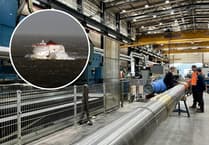
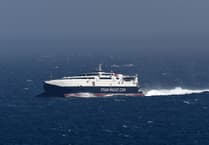
Repairs to the Manxman will cost in excess of £2.5m, documents released under Freedom of Information show.
And the documents reveal that Ministers have expressed concerns about the £78m vessel’s long-term suitability for operations in the Irish Sea - and at the Steam Packet’s approach to public communications.
They also confirm that Steam Packet board believe much of the damage to flagship’s shaft bearing and liner may have been caused by the build-up of silt in Douglas harbour.
At the end of July, Treasury approval was given for the state-owned ferry operator to proceed with the repair works up to a value of £2.5m. Further approval will be required should the bill exceed that sum.
The Ministerial decision reads: ‘The Manxman is currently in dry dock undergoing essential repairs.
‘The repairs required were unexpected and therefore unbudgeted. It is anticipated the costs will be in excess of £2.5m, although the Steam Packet are seeking to mitigate costs by way of insurance and latent defect testing.’
Under the terms of the agreement with Treasury as shareholder, its consent was required as the costs exceeded £2.5m.
An email from the Steam Packet’s finance director to Treasury chief financial officer Caldric Randall on July 30, following the company board’s approval of the unbudgeted repair to the Manxman noted: ‘The board is concerned that much of the bearing and liner degradation may have been caused by sediment in Douglas harbour.’
It said this reinforced the priority of urgently completing a capital dredge of the harbour to meet minimum depth requirements.
However, another email shows the director of harbours told the Council of Ministers that the silt build-up in Douglas harbour is less than that in Liverpool and Heysham docks.
.jpeg?width=209&height=140&crop=209:145,smart&quality=75)
.jpeg?width=209&height=140&crop=209:145,smart&quality=75)
An internal Treasury email from Mr Randall noted the concerns raised about the Manxman at a recent CoMin meeting.
It states: ‘It is recognised that the precise causes of the current issues affecting Manxman have yet to be fully established.
‘Nevertheless, Ministers raised broader questions regarding the vehicle’s long-term suitability for operations in the Irish Sea, including considerations around reliability, operational resilience in adverse weather conditions, and overall fitness for the company’s service requirements.’
The email continues that Ministers would welcome assurance from the Steam Packet board that lessons from the operation of the Manxman will be fully considered when finding a replacement for the Manannan fastcraft.
Those concerns were forwarded to the chairman of the Steam Packet, Dan Clague who in a response insisted: ‘Manxman remains a modern and strategically important asset to the company.’
Ministers also raised concerns about the ferry operator’s public communications over the issues affecting the Manxman, particularly in relation to timelines and completeness of information, and the absence of regular updates.
The Steam Packet had announced on July 22 that the Manxman’s time in dry dock had been extended after further essential repairs were identified.
Passengers booked on sailings in August were told these had been cancelled.
Then on July 28, the Steam Packet confirmed that the vessel would be out of action until late September because of wear on the shaft bearings and associated shaft liners.
But on September 8, the company revealed the ship will be out of service until the end of November because of the time taken for specialist repairs to be carried out in Denmark.
Ministers said the absence of regular updates ‘inevitably created a degree of speculation and uncertainty’.
In its response, the Steam Packet said the communications approach was adopted ‘deliberately and in good faith’, and the company had wanted to avoid providing information that might later prove ‘incomplete, inaccurate or misleading’.
Mr Clague added, however, that the board had asked the management to review the ‘communications protocol for major operational incidents’.
The emails released under the FoI also reveal that concerns was raised about the ‘additional reputational damage’ caused if the Manxman had to move to the Liverpool cruise terminal for two to three days before re-entering dry dock.