

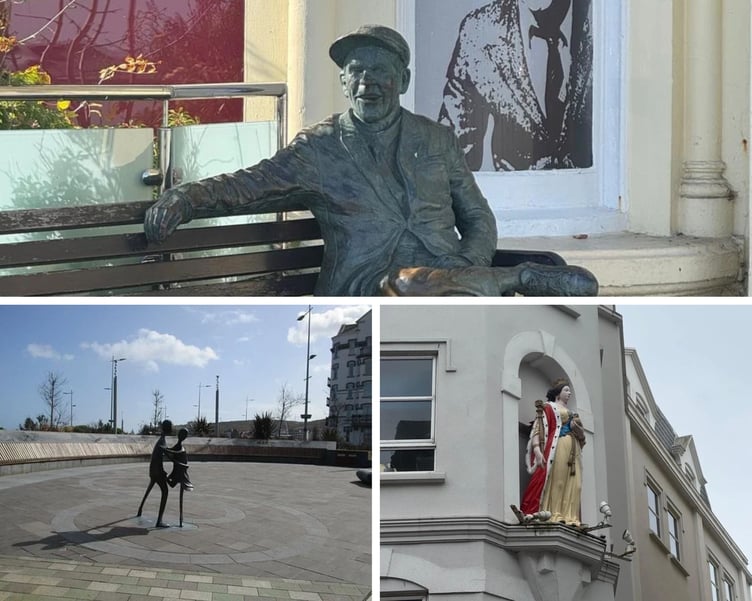
From international music stars to much-loved comedians and a man who helped save countless lives at sea, the Isle of Man’s capital is home to statues that tell some fascinating stories.
Whether you are a visitor exploring Douglas for the first time or a local who has walked its streets for years, there is plenty of history to discover if you know where to look.
Some of the town’s sculptures are impossible to miss, while others are tucked away above shopfronts or sit quietly on a familiar street corner.
Here are some of the statues and sculptures that help tell the story of Douglas.
The Bee Gees
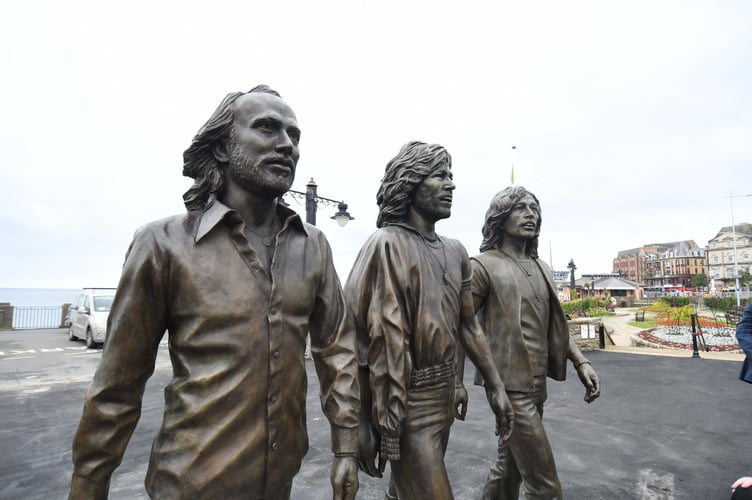
Perhaps the capital’s most recognisable modern sculpture is the bronze tribute to the Bee Gees on Loch Promenade.
Unveiled on July 8, 2021, the seven-foot-high statue depicts Barry, Robin and Maurice Gibb walking together, recreating the confident stride associated with their music video for the 1977 disco classic Stayin’ Alive.
The three brothers were born in Douglas and spent their early childhood on the island before their family moved to Manchester and later emigrated to Australia, where their musical careers flourished.
The sculpture was created by internationally acclaimed artist Andy Edwards, who has also produced statues of the Beatles in Liverpool.




Commissioned in 2019, the £170,000 project was delayed by the Covid-19 pandemic before finally being unveiled in front of crowds on the promenade.
Its location is significant. The figures appear to be walking back towards the town where their story began, as if returning home after years of international success.
The statue stands on a circular base shaped like a vinyl record, with the lyrics of the Manx patriotic song Ellan Vannin inscribed in Manx on the front and English on the rear.
The connection is particularly fitting because the Bee Gees recorded their own version of the song as a charity single in the late 1990s to raise money for island causes.
The brothers were also awarded the Honorary Freedom of the Borough of Douglas in 2008, recognising their international achievements and their enduring connection with the island.
The sculpture has since become a popular landmark for photographs, giving residents and visitors a chance to stand alongside three of the most successful pop musicians ever to come from the Isle of Man.
George Formby
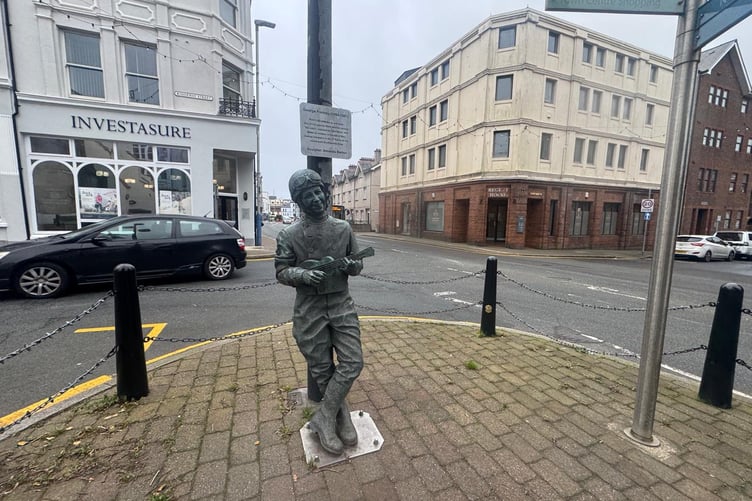
From disco to the ukulele, another statue celebrates an entertainer whose connection with the island came through one of its most famous sporting events.
The bronze figure of George Formby stands outside Douglas Town Hall, commemorating the comedian, singer and actor’s starring role in the film No Limit.
Released in 1935, the musical comedy features Formby as George Shuttleworth, a chimney sweep from Wigan who dreams of competing in the Isle of Man TT races.
The film brought the TT to a much wider audience and remains part of the island’s motorcycling and entertainment heritage.
Formby was already known for his comic songs, distinctive Lancashire accent and ukulele playing. His portrayal of an unlikely racing hopeful helped cement his reputation as one of Britain’s best-known entertainers of the era.
The statue was created by Manx sculptor Amanda Barton and depicts Formby as his character from the film, connecting Douglas’s public art with the island’s long-standing association with motorcycle racing.
Sir Norman Wisdom
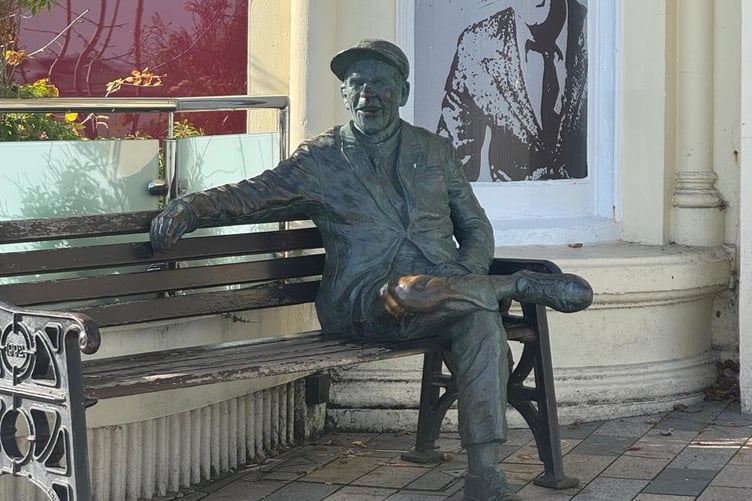
Few figures are as closely associated with the Isle of Man’s more recent history as Sir Norman Wisdom.
The beloved comic actor is commemorated by a bronze statue depicting him seated on a bench outside the Sefton Hotel on Harris Promenade.
It is an invitation to sit alongside one of Britain’s most recognisable comedy stars, whose trademark cap, expressive face and physical humour delighted audiences for decades.
Wisdom first came to the island in 1978 for a three-month summer season at the Gaiety Theatre. He fell in love with the Isle of Man and moved here permanently in 1980.
His film career had made him a household name, particularly through his portrayal of the hapless Norman Pitkin, whose misadventures and slapstick routines became a familiar part of British popular entertainment.
Away from the screen, Wisdom became a much-loved island resident. He was knighted in 2000 in recognition of his services to entertainment and charity.
He died in 2010, aged 95, and his funeral was held at St George’s Church in Douglas, with large crowds gathering to pay their respects.
The statue was originally located outside Douglas Town Hall before being moved to its present position by the Sefton Hotel, where it sits close to the hotel’s comedy-themed bar, formerly known as Sir Norman’s and now called Encore.
Unlike a conventional monument on a plinth, the seated figure offers a more personal tribute to a performer whose appeal came from making people laugh.
For many island residents, he was not simply a famous face but a neighbour who had made the Isle of Man his home.
Sir William Hillary
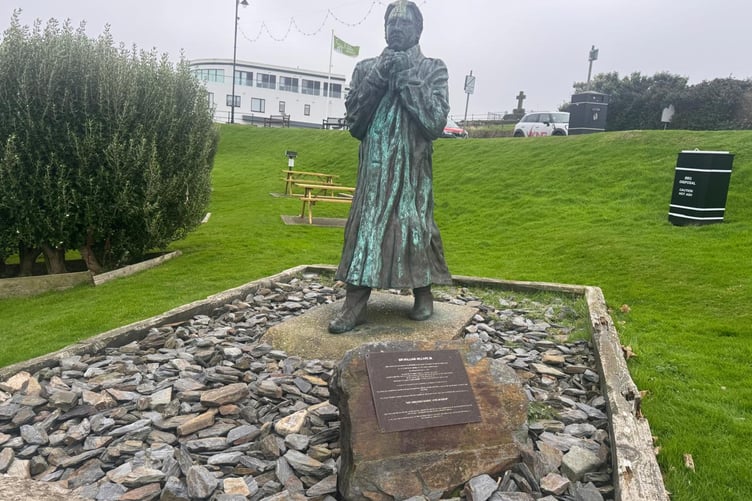
Not every statue in Douglas celebrates a star of the stage or screen. One of its most important memorials honours a man whose legacy is measured in lives saved.
Sir William Hillary founded the National Institution for the Preservation of Life from Shipwreck in 1824, the organisation that became the Royal National Lifeboat Institution (RNLI).
After settling in Douglas in 1806, Hillary witnessed the dangers faced by vessels navigating the island’s coastline. Shipwrecks and the loss of sailors’ lives inspired him to campaign for a more organised approach to maritime rescue.
His vision also led to the creation of the Tower of Refuge on Conister Rock in Douglas Bay. Built to provide shelter for shipwrecked sailors, the tower remains one of the island’s best-known landmarks.
A statue of Hillary, created by Manx sculptor Amanda Barton, was unveiled on September 21, 1999. It commemorates his humanitarian work and the lives lost at sea.
His legacy continues through the RNLI, whose volunteer crews still answer calls for help around the island’s coast.
The Dancers
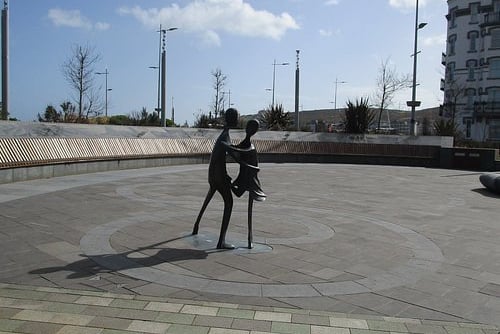
One of Douglas’s more contemporary works celebrates something that has brought generations of people together: dancing.
Created by internationally renowned sculptor John Mulvey, The Dancers depicts two figures in motion and stands outside the Gaiety Theatre in the promenade’s Cultural Area.
The sculpture was unveiled in September 2021 after being commissioned by the Isle of Man Arts Council at a cost of £47,023.60.
Rather than depicting a particular performer or famous personality, the work represents the thousands of people who have danced at the Gaiety Theatre and Villa Marina over the past 120 years, whether as performers, competitors or audience members.
That includes generations of islanders who have taken to the dance floor, watched a show or made memories at one of Douglas’s entertainment venues.
The work forms part of the wider Cultural Area, which incorporates the Gaiety Theatre, Villa Marina Arcade and Villa Marina. Its surrounding public space includes artwork celebrating Manx music and poetry.
Mulvey’s simple, expressive figures capture movement without relying on detailed facial features, allowing them to represent dancers of different generations.
It is a fitting tribute to the capital’s cultural life, recognising not just the stars who have performed on stage but also the people who have filled its venues.
Queen Victoria
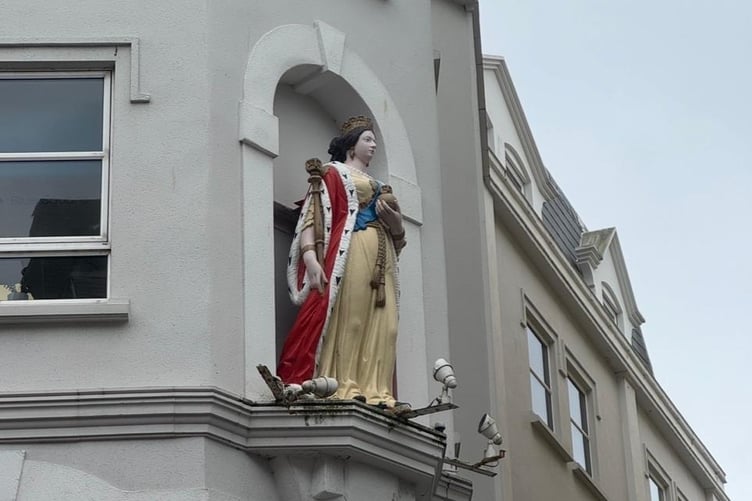
Some of Douglas’s statues can easily be overlooked because they are not standing at street level.
One example is the statue of Queen Victoria, positioned in an external first-floor alcove on Queen Victoria House in Victoria Street.
The stone-coloured figure looks down over the street, providing a small but distinctive reminder of the Victorian era, which helped shape much of Douglas’s historic townscape.
Unlike the larger memorials on the promenade, this statue is part of the architecture itself. Visitors walking along Victoria Street may need to look upwards to spot it.
Nearby, the Jubilee Clock at the junction of Victoria Street and Loch Promenade provides another reminder of the monarch’s legacy. The clock was donated by G W Dumbell in 1887 to mark the Golden Jubilee of Queen Victoria’s reign.
Together, the statue and clock offer a glimpse of how the Victorian period influenced the capital’s buildings, streets and public landmarks.
T E Brown
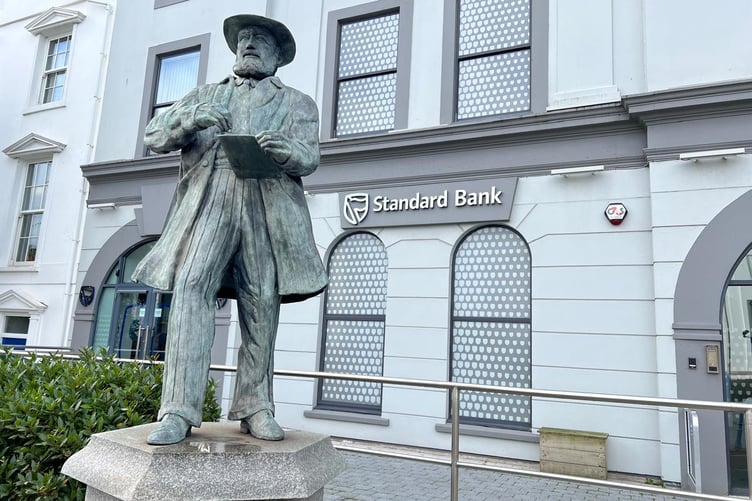
Another important figure in Manx cultural history is Thomas Edward Brown, the poet, scholar and schoolmaster widely regarded as one of the island’s most significant literary figures.
Born in 1830, Brown drew heavily on Manx life, speech and traditions in his writing. His work helped preserve aspects of the island’s identity at a time when its language and customs were changing.
A bronze statue of Brown stands near the junction of Circular Road and Prospect Hill, offering a tribute to a writer whose influence continues to be felt in Manx literature.
He’s often seen with a cone on his head!
His poem When Childher Plays is also celebrated in the artwork of Douglas’s Cultural Area, connecting his legacy with the town’s modern public spaces.
Brown’s inclusion among the capital’s statues is a reminder that Douglas’s heritage is not confined to famous entertainers and prominent public figures. Writers and thinkers have also played a significant part in shaping how the island understands and tells its own story.
From the Bee Gees striding home on the promenade to Sir William Hillary’s lifesaving legacy, Douglas’s statues offer a tour through the island’s musical, sporting, cultural and maritime past.
Some celebrate household names, others honour quieter achievements, but together they provide a reminder that the capital’s history is all around us – sometimes at eye level, and sometimes just above it.
Comments
We've recently changed our login process. If you have an account for commenting, you will need to re-register on the login window.
This article has no comments yet. Be the first to leave a comment.