
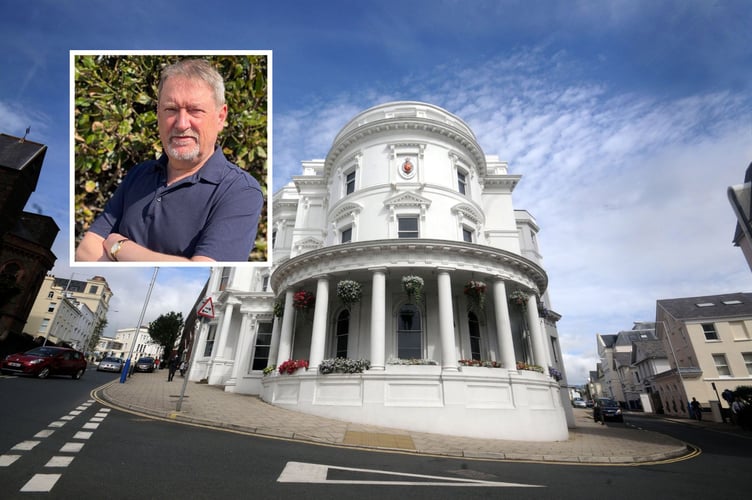
What should we expect from candidates for the House of Keys?
Not to have all the answers, because that would be unrealistic.
But we can expect them to have done their homework, to understand the big issues facing our Island, and to offer some thoughts around those issues. Many candidates, including a few recent MHKs, fail to meet even these basic criteria.
These people are asking us to make them members of the national parliament of the Isle of Man. To give them ultimate responsibility for our laws, vital services like health and education, and public funds running into billions of pounds. It’s a serious job, reflected in annual salaries starting at £81,000.
The following list of ten questions is designed to put the contenders on the spot and test their potential as national rather than just local politicians. Feel free to try these out on your candidates and enjoy watching them wriggle. Other lists are available.
1. What is your top political priority and how would you progress it?
A simple one to start with, but it can tell you a lot about the candidate’s clarity and focus. Do they actually have a number one priority, is it local or national, and have they thought about their next steps if they are elected? What do they most want to change and how would they go about changing it?
2. What should the Cannan government have done differently?
.jpeg?width=209&height=140&crop=209:145,smart&quality=75)

.jpg?width=209&height=140&crop=209:145,smart&quality=75)

If someone is standing for the House of Keys, we can be forgiven for assuming that they are interested in Manx politics. That they have been following it in recent years and have formed an overall view of the successes and failures of the outgoing administration. Is this too much to ask?
3. How should the government close the gap between its income and expenditure
Government’s annual spending is roughly £100 million more than its income. It has been balancing its budgets by using money from reserves, which is unsustainable. Options to end the deficit are: a) drastic cuts in spending and staffing, b) increased taxation or c) pray for an economic miracle.
If candidates are concerned about the reserves, do they also support scrapping the generous state pension ‘triple lock’ which is eroding the NI Fund? Probably not.
And if they believe in more efficient, streamlined government are they in favour of moving to a ‘single legal entity’ and dismantling the departmental structure? Have they even heard of this entity thing?
The fundamental problem here is how the Island sustains a high level of public services with a low tax economy. Candidate responses can be revealing of where they sit on the left/right spectrum, if they have any political orientation.
4. Will new taxation or charges be necessary to maintain health and social care services?
The focus in Tynwald has been on ‘fixing’ Manx Care and its repeated budget overruns. This conveniently ignores the inevitable acceleration in health and care costs caused by an ageing population and technical advances.
The public will have to pay more for its NHS through taxes or charges, or face service restrictions with increased use of private care.
How many candidates are brave enough to say this?
5. What will be key to the success of the economy over the next ten years?
Since Covid the Island has entered its first sustained recession in four decades, with 1,000 jobs lost in key sectors. That means less spending power in the local economy and less tax revenue to fund public services.
Government has been in denial about this historic downturn, which seems to have been too big for Tynwald to notice.
Its flagship economic strategy of optimistic expansion in population and job numbers is still in place, but under a rather half-hearted review.
The way forward is unclear.
.jpeg?width=752&height=500&crop=752:500)
6. Is the Isle of Man ready for the challenges and opportunities of Artificial Intelligence?
AI will decimate jobs in the private sector while creating new opportunities. It can also be used to reduce staffing and costs in the public sector, though government has been curiously reluctant to commit to this.
The Island still has no national strategy on AI but one is promised by the end of the year. The answer to this question is probably No.
7. Does the Island need a bigger population?
The goal of 100,000 residents is still official government policy, approved by this Tynwald. This has encouraged an open door approach to immigration, which the authorities are now trying to restrict.
The Island does have labour shortages and needs younger workers. But there is a concern that some of the immigration brings no net economic benefit, that low-income families in particular will cost the state more than they contribute in tax.
If net benefit is to be the criterion, should it not also apply to incomers from the United Kingdom and Ireland, not just to those from overseas? Is it time for comprehensive, selective residence control?
8. How could housing be made more affordable?
Affordable housing was the priority issue at the last general election yet very little progress has been made. Fresh initiatives were only recently announced.
Meanwhile the regulation of standards in private rented accommodation was effectively shelved by this government. It has not explained why.
9. Does the island need windfarms?
According to government policy the answer is yes, both offshore and onshore. This is in the interests of energy security, meeting the Island’s net zero commitment, and generating revenue.
But the policy process does not appear to have considered the value of the seascapes and landscapes that would be wiped out by the turbines. These are precious national assets.
What happens if we don’t have windfarms?
All candidates have a duty to make it clear where they stand on this issue.
10. Should there be an independent inquiry into government’s involvement with King Gaming?
This one seems a bit niche but it’s about political accountability or the lack of it.
King Gaming was facilitated by various arms of government but was subsequently exposed as a vast criminal conspiracy. It was a reputational disaster for the Isle of Man.
Criminal investigations are ongoing. An independent inquiry into government’s due diligence failure could run in parallel with this process, yet there has been no move to set one up. Presumably this is to avoid political embarrassment, but it is also avoiding accountability.