.JPG?width=94&height=94&crop=1:1,smart&quality=75)

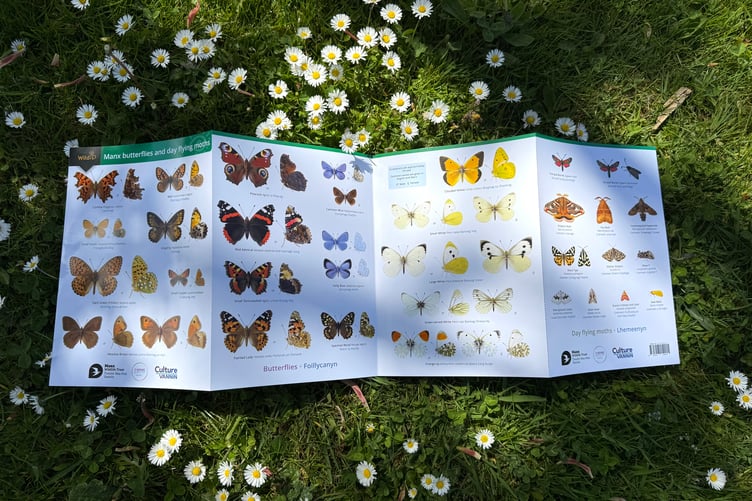
The Manx Wildlife Trust (MWT) has released a new Isle of Man-specific guide to local butterfly species, providing detailed information on all 19 regularly occurring butterflies found in the island.
The fold-out identification guide is the first formal publication dedicated exclusively to Manx butterflies, covering both resident and migratory species including the Painted Lady and Red Admiral.
It also features several brightly coloured day-flying moths that are often mistaken for butterflies, among them the Hummingbird Hawkmoth, which the MWT says is frequently reported as the small American hummingbird due to its appearance and behaviour.
While fewer than two dozen butterfly species are known to occur in the island, the Isle of Man supports hundreds of moth species. The guide includes life-size illustrations of some of the most notable day-flying moths, created by wildlife artist Richard Lewington.


Alongside species identification, the guide contains Isle of Man-specific biological information compiled from local expertise and more than 150,000 biological records. Details include species distribution, flight periods, preferred habitats, number of broods, scientific names and the caterpillars’ food plants.
Dr Jennifer Sharp, of the Manx Biological Recording Partnership, commented: ‘Butterflies are a barometer of our natural environment and can be found in all Manx habitats, from gardens and parks to woodlands, our coastline and within farmed fields.
‘For many people, spotting butterflies on a local walk can be the beginning of a lifetime of appreciation and wonder of the natural world around us.
‘This beautifully illustrated guide is tailored to those species which you can see locally, and we hope that this will get more Manx residents interested in observing these fascinating creatures and reporting their sightings to MWT.’
According to MWT, previous fold-out butterfly guides available locally focused on around 60 species found across Britain and Ireland, many of which do not occur on the Isle of Man.
This, it says, has sometimes resulted in confusion and occasional misidentification when species are submitted to the island’s biological records database.
David Bellamy, Head of Conservation and Land at MWT, added: ‘Whilst the island only supports a small number of butterflies, they are undoubtedly amongst our most beautiful and beloved invertebrates.
‘They can be appreciated in all habitats and settings, including finding Small Tortoiseshells hibernating within our homes and seeing migratory species such as the Clouded Yellow occasionally flying in off the Irish Sea.’
The publication has been produced in both Manx and English with support from Culture Vannin, which provided financial and linguistic assistance.
Rebecca McSevney, Operations Officer for Culture Vannin, said: ‘Supporting this project with a small grant reflects our charity's commitment to celebrating and safeguarding the island's unique cultural heritage.
‘By enabling the creation of a bilingual, Isle of Man-specific butterfly guide, our grant has helped Manx Wildlife Trust to produce a new resource which removes certain barriers.’
Free copies of the guide will be distributed to Manx schools, public libraries, scout groups and guide organisations, while copies are also available to purchase from the Manx Wildlife Trust gift shop in Peel and its Douglas Sea Terminal shop.