

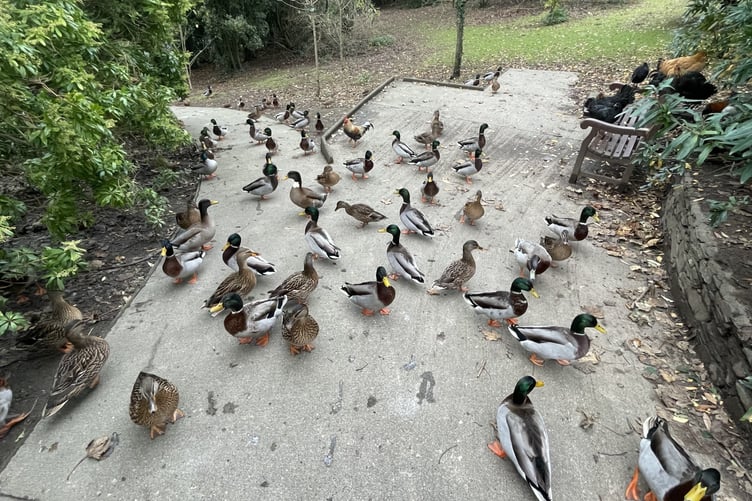
A government department has admitted it has occasionally had to ‘humanely’ manage the bird population at one of the island’s most well known parks.
The Department of Environment, Food and Agriculture’s (DEFA) admission comes after people questioned whether birds had been culled at St John’s Arboretum on social media forums.
DEFA has now admitted that when numbers have got out of hand action has been taken and has offered advice to visitors to prevent overpopulation.
A spokesman for the department said: ‘We proactively monitor and manage the population of birds at the Arboretum in St John’s as part of its wider responsibility for the site.
‘In doing so, it seeks to balance animal welfare, environmental management, public enjoyment, and the views of the community.
Most visitors regard the birds as an important and well-loved feature of the Arboretum, and DEFA recognises the positive contribution they make to the character of the site.
‘DEFA's approach has always been to manage the population responsibly through measures such as monitoring numbers, preventing further growth where appropriate, and discouraging supplementary feeding.
‘Responsible, humane population management has been required occasionally.’
While ducks and other waterfowl have always been attracted to the site’s pond, DEFA explained that numbers of poultry came from the birds being abandoned at the arboretum.
While the birds are a much-loved part of the arboretum, DEFA says there have been concerns raised over the rising numbers.
.jpeg?width=209&height=140&crop=209:145,smart&quality=75) Reflecting on Manx National Day: My Tynwald memories and traditions
Reflecting on Manx National Day: My Tynwald memories and traditions.png?width=209&height=140&crop=209:145,smart&quality=75) Man branded 'danger to the public' after being caught committing indecent act on bus
Man branded 'danger to the public' after being caught committing indecent act on bus.jpg?width=209&height=140&crop=209:145,smart&quality=75) Historic celebration as Douglas Bay Horse Tramway marks 150 years of Manx memories
Historic celebration as Douglas Bay Horse Tramway marks 150 years of Manx memories Talks take place with Steam Packet over contingency plan for ferry services
The spokesperson said: ‘The arboretum contains a mixture of birds, including free-ranging domestic poultry that are believed to have originated from birds abandoned at the site over several years.
‘The growing population of poultry on the site has generated concerns that have been raised directly with the department, with specific issues of noise pollution and property intrusion from residents.’
DEFA has issued advice to members of the public which will help control numbers and reduce any need to cull numbers in the future.
The spokesperson said: ‘To prevent excessive population growth, the public are asked not to feed the chickens which can encourage population growth, increase dependence on people and contribute to animal welfare, environmental and public amenity issues.
‘People should also avoid bread when feeding the ducks. Appropriate poultry or waterfowl feed is preferable and should only be provided in moderation.
‘We also ask not to abandon unwanted poultry or other animals at the arboretum or any public site.’