

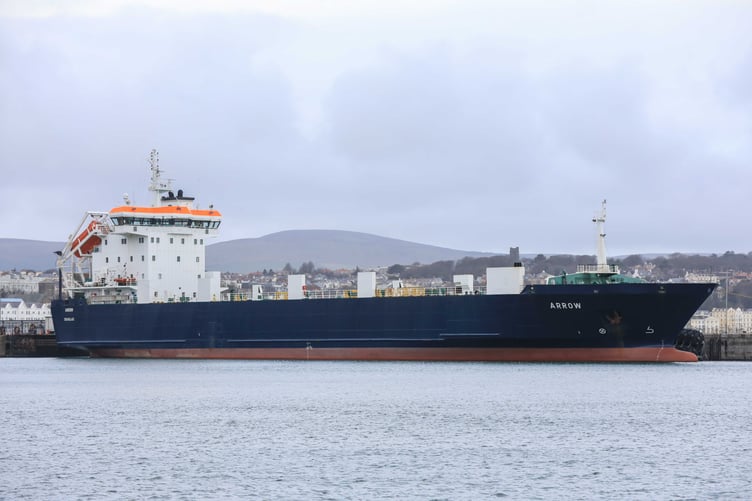
The Department of Environment, Food and Agriculture (DEFA) agreed to underwrite a one-off Steam Packet sailing last weekend to bring sheep from Northern Ireland to the Isle of Man.
The MV Arrow made the sailing on Saturday, October 17, allowing livestock already purchased by Manx farmers to be transported directly to the island.
The sailing was arranged after disruption to the usual freight service between Northern Ireland and the Isle of Man meant the animals could not travel directly.
DEFA said imports of livestock susceptible to bluetongue virus (BTV) from Great Britain remained suspended because of the disease situation there.
In 2026, the department introduced arrangements permitting controlled imports from Northern Ireland, subject to animal health requirements, including BTV-3 vaccination and pre-movement PCR testing.
However, the disruption to freight services created difficulties for farmers who had already purchased breeding stock for the current breeding season.
This disruption was due to the Manxman needing repairs, which saw the Ben my Chree being used for the Heysham/Liverpool route and the Manannan being used for Larne. The Manannan can take freight, but does not take livestock due to the additional motion of the boat.
A spokesperson from DEFA commented: ‘Following an approach from the Manx National Farmers' Union (MNFU) on September 10, DEFA began discussions with the Isle of Man Steam Packet Company and relevant UK and Northern Ireland animal health authorities to explore options to assist farmers who had already purchased breeding stock for the current breeding season.
‘Several discussions with the MNFU followed, and on October 8, DEFA subsequently agreed to underwrite a one-off sailing of the MV Arrow from Northern Ireland. The sailing enabled breeding sheep already purchased by Manx farmers to be brought directly to the island for onward distribution to around 14 Manx farming businesses.
‘Transporters were charged the normal commercial rate for the crossing, with DEFA agreeing to meet the remaining net cost. A direct sailing was considered the preferred option on animal welfare and biosecurity grounds, as it avoided the longer and more complex alternative route via Great Britain.’


Industry representatives and other stakeholders were contacted before the arrangements were finalised to establish whether other livestock keepers wished to use the sailing.