

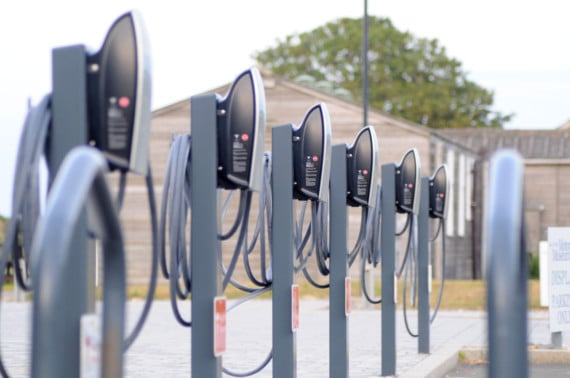
Removal of financial incentives for electric cars is a backward step but they will still be far cheaper to run than a petrol car, the island’s Green Party says.
Zero emissions vehicles are currently not charged for vehicle tax. But from April 2020, there will be a charge of £14.
Infrastructure Minister Ray Harmer announced the move in Tynwald last month.
He said the charge was needed as duty from petrol and diesel vehicles would rapidly decrease over the next 10 years.
.jpeg?width=209&height=140&crop=209:145,smart&quality=75)

Meanwhile, Manx Utilities has confirmed plans to make people pay to use its 24 electric vehicle charging points are being finalised.
Isle of Man Green Party says it wants the swift decarbonisation of transport in the island and this doesn’t focus just on switching to electric vehicles but also takes into account active travel and public transport.
It is calling for the Manx government to introduce a grant and/or loan scheme to help lower earners buy electric vehicles.
And it is calling for a swift increase in the provision of publicly accessible electric vehicle charging points in the island.
The party’s Andrew Langan-Newton said: ’Financial incentives are important in encouraging the adoption of low carbon transport.
’The removal of such incentives is a retrograde step but one that we ultimately would anticipate taking place as the market in EVs develops. ’The government has indicated it will soon remove the incentive of free charging for electric vehicles.
’Plans to increase the road tax of EVs (currently zero) is likewise, on the face of it, a backwards step but one we did anticipate.’
Mr Langan-Newton said that road tax has a function of incentivising low carbon transport and disincentivising high carbon transport but it also pays for the maintenance of roads.
He said the relatively small charge being introduced would still offer a financial incentive in comparison to the road tax for petrol and diesel cars.
Charging and running an electric car is still far cheaper than fuelling a petrol or diesel car, he pointed out.
He said: ’Per mile, fuelling an EV with electricity saves in the region of 10p in comparison to fuelling a car with petrol or diesel.
’Therefore, we do not consider that either free public charging or zero road tax are the overarching incentives for a person choosing to buy an EV.
’Rather, the purchase price of the EV and security in the knowledge of adequate provision of EV charging infrastructure (whether free or charged for) are arguably greater considerations.’
He called on the government to put decarbonisation of transport at the heart of its strategy.
Comments
This article has no comments yet. Be the first to leave a comment.