

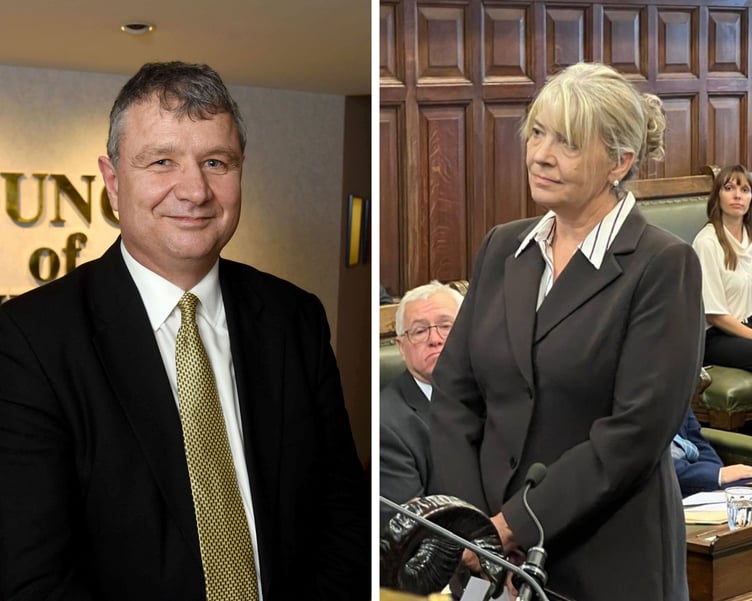
Kirrie Jenkins and Chris Thomas will go head-to-head at a hustings on Thursday as the contest to become the Isle of Man’s next Chief Minister enters its next stage.
The two candidates will face questions from MHKs in the Legislative Council Chamber at 2pm, just two days after the nominations were formally submitted and a contest which had appeared wide open became a two-way battle.
But there could still be plenty of twists before the House of Keys meets next Tuesday to decide who gets the top job.
It has been quite a day.
The morning began with Onchan MHK Rob Callister confirming he would not be putting his name forward, after spending the previous week gauging support among his fellow MHKs.
Mr Callister had been the first MHK to publicly declare his intention to stand after last month's General Election, and had circulated a 16-page manifesto setting out his plans for Government.
But he said he had concluded he did not have enough support to secure the nomination.
He said his proposals had been warmly received by businesses, charities and constituents, but that it had become clear he did not have sufficient support within the new House of Keys.
That initially left Chris Thomas as the only candidate to have publicly confirmed he was standing.
The Douglas Central MHK and current Treasury Minister had sent his policy statement to Tynwald members on Monday, setting out his plans for a ‘smaller, smarter, smoother Government’.
His proposals cover a wide range of issues, including public finances, housing, healthcare, migration, energy, transport and infrastructure.
But there was still a question hanging over the contest.
Would anyone else put their name forward?
The answer came with the deadline fast approaching.
Newly elected Arbory, Castletown and Malew MHK Kirrie Jenkins submitted her nomination papers with only minutes to spare before the noon deadline, Isle of Man Today understands.
It transformed what had been an uncertain contest into a straight choice between a new member of the House and one of its most experienced.
The Secretary of the House of Keys subsequently confirmed that two proposals had been received under Standing Order 12.2.
Ms Jenkins was proposed by Glenfaba and Peel MHK Katryna Baptist and seconded by Ayre and Michael MHK Stephen Broad.
Mr Thomas was proposed by Ramsey MHK Rob Cowell and seconded by Middle MHK Jane Poole-Wilson.
And so, for now at least, there are two people seeking the keys to the Chief Minister's office.
A potential first for Manx politics
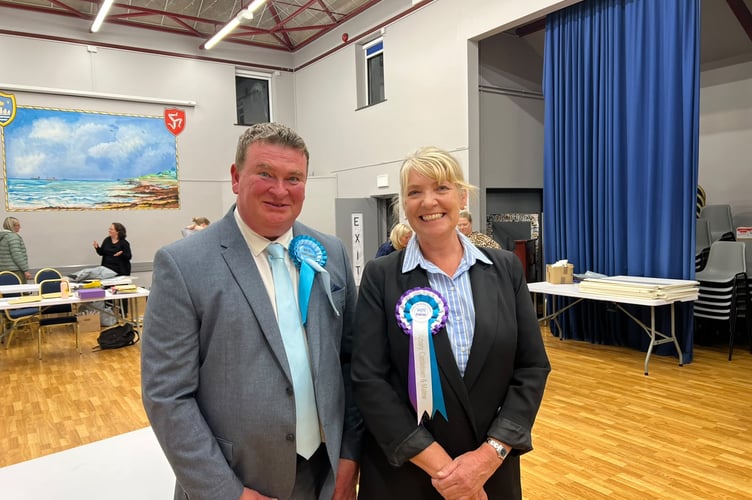
Ms Jenkins' candidacy has immediately given the contest a historic dimension.
She secured 1,839 votes in Arbory, Castletown and Malew at September's General Election, the second-highest total recorded by any candidate across the Island.
If she is elected next Tuesday, she would become the first woman to serve as Chief Minister.
She would also be the first person to go directly from being newly elected as an MHK to the island's top political job.
Her policy statement is titled ‘Streamline. Strengthen. Stabilise. A Government That Delivers.’
It calls for a Government that is smaller but better, with a greater emphasis on day-to-day public services, reducing duplication, faster decision-making and accountability.
Ms Jenkins says voters want Government to work together rather than become consumed by political point-scoring.
She also sets out what she believes the next Chief Minister should be.
Among her criteria is that they should have ‘won the trust of their constituency’, should embrace the newness of the House of Keys and be “of high moral character”.
That wording has already sparked a debate.
Mr Callister, despite withdrawing from the contest, questioned whether the reference to winning the ‘popular vote’ could be interpreted as meaning that only MHKs who topped their constituency poll should be eligible to become Chief Minister.
He pointed out that all 24 members had been democratically elected and asked constituents whether the top job should be open to every MHK.
His intervention could also prove relevant to the contest itself.
Mr Callister has told Isle of Man Today that if neither Ms Jenkins nor Mr Thomas secures the 13 votes required next Tuesday, he would consider putting his name forward again.
That means the apparent two-way contest may not necessarily remain that way. It could also mean someone else count enter the fold.
Thomas sets out his alternative
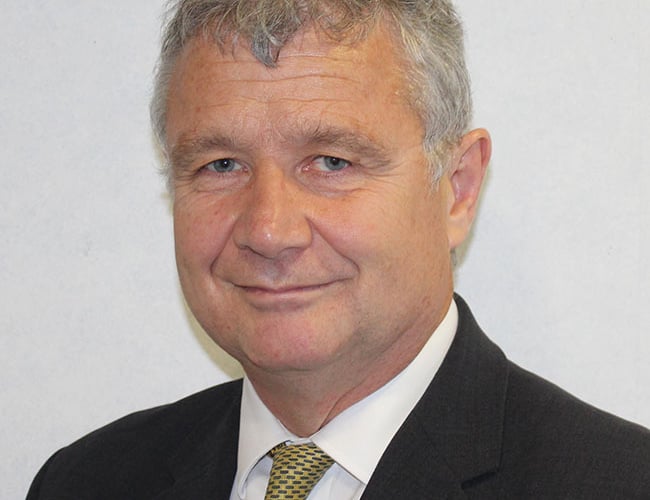
Mr Thomas' policy statement takes a very different approach, drawing heavily on his experience in Government and his belief that the Island needs a more focused administration.
His document is titled ‘Smaller, Smarter, Smoother Government - Fair, Firm, Free Island.’
He argues for priority-based budgeting, a more productive public service, changes to migration policy, affordable housing and reforms across transport, energy and infrastructure.
He also wants to see economic and legislative programmes for 2026-31 brought to Tynwald before Christmas.
It’s worth a look back at what happened after the 2021 General Election.
That year, Alfred Cannan defeated Alex Allinson by 14 votes to eight, with two spoiled ballot papers.
Mr Thomas voted for neither candidate, declined to join the Council of Ministers and later voted against the Island Plan.
He argues that consensus is desirable and compromise can be necessary, but says an unworkable compromise is not good enough.
He blames what he describes as ineffective action and contradictory policies for contributing to the October 2024 no-confidence motion, which he seconded.
His statement is therefore not simply a list of policies. It is also an argument about how he believes Government should operate.
The numbers game
.jpeg?width=752&height=500&crop=752:500)
For all the policy differences, the immediate question is much simpler.
Who can get 13 votes?
There are 24 MHKs in the new House of Keys, meaning a candidate needs a majority of 13.
The House will meet at 10am on Tuesday, October 13, when the candidates will have the opportunity to make an opening speech and answer questions before a ballot.
A Tynwald insider has told Isle of Man Today that they believe both candidates could currently be relying on around nine votes each, leaving six MHKs undecided.
That is not a confirmed tally of support and the position could change considerably before next Tuesday.
But if the assessment is broadly accurate, it demonstrates why Thursday's hustings could matter.
MHKs will have the chance to question both candidates in person, while the two policy statements give them something more concrete to consider than simply who has expressed an interest in the job.
Could history repeat itself?
.jpeg?width=752&height=500&crop=752:500)
And then there is 2006.
That year's Chief Minister contest provides an intriguing precedent for what can happen when nobody can initially command enough support.
Following the General Election, John Shimmin, Steve Rodan and David Cannan stood for the top job.
None was able to secure the necessary majority.
Tony Brown, who had been widely discussed as a potential candidate, had not initially put his name forward.
When the first candidates failed to secure enough support, nominations were reopened.
Mr Brown subsequently became the only candidate and was confirmed as Chief Minister on December 14, 2006.
That history is particularly relevant now because Mr Callister has already indicated that he could reconsider his position if neither of the current candidates gets to 13 votes.
It means that while Thursday's hustings is formally about two candidates, the possibility of the contest changing again cannot entirely be ruled out.
What happens now?
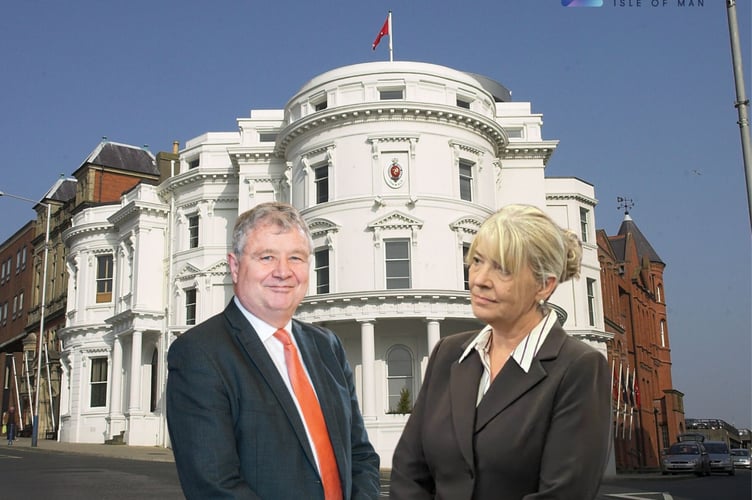
For the moment, the focus is firmly on Ms Jenkins and Mr Thomas.
They will meet in the Legislative Council Chamber at 2pm on Thursday for the hustings, with MHKs able to hear their arguments and question them directly.
Then comes the decision.
The House of Keys will sit at 10am on Tuesday, October 13, to nominate the next Chief Minister.
The successful candidate must secure at least 13 of the 24 votes.
If one does, the process of forming the new Council of Ministers can begin. Which is interesting in itself, given 15 new politicians are in this house.
If neither does, however, the political uncertainty could continue.