

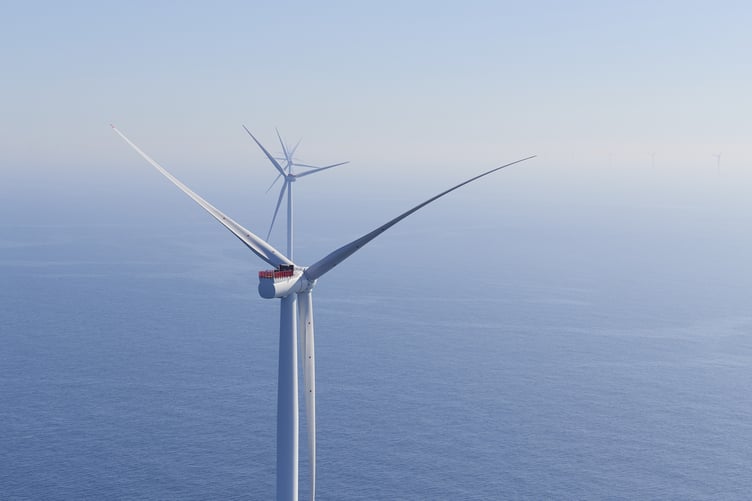
Renewable energy is being demanded by businesses around the world because it’s seen as a more reliable, sustainable and secure option for future power needs.
Offshore wind has already delivered significant investment and economic activity across the UK, particularly in coastal communities, so proposals for Ørsted’s Mooir Vannin Offshore Wind Farm therefore raise the possibility of the Isle of Man gaining long-term economic benefits too.
At the centre of Ørsted’s proposals are revenues expected to boost the island’s economy by approximately £2 billion over the wind farm’s 35-year operational lifetime.
These financial benefits would come from taxation and seabed rental revenues paid directly to Isle of Man Treasury, alongside an independently administered Community Investment Fund supporting projects and initiatives selected for the benefit of the local community.
The approximately £2 billion total would equate to an average of around £50 million to £60 million each year, creating a new revenue stream comparable with several established sectors of the island’s economy.
These financial benefits would require no direct investment or subsidy from the Isle of Man Government, with no capital or operational expenditure risk to government or taxpayers.
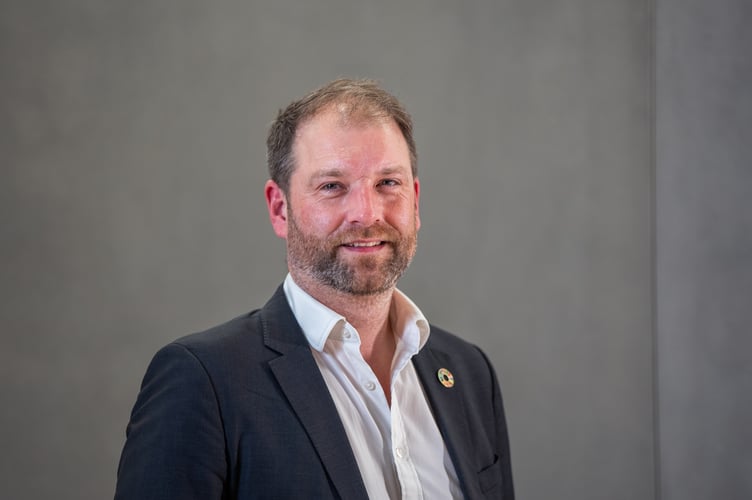
However, Mooir Vannin project director Jamie Baldwin says the wider economic opportunity extends beyond direct revenues. Ørsted has built and operated 12 offshore wind farms in UK waters, including six in the Irish Sea, and its experience shows how offshore wind investment can support wider economic activity.
He said: ‘In the UK, offshore wind has been associated with sustained investment in ports, manufacturing and services, particularly in coastal regions.
‘Where we have operational offshore wind farms, we have seen it revitalise coastal communities and stimulate long-term investment.
‘In this context Mooir Vannin presents a unique, once-in-a-generation opportunity for the Isle of Man to support a project that is both environmentally responsible and economically transformative.’

Jobs, skills and supply chain opportunities
Ørsted is proposing an operations and maintenance base in the island, which would support skilled employment throughout the wind farm’s operational lifetime.
Potential roles could include engineering, marine operations and port services, while businesses across the island may also have opportunities to participate in the project’s wider supply chain.
For the Isle of Man, the economic impact could therefore extend beyond employment directly associated with Mooir Vannin.
The project could help develop local expertise, specialist services and supply chain capability connected to a growing international industry.
Power to the island options
Mooir Vannin would generate much more electricity than the Isle of Man could consume on its own.
Offshore wind farms need to operate at significant scale to be commercially viable, meaning the majority of the electricity generated by the project would be exported to the UK grid.
The island could also gain energy security benefits via one of two options Ørsted has put forward.
- A new electrical cable between the wind farm and the IoM’s electricity grid.
- Connect the wind farm solely to the UK grid, with the option for the Island to buy a proportion of the power it generates at cheaper than wholesale prices.
Ørsted has been progressing both possibilities voluntarily. The eventual decision on the preferred route would rest with Isle of Man Government and Manx Utilities.
A proven, rapidly developing technology
Offshore wind technology has developed considerably over the past three decades, with larger and more productive turbines enabling projects to generate substantially more energy.
‘Wind energy technology is developing rapidly,’ says Baldwin.
‘Today, a single offshore wind turbine rotation generates enough electricity to power a UK home for 24 hours.’
The scale of development can be seen by comparing today’s technology with Ørsted’s Vindeby project in Denmark, the world’s first offshore wind farm, which became operational 35 years ago.
Turbines today are almost 18 times more powerful. Wind is also playing an increasingly important role in the UK’s energy system.
Figures from the National Energy System Operator showed that in 2025, wind generated more electricity than gas in the UK for the first time. Across Europe, offshore wind is also forming part of long-term energy security strategies.
Mooir Vannin is currently expected to become operational in the first half of the 2030s.
With an anticipated operational life of around 35 years, it could continue generating renewable electricity into the 2060s.
For Baldwin, this longevity is an important part of the economic opportunity. Offshore wind is already a proven and scalable technology, with established projects operating around the UK and internationally.
The combination of long-term revenues, skilled employment, supply chain development and potential access to renewable energy means Mooir Vannin could represent an economic opportunity extending well beyond the construction of the wind farm.
Find out more at orsted.im