
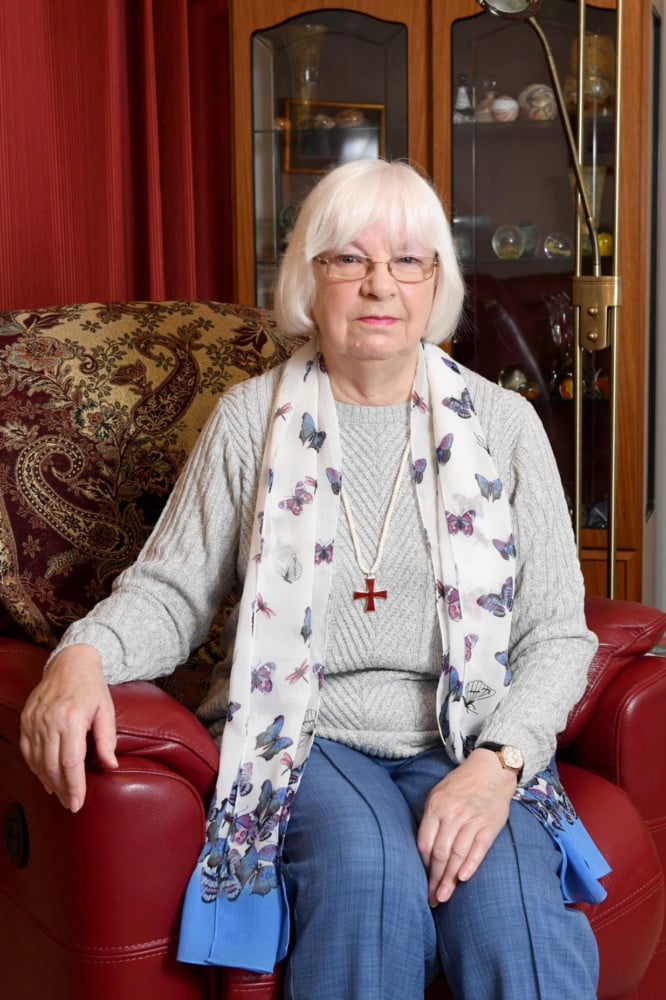
Issues of loneliness and social isolation were highlighted during the Covid-19 lockdown as it was a time where all portions of society may have experienced these feelings to some extent, writes Paul Hardman.
However, such feelings have long been familiar to certain demographics, such as the elderly who live alone.
Charities such as Live at Home and Southern Befrienders have for years worked to combat loneliness in the Manx community - well before the pandemic struck.
Live at Home helps older people to ’live happily at home for as long as they can’.

.png?width=209&height=140&crop=209:145,smart&quality=75)
This year it conducted a survey of its members and found that many reported not feeling any different in terms of loneliness during lockdown, showing that they had experienced these same feelings before, and after the pandemic.
Southern Befrienders operates in the south of the island to provide care and attention to about 180 older people.
We went along with Southern Befrienders scheme coordinator Val Haslam to speak to two elderly Port Erin residents who live alone about their very different experiences of life during lockdown.
For Kathy Best, 79, a former secretary and private pilot, the most difficult part of lockdown was her fear of catching the virus which left her isolated in her flat for three and a half months.
She managed to cope because the wardens of her sheltered accommodation building would do her shopping, along with S&S garage and Southern Befrienders.
’They call me a "vulnerable person",’ she said. ’I never thought of myself as a "vulnerable person".’
Typically, she enjoyed the independence and social contact that came from having a routine, explaining: ’I’m used to being out practically every day, doing something or other - like going around with Southern Befrienders on their minibus, or to lunches.’
Before the pandemic she had never experienced any feelings of loneliness.
’I didn’t find it (lockdown) difficult to start with because I don’t mind my own company,’ she said. ’I’m used to it with living on my own.
’So it didn’t bother me for a while, but then I thought "It’s beautiful weather out there" - that was really getting to me, that beautiful weather (in March and April).
’I thought that when this is all over, it’ll start raining!’
She once drove down to Shore Road just to break the monotony of being inside, but found herself too afraid to even roll her windows down.
Even now, Kathy says she is ’still a little bit iffy’ and apprehensive about getting close to people in public, having lost a lot of her confidence.
She has also stopped watching the pandemic news from the UK.
Kathy told us said that during the three and a half months inside reading did help to keep her mind active to some extent, but added: ’I think the old brain was going to sleep, quite honestly. I’m still finding it quite difficult sometimes to remember names, for example.’
Val pointed out that the lack of mental stimulation and loss of interaction skills was one of the effects of long-term social isolation.
Kathy also said that the frequent phone calls from Southern Befrienders had helped as well, explaining: ’It showed there was somebody still out there, that somebody cared. You did find out that there were people out there who would do things for others.’
By contrast, Peter Archer, 71, a former RAF serviceman, was able to keep active throughout lockdown - making curries, cakes and lasagnes to deliver to vulnerable residents, as well as doing their food shopping.
As Peter already enjoyed baking, he said this ’made the time fly’ during the particularly strict phase of lockdown, and that if he hadn’t had that diversion to keep him active he would have ’gone loopy’ - describing the first weeks as ’really hard’.
The landlady of the Station Pub even asked him to deliver their extra hotpots to residents, which he did in a socially distanced manner at their doorsteps.
However, outside of this he told us that the most difficult part of lockdown was not seeing anybody, except for the warden from the sheltered accommodation complex who delivered the post.
Peter is also a volunteer for Southern Befrienders, and adapted during lockdown by calling around residents as a form of ’telephone befriending’, even making a socially distanced visit to one so he could tune her radio - as this was all she had for entertainment.
On the topic of news, Val highlighted that one of the issues was that elderly residents without access to the internet were unable to go to the shops to buy Manx newspapers - and so would receive only ’alarming’ UK news and apply that to the island.
To help with this, Southern Befrienders sent out regular newsletters to residents updating them on the latest Isle of Man government advice, which Peter said ’really worked’ because the ’doom and gloom’ UK news reports were causing worry.
However, he found that the shared experience of hardship during the pandemic heightened the sense of community in his sheltered accommodation block, saying that: ’Before (Covid-19) you didn’t know your neighbours around here. But over lockdown, it brought people together. It got people talking, and everyone came out and clapped (for the key workers).
’Now, if you want anything you can just know on each other’s door - but it wasn’t like that before.’
Comments
This article has no comments yet. Be the first to leave a comment.