

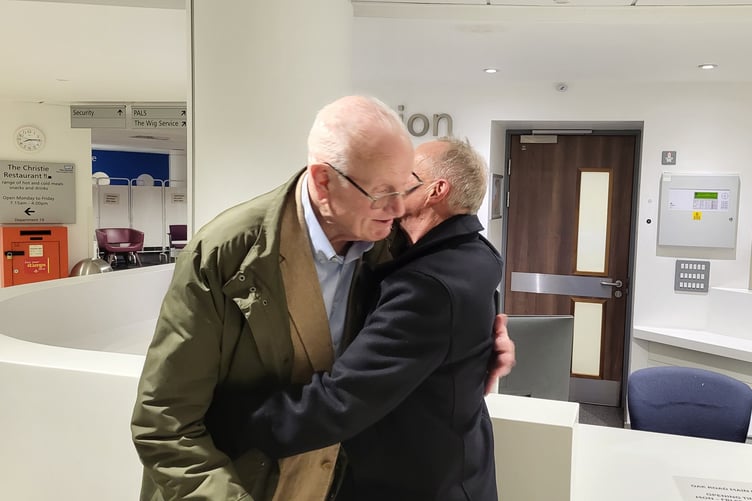
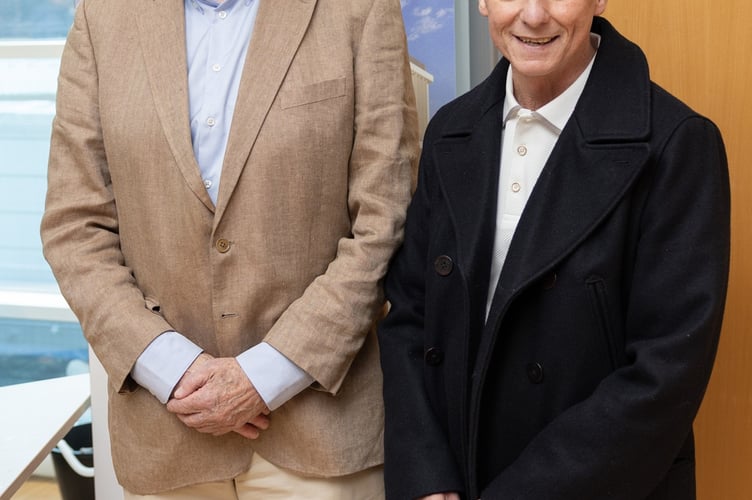
A retired Isle of Man doctor who helped establish a pioneering leukaemia and bone marrow transplant service has met up with former patients and colleagues in an emotional reunion.
Professor Howard ‘Howie’ Scarffe, who was born on the island and has returned to live in Castletown, was the founding head of The Christie’s Adult Leukaemia Unit (ALU).
The centre opened in 1986 after several years of work to establish specialist facilities for patients with acute leukaemia and those undergoing bone marrow transplants.
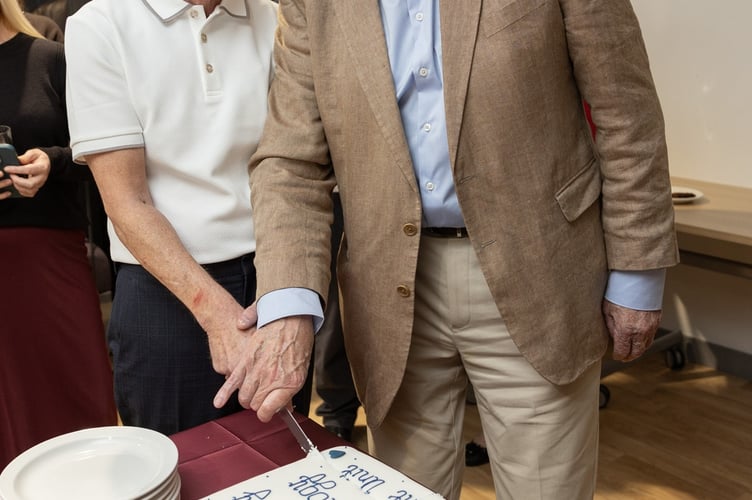
He has now returned to The Christie to mark 40 years since the specialist unit opened.
The anniversary brought Howie back together with former colleagues and patients to reflect on how dramatically treatment has changed since the early 1980s.
Among the patients was Derrick Derbyshire, one of The Christie’s earliest adult bone marrow transplant beneficiaries.
When Howie became a senior lecturer and honorary consultant in 1980, he set himself what today sounds like an extraordinarily modest ambition.
‘When I became a consultant, my aim was to cure at least one patient of leukaemia,’ he said. ‘I later thought, maybe Derrick is the one.’
Derrick was 18 when he arrived at The Christie with acute leukaemia in 1982. He became seriously ill before receiving a bone marrow transplant the following year using cells donated by his teenage brother Robert.
During treatment, Derrick lost his hair and used some of it, together with a cardboard hospital urinal, to create ‘Dougal’, named after the dog from The Magic Roundabout.


The relationship continued beyond Derrick’s treatment.
When Howie and his colleagues began fundraising for the new Adult Leukaemia Unit, Derrick arrived at a clinic appointment carrying a brick in a plastic bag. He knew money was needed for the new building and decided that, if he could not contribute much financially, he could at least provide a brick to get them started.
Derrick later ran the Manchester Marathon with his brother to raise funds and, in November 1985, was invited to lay the foundation stone for the new unit.
When the ward was officially opened by the Duchess of Kent, Derrick was among those invited back to meet her.
Howie and his wife Sheila later attended Derrick’s wedding to Tracey. After Howie left The Christie at the end of 1999, however, the pair eventually lost touch.
It was many years later, while Howie was writing down memories of his career and life, that one question repeatedly came back to him: whatever happened to DD?
They eventually made contact again and rediscovered the easy rapport they had shared decades earlier.
Their reunion at The Christie’s 40th anniversary celebration therefore had a personal significance alongside the opportunity to reflect on the development of haematology.
Derrick, now 63, has gone on to marry, gain an engineering degree and have two sons despite concerns that his treatment might make fatherhood unlikely.
‘Without the transplant in 1983, I wouldn’t have lived until I was 21,’ Derrick said. ‘I’m 63 now. I’ve been exceptionally lucky. If it wasn’t for Howie and his team, I wouldn’t be here today.’
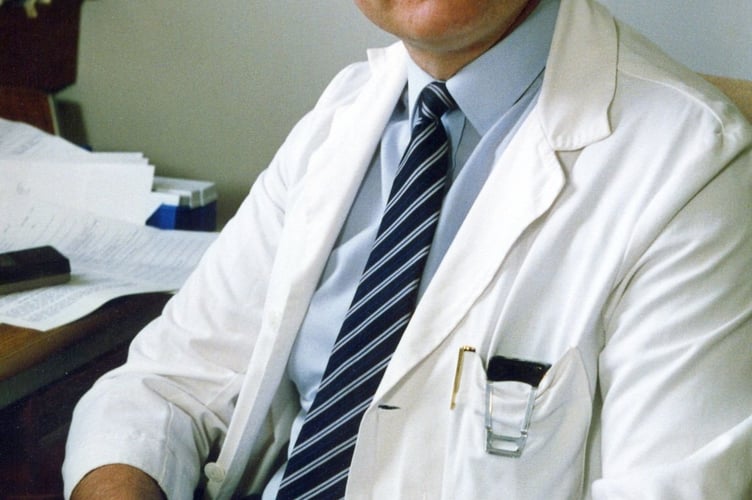
When Howie first joined The Christie in the 1970s, the hospital had no dedicated acute leukaemia service and did not carry out bone marrow transplants.
Patients who began being referred to the team were initially cared for on an ordinary ward without the specialist facilities that would now be considered essential for people undergoing intensive treatment.
‘The Christie hadn’t treated leukaemia at all,’ Howie explained. ‘It hadn’t done anything like bone marrow transplants. It didn’t have any facilities. It didn’t have any staff.’
As referrals grew, Howie worked alongside colleagues including Professor Derek Crowther, Dr James Chang and Dr Godfrey Morgenstern to develop the clinical expertise needed for a specialist service.
By 1982, The Christie team was carrying out some of the North West’s earliest adult bone marrow transplants, initially on an ordinary hospital ward.
But patients could spend weeks waiting for transplanted marrow to begin producing healthy blood cells, leaving them particularly vulnerable to serious infection and bleeding.
It became increasingly clear to Howie and his colleagues that a dedicated unit was needed.
Creating the new unit required Howie and colleagues to secure support from The Christie and regional health authorities, as well as raise money for the building, equipment and running costs.
Funding came from organisations including the Cancer Research Campaign, Leukaemia Research Fund and Christie Hospital Women’s Trust Fund, alongside fundraising by patients and supporters.
Howie recalled spending many evenings visiting groups that had raised money, often simply to say thank you. That connection between clinicians and patients became one of the defining features of the service.
The new Adult Leukaemia Unit in Manchester began treating patients in 1986, with the Laszlo Lajtha Ward officially opened by Her Royal Highness the Duchess of Kent in March 1987.
The ten-bed unit included specialist isolation rooms designed to reduce the risk of infection for patients undergoing intensive treatment and transplantation.
Among The Christie’s historic milestones was a world-first clinical trial involving cultured bone marrow.
For patients without a suitable donor, clinicians investigated whether their own marrow could be cultured before being returned following very high-dose treatment.
The clinical trial was led by Dr James Chang, building on laboratory work associated with Professor Dexter’s team. Although the approach showed early promise, blood counts took longer to recover, increasing vulnerability to infection, and subsequent developments in transplantation meant it did not become routine practice.
The work nevertheless demonstrated the ambitious approach to clinical research that characterised the developing service.
Howie also highlights the team’s involvement in early research into G-CSF, a drug that stimulates production of white blood cells following chemotherapy, allowing stem cells to be collected.
Peripheral blood stem-cell collection developed into an important part of modern transplantation, avoiding some of the difficulties associated with traditional bone marrow collection.
The original Adult Leukaemia Unit eventually became too small for the increasingly sophisticated service it had helped create.
In 2014, it was replaced by larger, purpose-built haematology and transplant facilities within The Christie’s Palatine Treatment Centre in Manchester.
For Howie, returning to The Christie offered an opportunity to see the legacy of work begun at a time when the hospital had no specialist acute leukaemia facilities at all and to be reunited with one of the patients who helped make those early years so memorable.
Comments
We've recently changed our login process. If you have an account for commenting, you will need to re-register on the login window.
This article has no comments yet. Be the first to leave a comment.