


There are few jobs on the Isle of Man that involve spending a working day among the island’s most remarkable historic buildings and landscapes.
For John-Paul Walker, it is part of the job.
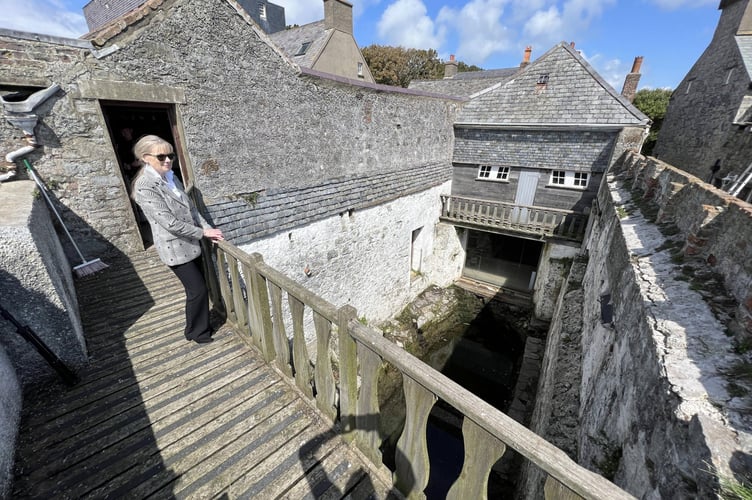
As historic buildings architect for Manx National Heritage (MNH), he is responsible for the conservation of the organisation’s historic buildings, from the imposing walls of Peel Castle to the world’s largest water wheel, to structures that help tell the story of the island’s past.
But behind the scenes, his role involves much more than inspecting ancient stonework and overseeing repairs.
It means deciding which buildings need attention most urgently, finding ways to make historic properties work for the future and, sometimes, explaining why a project that appears obvious to the public cannot happen just yet.
MNH manages 11 heritage sites and 17 additional ancient monuments, alongside approximately 2,500 acres of land across the island.
Its wider estate also includes holiday lets, hospitality venues and commercial properties such as One Market Square in Castletown.
And while the buildings may be centuries old, the challenges of looking after them are very much a modern problem.
‘Essentially, my short answer is that I look after all the historic buildings in our estate,’ Mr Walker says.
‘We have quite a lot of buildings that are much more modern. Historic is a bit misleading in a way.

‘If we considered it a very worthy example of that type of building, then it would probably come under my remit.’

His work also extends beyond the charity’s own properties.
He sits on the group that advises the planning department on applications involving conservation areas, registered buildings and scheduled ancient monuments.
It is an important part of MNH’s wider responsibility to protect the island’s heritage, rather than simply looking after the sites it owns.
But with a small organisation responsible for such a broad estate, there is a difficult question that repeatedly comes up: where do you start?
For Mr Walker, the first step is understanding the condition of each building and how important it is to the island’s heritage.
He carries out condition surveys, assessing the likelihood of deterioration and the consequences of losing part of a structure.
‘If we’re saying this is an important part of the country’s heritage, just how critical is it?’ he says.
‘If we lost this, worst-case scenario, how devastating would it be to the nation?’
The condition of the building is then weighed against its significance, before other considerations come into play.
Public safety is one of the most important.
If a section of a building is at risk of collapse, could the entire site have to close? Could it threaten visitors or members of the public?
Peel Castle is a good example.
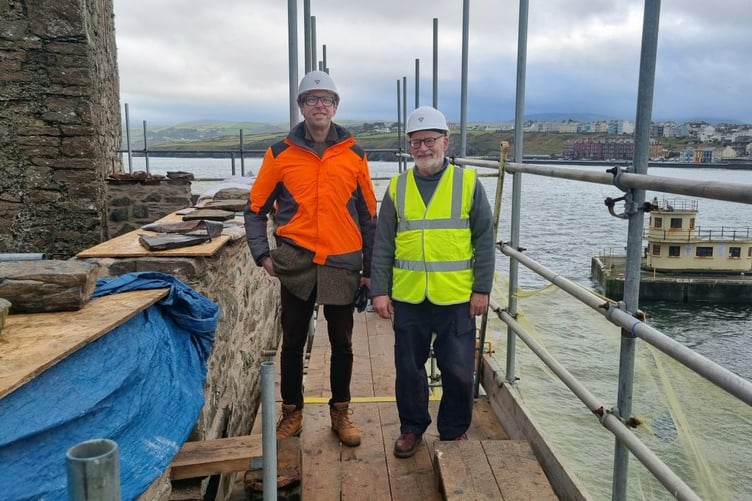
With a public highway and footpath running around the site, any deterioration that could put people at risk has to be taken seriously.
‘That’s one of the reasons why Peel Castle got driven up to the top of the list,’ Mr Walker says.
But even after that initial assessment, the final decision is not always his.
His recommendations go to MNH’s executive team, where operational considerations, corporate priorities and political or public pressure can change the order of work.
And that, he admits, can turn his carefully considered list ‘completely upside down’.
‘Frequently my list will get turned upside down,’ he says.
One example was the Nautical Museum in Castletown, where proposals were led by Mr Walker.
He says it was not originally at the top of his list, but a House of Keys question from an MHK about the future of the boat Peggy helped bring it forward.
‘That’s really what triggered that to become a priority,’ he says.
‘There were other things I would have done before that.’
It is an illustration of the competing demands facing MNH, which must balance the condition of its buildings against the practicalities of running an organisation responsible for so many different sites.
Money is finite, and not every project can be tackled at once.
Mr Walker says the charity is also reviewing its estate to find ways of making properties more useful, whether that means improving a visitor attraction or finding a new purpose for a building that is no longer in use.
‘They all have to have a purpose, if you like, a function, and not all of our buildings do,’ he says.
‘Some of them are just because of funding, they’re redundant and really need to be brought into use.’
For a conservation architect, that can mean moving beyond traditional repairs and considering how a historic building could generate income or become useful to the community.
It is a role that combines the technical demands of preserving old buildings with the need to make them work in the present.
And while the decisions can be difficult, Mr Walker says the best part of the job is the opportunity to spend time in some of the island’s most extraordinary places.
‘Sometimes I do have to pinch myself because a day of work is me going to these amazing sites, in our amazing landscape, and caring for these structures,’ he says.
‘They are far more than just bricks and mortar.’
He believes the island has some ‘world-class’ built heritage, something he says is sometimes taken for granted.
‘If we didn’t have them, it would be a massive loss.’
But it is the criticism that can come with the job that he finds most difficult.
He understands why people become frustrated when they see a historic building in need of attention, particularly when they believe something should have been done sooner.
However, he says it can be difficult for the public to understand the scale of the work involved and the limitations of the resources available.
‘If I was given the funds and the resources, it pains me not to do everything on my wish list,’ he says.
‘I understand why they say that. They’re as frustrated as I am.’
It is why he welcomes opportunities to explain the work taking place behind the scenes.
‘We do take it very seriously and passionately,’ he says.
And while the priority list may not always match public expectations, Mr Walker says the aim remains the same: to protect the island’s heritage and ensure its historic buildings can be enjoyed by future generations.
‘Believe me, we try as hard as we can.’
Comments
We've recently changed our login process. If you have an account for commenting, you will need to re-register on the login window.
This article has no comments yet. Be the first to leave a comment.