

What could have been a catastrophic runaway tram incident has been a wake-up call for the Snaefell Mountain Railway.
And it has begun the 2019 season with the line safer now than it has ever been in its near 125-year history.
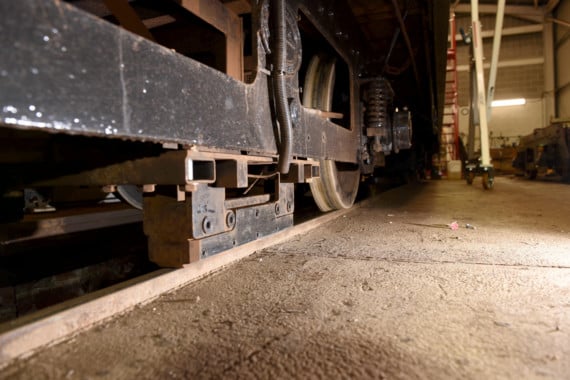
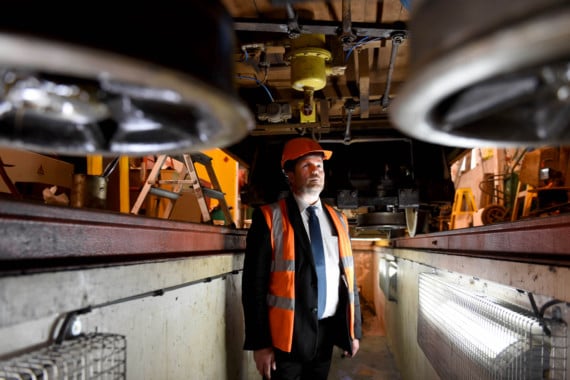
The engineering team at the line’s Laxey depot has been working flat out over recent months to fit the trams with new electro-magnetic track brakes. They have also completely revamped the existing braking systems with all new components and a number of other improvements made prior to the previous season.
It means the tramcars now have four independent braking systems - the new track brakes, the wheel brakes, the Fell brakes and rheostatic brakes.
-and-Aoife-Cogan-(right).jpeg?width=209&height=140&crop=209:145,smart&quality=75)
’They’ve got more braking systems than a Jumbo now!’ said Andy Cowie, chief engineer, as he showed the Examiner around the depot to see the improvements that have been carried out.
Passengers were told to ’brace’ by the crew, fearing a derailment, when vintage tram no.2 ran out of control 1,400m down Snaefell mountain, after its brakes failed shortly after leaving the summit on August 4, 2017.
The tram, with 48 passengers on board, reached a speed 44mph as it crossed the road at Bungalow before the motorman and guard, helped by a passenger, managed to bring it to a halt.
A Health and Safety at Work Inspectorate investigation concluded that a failed microswitch connected to the compressor pump was the initial cause of the incident.
This prevented the pressure in the system from being recharged, disabling the rheostatic brake control.
But it also found that the Fell brake components were excessively worn so they did not clamp correctly onto the sides of the line’s central rail.
And the pressure gauges in the cab were confusing, located away from the motorman’s line of sight and in different places on different trams.
An improvement notice was served on the line by the HSWI obliging it to fit ’fail to safe’ brakes on the trams before the start of the 2019 season.
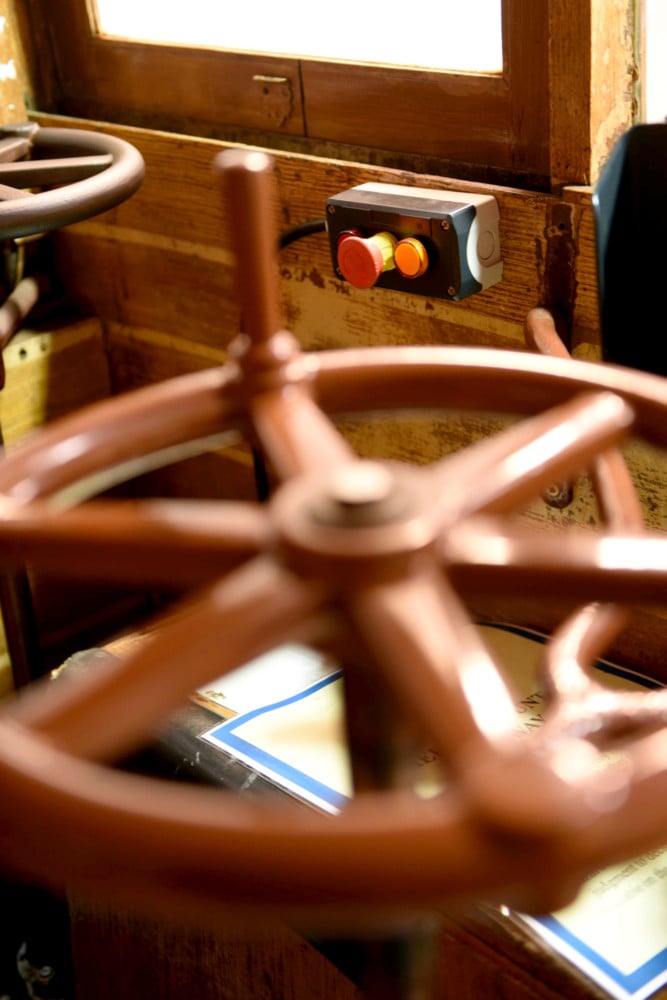
The new track brakes apply instant braking at the push of a button in the cab and they also come on automatically in the event of the failure of the electric or pressure systems.
They are powered independently with 24 Volt battery systems. Three trams have been fitted with the new track brakes so far, with a fourth - tram no.2 that was involved in the incident - waiting for the components to be delivered from Germany.
Rolling stock manager Mike Szender admitted: ’It’s been a pretty hectic few months. Very long hours have been put in by a lot of people.’
Fitting the track brakes has not been an easy task.
Although the components are relatively standard and well-established technology used on lines around the world, the difficulty was retro-fitting them to Snaefell’s unique Victorian tramcars.
Assistant rolling stock manager Mark Quayle designed a new frame to carry the track brakes.
Tolerances are tight and a lot of thought had to be put in about how to route the cabling. The first of the trams was fitted with the new system in November last year and has undergone rigorous testing over the winter.
Mr Cowie was appointed as chief engineer in November 2017 - after the runaway incident - and was previously employed by Manx Utilities and before that in the defence avionics and automotive industry in the UK. Mr Cowie explained the new track brakes are not the only change that the team has made.
All the components of the trams’ Fell brake system - named after their British inventor John Barraclough Fell, whose son George Noble Fell initially surveyed the Snaefell railway - have been replaced.
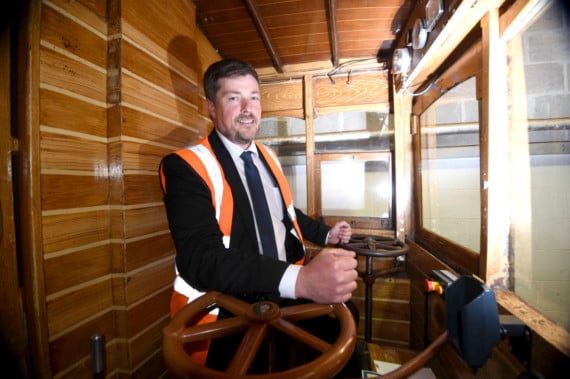
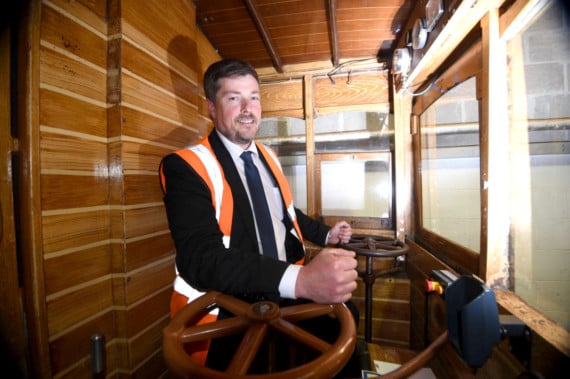
In the cab, the dash has been completely refurbished with the pressure and other gauges in clear sight. An alarm sounds if the pressure dips below 50psi, which leaves sufficient air pressure for at least two trips of the railway. At the centre of the dashboard is the red button for the new track brake.
The headlines over the runaway tram incident appear to have had no impact on the line’s popularity. Indeed, last year the line carried a record 76,434 passengers, up from 63,175 in 2017.
That popularity can be attributed in part to the themed dining specials, including the Pie in the Sky trams. The first of this season’s special events is a James Bond night this Saturday night (May 11).
While it’s mainly visitors who travel on the trams during the day, the evening specials are aimed at attracting locals to use the line.
At the Summit Restaurant and Cafe, there is a new catering firm in charge, determined to increase passenger numbers even further.
Caterleisure (Isle of Man), which also operates the cafes, restaurants and shops at Ronaldsway Airport, took over the tenancy this year on a five-year contract.
General manager Paul Lewin said: ’It’s going really well. We knew it was always going to be a quiet start until the cruise ships start and you can get all four seasons in a one day.’
Asked if the runaway tram incident had deterred passengers, he said: ’Not at all. They are positive and they enjoy the tram ride.
’We’ve had a lot of compliments. We’ve still got changes to make. We are trying to make it as warm, welcoming and informal as possible.’
He said the focus was on customer service and using Manx produce, with 25 local suppliers. Back in the depot Mr Cowie said given the record passenger numbers, the line needs to increase capacity.
A fifth tramcar is undergoing a major refurbishment and a sixth, destroyed in a previous runaway incident, fortunately while no one was on board, could yet be rebuilt.
After months of negative headlines, it looks like the only way is up for the Snaefell Mountain Railway.
Comments
This article has no comments yet. Be the first to leave a comment.