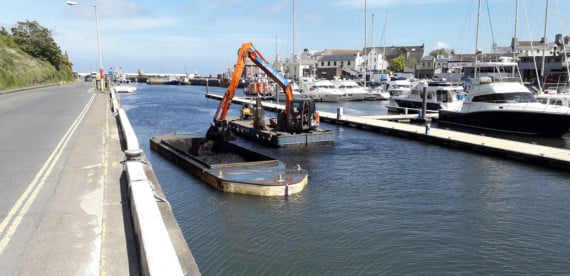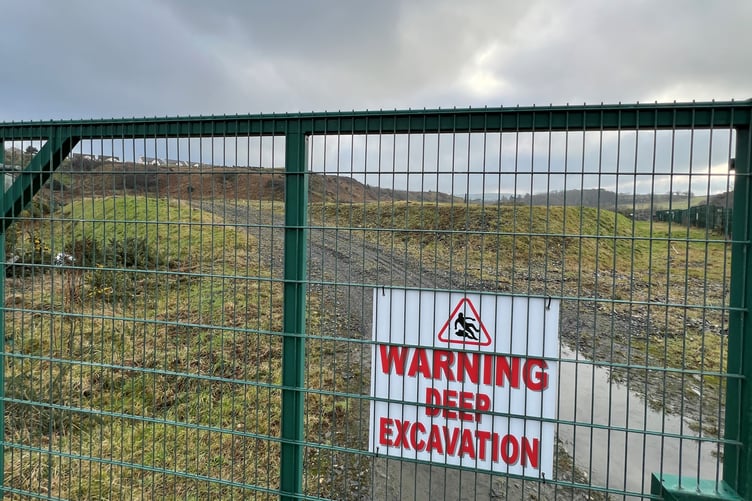
A new strategy for dealing with the disposal of silt dredged from Peel marina could take an important step forward next week.
Three proposals are being recommended for approval by the island’s planning committee which meets on Monday.
One, a retrospective application submitted back in 2022 by the Department of Infrastructure, involves turning the temporary marina silt storage site at Rockmount on the Poortown Road into a permanent facility (22/00287/B).
A second DoI application (24/00301/B), again retrospective, aims to extend to December 2027 the lifetime of the lagoon at Ballaterson Farm used for dewatering and storing the silt, together with the associated discharge pipeline along the River Neb.
-(2).jpeg?width=209&height=140&crop=209:145,smart&quality=75)
.jpeg?width=209&height=140&crop=209:145,smart&quality=75)

.jpeg?width=209&height=140&crop=209:145,smart&quality=75)
And the third, lodged by the Department of Environment, Food and Agriculture (25/90698/B), relates to the use of the former Cross Vein mine as a long-term waste management option for the disposal of the dredged material from the marina.
If approved, it would see the transportation of sediment from the Peel silt lagoon to the mine, treatment of it on- site, and subsequent remediation of the area including capping works.
The proposed development will also include the construction of a settlement pond, temporary treatment plant, work access tracks, drainage ditches, fencing and landscape works.
Periodic dredging is carried out at Peel marina because of the build-up of sediment which reduces safe depths for commercial vessels and restricts access to berths.
It was last dredged in 2020 and 2021 with approximately 23,000 m3 of sediment removed.
Chemical analysis has recorded concentrations of lead and zinc that exceed levels which would allow it to be deposed of at sea.
Planning permission for the use of Rockmount as a temporary silt storage expired in August 2020. The retrospective application sets out plans to restore the site for agricultural use or nature conservation.
Since 2019, dredged sediment has been stored in a temporary dewatering lagoon at a site which borders Peel power station and the construction site for the new sewage treatment works.
Planning consent, approved in March 2019, allowed the lagoon to be retained until March last year, by which time it was due to be decommissioned and the site restored to its original use as agricultural grazing land.
The volume of the sediment that has been de-watered in the lagoon has reduced to 16,000 m3.
No new dredged material from the marina is proposed to be disposed of at Rockmount, and DoI’s application seeks only to permanently retain the material already stored there and to implement a restoration scheme.
Cross Vein mine, known as ‘Snuff the Wind’, closed in 1881 and in recent decades the site was used by off-road motorbikes until this was banned in 2020.
DEFA’s proposal aims to treat the sediment currently stored in the Peel lagoon to make it suitable for reuse in the remediation scheme at the former mine.
It is proposed that the treated silt is used as a capping layer across 'the deads' to reduce run-off and the amount of heavy metal contaminants going into the River Neb catchment.