
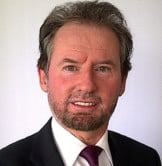
The MHK responsible for Tynwald’s last strategy on climate change this week launched a scathing attack on Environment Minister Geoffrey Boot.
Ralph Peake (Douglas North) who helped to pen the 2016-20 strategy, which targeted improved energy efficiency and a reduction in fossil fuel use in both heating and transport, hit out at a lack of action from the minister.
In Tynwald on Tuesday, Mr Boot gave a statement on climate change mitigation, but members did not have the chance to have a full debate, which they would have had if Mr Boot had tabled a motion of policy.
Mr Boot argued that a full debate would take place when he presented a new strategy, but that would only come after a consultation.
.jpg?width=209&height=140&crop=209:145,smart&quality=75)
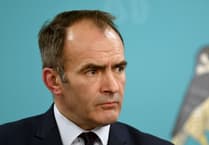
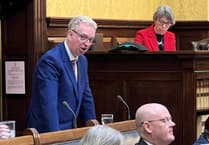

That left Mr Peake distinctly unimpressed.
’We started this process two and a half years ago. A strategy was agreed,’ he said, adding the subsequent delivery of that had not been good enough.
’When will the minister take responsibility and actually start delivering on what Tynwald asked for two years ago?’
Mr Boot’s warned if he did not get Treasury support, as well as from other government departments, or if there was not public backing for a strategy, he would find himself in a ’very isolated’ position.
But Mr Peake said that wasn’t good enough.
’He is in a better position to actually work on things and he can influence rather than trying to blame or wait for other people to say "no" to him,’ he said.
Mr Boot opted for attack as the best form of defence, saying he thought Mr Peake’s strategy had not been ambitious enough.
’We are stepping it up now.’
However, a number of other members were critical of the minister.
Chris Robertshaw (Douglas East) was accused Mr Boot of having a ’predilection for statements and questions rather than full debates’ on matters of importance.
Kate Lord-Brennan MLC said: ’It is possible to show leadership and take action without repeated consultation.’
Mr Boot argued: ’Leadership is one thing, but doing the right thing is another.’
Earlier, Mr Boot formally announced a consultation on setting ’interim targets and options’ to include in a new climate change mitigation strategy 2020-2030 - members had already been told of this at a briefing ahead of this week’s sitting.
’We must urgently do more to reduce our greenhouse gas emissions,’ the minister said.
He said many of the proposals would require government and public investment, but also greater regulation.
He argued the new strategy, although not actually unveiled in detail, showed ’clear leadership’.
’Our focus will continue to be on energy efficiency and reducing the role of fossil fuels in both property heating and transport’ he added.
’When the current gas-powered generation of electricity comes to the end of its life in the mid-2030s, we expect it to be replaced with sustainable renewable generation.’
That would see a ’step change’ in reducing emissions.
He warned: ’The Isle of Man is faced with an energy trilemma of balancing energy security, affordability and minimising the impact on environment.
’It is therefore imperative that the most cost-effective initiatives are progressed in order to limit the financial impact on Isle of Man residents.’
Later in the sitting, members approved a Department of Infrastructure report setting a target of 10,000 electric vehicles on Manx roads by 2030. A separate report from the Manx Utilities Authority, looking at moves towards more efficient use of electricity for heating, and other measures, was also supported.
Comments
This article has no comments yet. Be the first to leave a comment.