
The number of children in care homes has increased, while improvements to the fostering service are not happening fast enough.
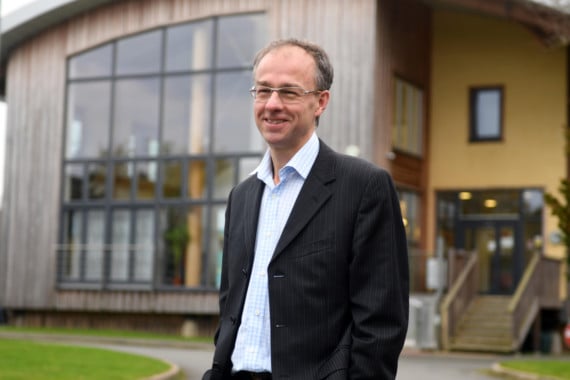
That is the message from children’s champion Tim Baker in his annual report, which details a ’strained’ relationship between foster carers and the family placement service (FPS) in the Department of Health and Social Care.
He states: ’It is now well over a year since responsibility for the service was transferred back into the department.
’It is time that the recovery phase was completed and normal service is resumed. Much work is required to deliver this.’
-(1).jpeg?width=209&height=140&crop=209:145,smart&quality=75)
.jpeg?width=209&height=140&crop=209:145,smart&quality=75)

The Ayre and Michael MHK, who was appointed children’s champion in 2018, says the current shortage of foster carers has created a situation that is ’not sustainable’.
Since his appointment, he says, the number of looked-after children in the island has ’increased steadily’.
At the end of September, it was 93, but at the start of December it was 104, the upper end of the benchmark range of 90-105, although he acknowledges the figures can fluctuate.
The proportion of those children in family placement - fostering, kinship or adoption - had dropped from a baseline of 73% down to 69% at the end of September, 6% below the target proportion of 75%. At the same time, the proportion of those children in care homes has risen from 27% to 31%, compared with a target of 25%,
’With a combination of the increased numbers of looked-after children and the rising proportion of them accommodated in care homes, the actual numbers of children in residential care has increased significantly,’ he says.
’This also includes younger children than would normally be the case, including some of primary school age who are in residential care.’
Mr Baker says this indicates the significant challenges still being experienced within the FPS, particularly a lack of fostering capacity, which falls ’well short of what would be regarded as best practice’
At the end of September, 51 out of 53 foster placements were filled, with only two available - since that time, the number of looked-after children had increased by 11.
This had forced the DHSC to make ’pragmatic short-term decisions’, relying on the goodwill of existing carers and a flexible response from charity St Christopher’s.
The government took back responsibility for fostering services, from the Isle of Man Children’s Centre, in 2018.
difficult
’It is acknowledged that this reintegration has proceeded far more slowly and has been far more difficult than the department anticipated,’ says Mr Baker.
’Expectations were built, particularly among the foster care community, when the service was transferred from the Children’s Centre.
’However these expectations have not been met to date. From an external perspective there is little tangible sign of progress.’
There had been a plethora of challenges, including high staff turnover and a new management team being put in place.
’The desire to ensure robust foundations are in place for future service provision is commendable, says Mr Baker.
’However, there have been adverse implications whilst this lengthy, and still incomplete, transition has been taking place.’
He states: ’This has compromised aspects of service delivery and is also reflected in the poor relationship between the service and foster carers.
’This relationship has been heavily strained for a long period of time. Work is underway to improve it - however it is slow.
’Trust and confidence are in very short supply.’
The situation has led to the service having to come up with short-term solutions such as temporarily increasing the number of children a carer may foster and commissioning additional residential accommodation.
Such measures are not sustainable in the long-term, Mr Baker warns, adding that normal service needs to resume early this year.
That includes recruitment of more foster carers to increase capacity - a recruitment programme is due to start this month, the report says - and a training programme.
Mr Baker concludes: ’For too long in the Isle of Man, being brought up "in care" has meant poor life chances. We must change this scenario.
’The next 12 months will be fundamental. The promises and good intentions that have been made need to be turned into tangible actions.’
His report is due to be debated in Tynwald next week.
Comments
This article has no comments yet. Be the first to leave a comment.