
Your dog’s worn out or chipped teeth could be as a result of age or rough play, but they may also be a sign that something deeper is going on related to your pet’s behaviour or physical health.
Dogs explore the world through their mouths – they chew, lick, carry, fetch and gnaw with their mouths, and natural wear and tear on teeth is to be expected.
However, stress is one of the most significant behavioural reasons for problem teeth. For example, dogs that are anxious, isolated or frustrated may chew household objects such as door frames, windowsills, walls, floors or furniture. The solution is definitely not to put a dog in a crate, not least because the chewing will be redirected onto the metal frame of the crate, putting the dog’s teeth at even greater risk of damage.
A far better way to help an anxious dog is to give them ‘tooth-friendly’ mental stimulation – puzzle toys, frozen lick-able mats, and Kongs stuffed with something tasty like cheese spread.
Tooth wear can also be a symptom of a physical pain or discomfort, and dogs may lick or chew objects because they are trying to sooth something deeper like gastrointestinal discomfort or reflux. Dogs that eat soil, rocks, sticks, plastic or fabric (basically, any non-food items) are displaying something called ‘pica’, and they are likely to be suffering some sort of intestinal problem.
Of course, worn or chipped teeth can be very painful, whether the cause is behavioural or medical. When an animal is in pain it affects every part of their life. They may become defensive around their mouth or head, for example, and avoid being touched, and they may even become uncharacteristically aggressive.
Observing a pet’s behaviours is an essential part of ownership, and every bite, chew or bark might be your dog’s way of asking for help.
And if you add in worn or broken teeth to the observations then it is likely that you will need professional advice from a vet. Vets are, understandably, very cautious when examining a dog’s mouth (‘once bitten, twice shy’), especially when a dog has problem teeth and is in pain. In such situations a vet will recommend a light sedation.
And on the basis that prevention is better than cure, an important part of responsible dog ownership is the ability for an owner to touch and gently open their pet’s mouth, and for this to be a normal, everyday occurrence. An oral examination should not be something a dog associates with a trip to the vet or discomfort.
Like humans, some dogs are more predisposed to poor oral health than others, whether this is a result of diet or genetics.
.jpeg?width=209&height=140&crop=209:145,smart&quality=75)
.jpeg?width=209&height=140&crop=209:145,smart&quality=75)


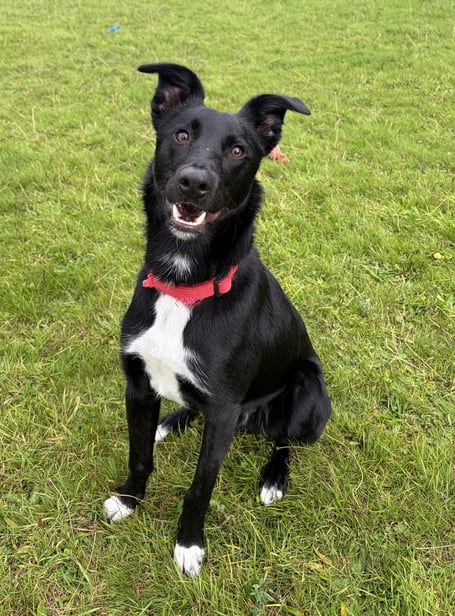
However, Border collie cross lurcher puppy, Blue, has been blessed with good ‘teeth genes’ and he has a shiny white smile to prove it. He can also be a bit ‘mouthy’ when he’s playing, but this is natural puppy exuberance and Blue absolutely adores the humans in his life.
Blue enjoys playing with other dogs when he is off-lead, and he could happily live with other dogs, but he is vocal and reactive when he’s on-lead. This is due, once again, to his age, and it will improve with consistent training in the right home.
The right home, sadly, can’t include cats or other small animals because Blue has a very strong prey drive (as you would expect from a lurcher) and he is an escape artist, and so he will need to live in a secure environment with high garden fencing. Blue is intelligent and incredibly active, and he would be an excellent candidate for dog agility classes. He simply needs to find a new owner who has the energy and time to enable Blue to reach his potential as an amazing dog.