
Over the last couple of weeks, I have looked at the Douglas Bay Horse Tramway service in its 150th year.
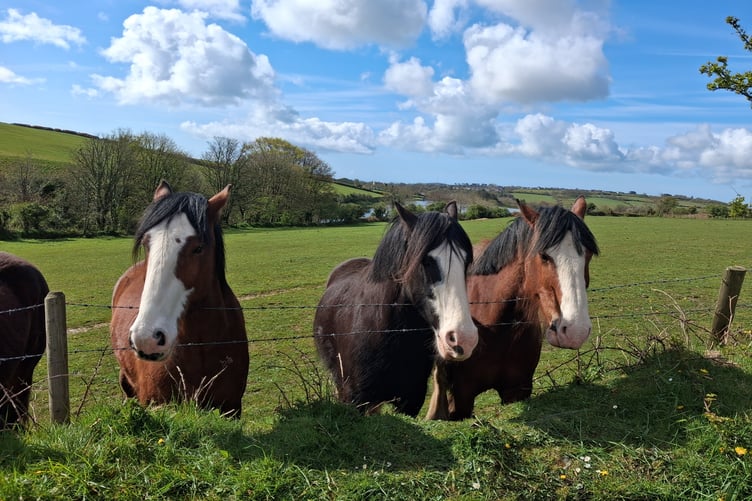
I have mentioned how I enjoy seeing the magnificent animals relaxing in fields adjacent to Clypse and Kerrowdhoo when walking around the footpaths in this scenic area.
It was really good to see the improvement works and boardwalks that have been put in place in recent times to improve accessibility to what is a combination of a working and leisure area.
Clypse is the older and upper reservoir, constructed by the Douglas Waterworks Company between 1875 and 1878, during the period when Douglas was expanding rapidly as a Victorian holiday resort and needed a much greater water supply.
It was designed by local engineer Daniel Cregeen. It is about 320 metres long, with a surface area of roughly 6.3 acres, and water from Clypse flows down into Kerrowdhoo.
Around the reservoirs are hides where you can observe birdlife without distracting them, and at the edge of the water, anglers enjoy the tranquillity of the beautiful surroundings whilst indulging their passion.
Water from Clypse flows down into Kerrowdhoo, which is the lower and larger reservoir, constructed between 1891 and 1893.
It is about 520 metres long and has a surface area of approximately 11.6 acres.
Once Kerrowdhoo was completed, Clypse effectively became the upper reservoir, feeding the new lower reservoir, and together they became an important part of the water supply for Douglas.
They are not only scenic lakes and areas of recreation; both remain operational drinking-water reservoirs, supplying raw water to the Douglas Treatment Works and ultimately serving Douglas, Onchan and parts of the south of the island.
.png?width=209&height=140&crop=209:145,smart&quality=75)
As indicated earlier, they are also popular for fly fishing, stocked with rainbow trout and wild brown trout.
They are unusual amongst Manx reservoirs because traditional fly fishing is the permitted method.
I enjoy taking my dogs Rosie and Ted around the various walking routes in the area, and another rather special feature is that the area includes an officially recognised Dark Sky Discovery Site.
Because the area is relatively open and away from much of the lighting of Douglas, it can be an excellent place, amongst others across the island, for looking at the Manx night sky.
During the working lives of the tram horses, they spend their winter and training periods in the fields. I often stand by one of the gates if I see horses in the fields and try to encourage them up to say hello.
Usually, one will walk up whilst others look on, and when they realise all is safe, two, three or more will clip-clop up in style and put their nostrils towards you out of interest and curiosity.
The young tram horses, usually around four years of age, learn the basics of pulling light loads. As they become confident, they move to the stables and eventually train in Douglas, including getting accustomed to the sights and sounds of the Promenade.
But, as stated earlier, it’s not only training.
When the tram season finishes, the horses enjoy a relaxed existence in this beautiful location. The giant Shires and Clydesdales are a sight to behold as they run together and play.
There was a lovely story about one Clydesdale, Douglas, who worked for the trams for about 20 years. Before his final retirement to the Home of Rest, he would graze with the younger horses in the fields.
Another story relates to Elodie, a Clydesdale-Shire cross born at Maughold in 2017.
Before she became a working tram horse in 2024, her training included long-reining in the fields, followed by pulling a sledge along Douglas Beach.
Eventually, she graduated to pulling a tram with passengers.
The Tramway has used several areas of grazing land around Onchan, and in a tribute to long-serving tramway worker Michael Crellin, it was noted that from 2018 he was farm manager, responsible for the Clypse and Honey Hill grazing fields.
Moving on, a tram horse’s working life is limited, with each horse completing only two return trips each day and working an absolute maximum of around two hours each day - much less than used to be the case.
They have plenty of time for feeding, grooming and rest, and additional horses are kept on standby, particularly during busy periods.
Their average working life is around 15 years, and then, when they retire, they can spend the rest of their natural lives at the Home of Rest for Old Horses at Bulrhenny, off Richmond Hill.
That makes the Home particularly important in preserving the human story of the horse trams.
When you see an old photograph of a huge Shire or Clydesdale pulling a tram along Douglas Promenade, there is a very good chance that animals like those would have eventually ended their days at Bulrhenny.
Today, the Home occupies around 93 acres of Manx countryside. It is a completely different environment from the busy Promenade.
Instead, the beautiful animals can spend their days grazing, wandering between fields, being groomed, being fed and enjoying the company of other horses.
The stated purpose of the charity is to provide a peaceful home for the rest of the natural lives of old or injured horses, ponies and donkeys.
Although the Douglas tram horses are perhaps the most famous residents, as stated, the Home is not exclusively for them.
Over the decades, more than 300 equines have found retirement there, including those described above, as well as injured animals and animals whose owners can no longer care for them.
Today, on average, care is provided for more than 60 horses and donkeys.
When Bulrhenny first opened, people would see the gates opened and stop to look at the horses.
Mildred Royston was very happy to show visitors around and explain what they were doing. Soon, they began offering visitors a cup of tea and a scone for a small charge.
Those humble teas gradually developed into the visitor facilities that exist today, including a coffee shop, gift shop and museum.
At Christmas, a visit to a spectacular Winter Wonderland is a must.
The museum relates to the history of the Home and the working horses it has cared for.
For anyone interested in old Douglas, farming, transport or the horse trams, it is particularly worthwhile because it preserves a side of Manx history that could easily have been forgotten.
The current charity information says visitors can meet and feed the horses, with feed available from the gift shop.
In 1950, two Manx women looked at what happened to horses when their much harder-working lives ended and said, essentially, ‘Enough is enough’.
The Home they created is such a perfect place in retirement for our equine friends, and 76 years after Mildred Royston and May Kermode began their work, the Home is still doing exactly what they intended … ‘Thank you, ladies!’
The first horse was Molly, who retired there at the age of 25, followed by Daisy, Bunny and others in the 1950s.
The nicest thing is that the horse doesn’t disappear when it can no longer work.
The Douglas Tramway’s relationship with the Home of Rest means that these magnificent animals can retire with dignity.
A special place, the initiative of two special Manx women, providing for special, much-loved animals; an instantly recognised and authentic part of Manx heritage and history…I must visit again sometime soon! How about you?