
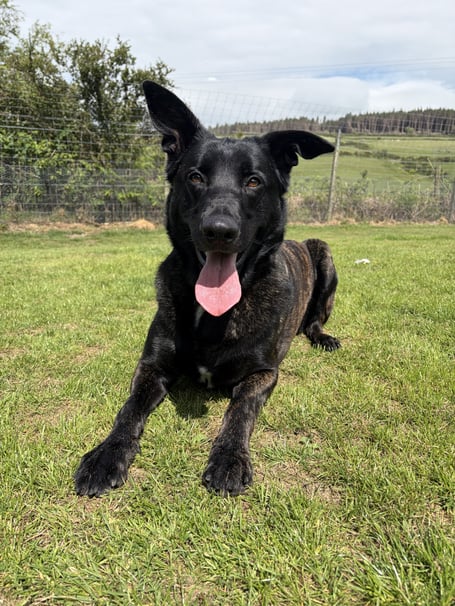
We have several large breed rescue dogs in our care at the moment (dogs such as Dutch shepherd Achilles) and owners of similarly sized dogs, particularly ones with a deep chest, should read on because this article could save their dog’s life.
Large dogs (both male and female, weighing more than 40kg) are particularly susceptible to a condition called bloat, or gastric dilation volvulus (GDV).
GDV causes a dog’s stomach to fill with gas, overstretch and then twist. The dog’s stomach rotates from 90 degrees to 360 degrees in a clockwise fashion, displacing a part of the stomach called the pylorus which, in turn, entraps the duodenum (part of the small intestine).
Aswell as a distended stomach, which is painful to the touch, common symptoms of GDV include pale gums, excessive drooling, frothing at the mouth, an increased respiratory rate, and a decreased appetite. A dog may also collapse.
As with severe colic in horses, or bloat in sheep, GDV is often fatal if not treated within a few hours.
A vet will take x-rays and an electrocardiogram to assess the severity of the condition, with a view to performing surgery if the problem has been caught in time and the dog is deemed likely to survive the procedure.
The surgery involves untwisting the stomach, removing parts of it if necessary, and then permanently stitching it to the abdominal wall (a gastropexy).
This should prevent rotation if subsequent gas build-up occurs. For dogs who are at high-risk of GDV, vets are now offering to perform this procedure at the same time as neutering them.
So what causes GDV? It can occur as a result of exercising too soon after eating, eating too quickly, gulping down a large quantity of water, or as a result of stress or fear.
It can occur in any dog, but the larger breeds are much more susceptible. In a recent study the top three breeds found to be at risk were the great Dane, the St Bernard and the Weimaraner, with German shepherds, Dobermans and setters also in the mix.
.png?width=209&height=140&crop=209:145,smart&quality=75)
Studies have shown that the risk of GDV increases with age and is five times more likely to occur in pure bred dogs than in crossbreeds.
To lessen the chances of GDV an owner should feed their dog two or three smaller meals a day rather than one large daily meal. They should not exercise their dog straight after feeding, and they should wait at least an hour after a meal before doing any vigorous physical activity with their dog. Ideally a dog should be exercised before a meal.
Achilles is in the GDV ‘at risk’ category, but he is fit and healthy, and only three years old.
He came to us because he can be boisterous, and he simply had too much energy for his previous owners to cope with whilst their young family was growing.
Like all shepherds, he guards the people he loves and is protective of his home. He also seems to have a bit of a problem with men he doesn’t know, and so he needs extra ‘safeguards’ around post men!
He is incredibly smart and enjoys learning new games, and so his new owners will need to enjoy being with a dog who thrives on engagement and interaction.
His future training should focus on his recall skills so that, in due course, he can be walked safely off-lead. Achilles is happy around other dogs, and would probably benefit from a canine companion in his new home, but cats are a ‘no’.
When Achilles first came to us he weighed 57kg, and he was clinically overweight and more at risk of GDV.
But he’s been on a diet for several weeks and is dropping the kilos, and now he’s a much trimmer 45kg. His new owners will need to continue with a healthy and balanced feeding regime, so that he can maintain the body condition needed for a long and healthy life, succumbing neither to GDV nor hip dysplasia.