
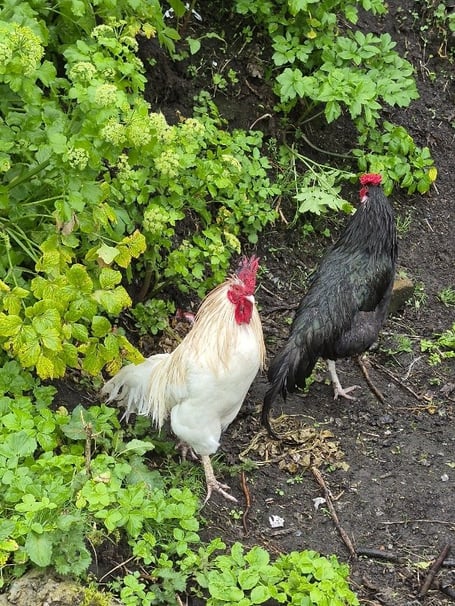
It’s happening all over the island – unwanted cockerels are regularly being dumped, and left to fend for themselves.
The white cockerel in the photograph, who lives in a well-known ‘dumping ground’ on the outskirts of Peel, was viciously attacked by a group of young, newly arrived black cockerels who ripped off part of his comb. He was covered in blood but, unlike many older birds, he has lived to fight another day.
Dumping cockerels (or any poultry, for that matter) is immoral, and it’s also illegal.
It is classed as the offence of ‘abandonment’ under The Cruelty to Animals Act 1997 and carries the risk of a custodial sentence or a fine of up to £5,000.
.jpeg?width=209&height=140&crop=209:145,smart&quality=75)

The Manx Society for the Prevention of Cruelty to Animals simply can’t rehome cockerels.
If we’re lucky we get one or two people a year who will take a couple to add to their flock.
We’re doing what we can, but the problem needs to be tackled at source.
Which means that if you have hens and a cockerel, and you don’t routinely find and collect all the hens’ eggs, you will end up with a problem. Nature being nature, the odds are that the resultant chicks will be 50% male.
Having a small flock of hens in your back garden is incredibly rewarding, particularly if they are good layers and produce lots of eggs.
But the birds need daily care and expert husbandry, and they can’t be left to fend for themselves – not even for a couple of days.
If you’re seriously thinking about getting some hens, please make sure you’ll have the time and energy to care for them properly.
The British Hen Welfare Trust has an excellent website that gives lots of advice to anyone who may be considering hen keeping.
The hen coop can be a purpose-built shelter or a re-purposed garden shed with added nest boxes and perches.
It needs to be suitably sized, with a large outdoor area that is fenced off and secure. Hens will destroy neat flower beds and lawns with their digging, scratching and mud bathing, and so be prepared.
They need a fresh, daily supply of specialist poultry grain, alongside clean water and grit, to supplement the seeds and insects that they find in the garden.
The most important part of their daily regime is their bedtime, when they need to be locked safely in their coop to protect them from predators.
In the island the biggest threat to hens are pole cats and rats, with the latter attracted both by the hens themselves and the food they don’t eat.
To keep long tails at bay, and for the general health of your flock, the coop requires daily ‘poo-picking’ and the removal of old food; and a thorough deep clean every couple of weeks to deter red mites and infectious diseases such as salmonella.
Observing your flock on a daily basis is hugely enjoyable because hens are so active and engaging, but it’s also important because you can spot any illness in the flock or irregular behaviour.
The pecking order sometime means that birds at the bottom are bullied and feather-pecked (or worse), and kept away from food.
The bully needs to be removed to a separate area for a period of time in the hope that the pecking order ‘re-sets’ itself.
Purchasing free-range eggs from a shop may simply be the best and easiest alternative to keeping your own hens.
But did you know that eating white eggs is also a way of ensuring that the birds’ welfare is prioritised?
This is because white eggs are generally produced by white feathered hens, and brown eggs by brown feathered ones; and white birds are usually more docile.
This means that there is less need to trim their beaks because they are not as prone to pecking at each other.
And the British Hen Welfare Trust is also urging us all to purchase smaller eggs because larger ones can cause health problems for hens.
Laying smaller eggs is less stressful for the hen, and reduces the chances of her having a prolapse. So, when buying your eggs think local, free-range, white and small.