
In the Chinese zodiac 2026 is the year of the horse – specifically, it’s the year of the fire horse, when the usual horse attributes of strength and speed are united with more exotic ‘powers’ such as passion and volatility.
This somewhat romanticised view of the horse is one of the reasons why horse racing is such a popular, and lucrative, sport – one that contributes an estimated four billion pounds to the UK economy annually.
But at what cost? The deaths of four horses at the Cheltenham Festival earlier this month have put the spotlight back on the ethics of horse racing, and the welfare of the animals involved.
Three of the horses were euthanised having sustained injuries on the track, but the death of 12-year-old ‘racing legend’ Envoi Allen was particularly tragic, not least because he collapsed just after the end of the Gold Cup race (having finished ninth) and died of suspected heart failure in front of thousands of spectators. He was due to retire after that race.


.jpeg?width=209&height=140&crop=209:145,smart&quality=75)
.jpeg?width=209&height=140&crop=209:145,smart&quality=75)
On the one hand, the Jockey Club says that data shows the rate of fallers in horse races has declined in all of the last 21 years, and is now just 1.98% of runners; and the fatal injury rate in 2025 was 0.22% out of 86,300 runners.
It adds that recent improvements include the changing of marker flags on jumps from orange to white, following research into equine vision; a change to padded hurdles; and the introduction of a detailed review process within 48 hours of every fatality on a racecourse.
On the other hand, the RSPCA has renewed calls for improved racehorse welfare standards, highlighting that 24 horses have died in competitive racing in the UK this year alone.
Running conditions could be improved in various ways: limiting the number of horses in a race; making bends as long as possible (so that horses are less likely to make contact with each other round a sharp turn); and placing further restrictions on the use of the whip.
But it’s not just running conditions that need to be improved. What goes on off the track is, arguably, more important than what happens on it.
The horses who race successfully usually enjoy a very high standard of care, and they are treated like elite athletes with the best nutrition and plenty of exercise.
But these thoroughbred horses have almost always been raced as two-year-olds, whereas a ‘normal’ ridden horse is not usually backed until they are three or four years old.
Horseracing enthusiasts insist that early ridden work improves a young horse’s bone density and strength, whereas most vets would argue that stress fractures are much more likely to occur in bones that are still developing.
But it’s a racehorse’s back that causes most health issues, because the last bones to fuse are in the vertebral column.
A painful condition called ‘kissing spines’ is commonly seen in thoroughbreds because they are trained under saddle before their musculoskeletal system has had enough time to develop to handle the weight of a rider.
And what happens to ‘failed’ racehorses? Or horses that have reached the end of their racing careers? Some mares will be selected for breeding, but the amount of horse ‘wastage’ amounts to thousands of animals every year.
The racing industry needs to take far more responsibility for this, and allocate a much bigger percentage of the billions of pounds it generates to the retraining and rehabilitation of racehorses.
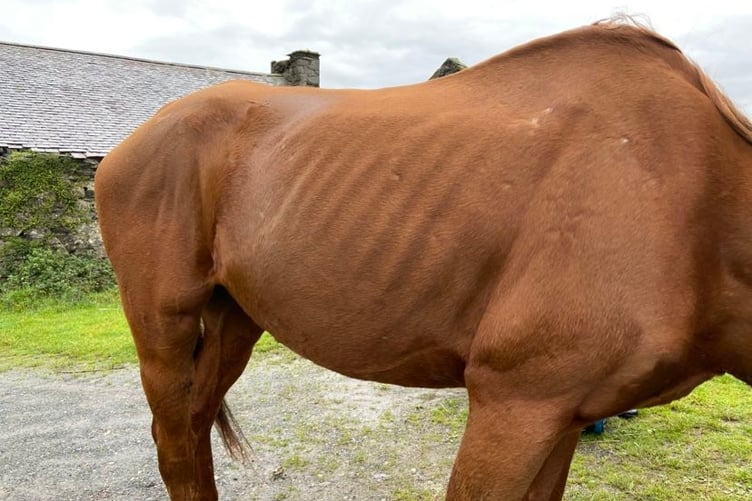
You may remember that we were looking to find a new owner for a beautiful ex-racehorse called Cassie last year, once her foster carer had brought her back to good health.
It wasn’t easy, but she is now settled in a knowledgeable home surrounded by other thoroughbreds.
Cassie raced 16 times as Caesonia, and placed on six of those occasions, but was sold shortly after her last race at Kempton Park in 2022.
Her trainer wanted her ‘off his books’ and did not undertake the ‘due diligence’ he should have done to make sure he sold her to an appropriate ex-racer home.
She was brought to the island and when we rescued her eight months later she had abscess in all four feet and was emaciated. The Sport of Kings did not serve her well.