

Tackling government bloat is a regular theme of Manx election campaigns.
But successful candidates soon discover it is one manifesto pledge that is easier said than done.
One former UK cabinet minister can claim to have actually delivered on promised reforms.
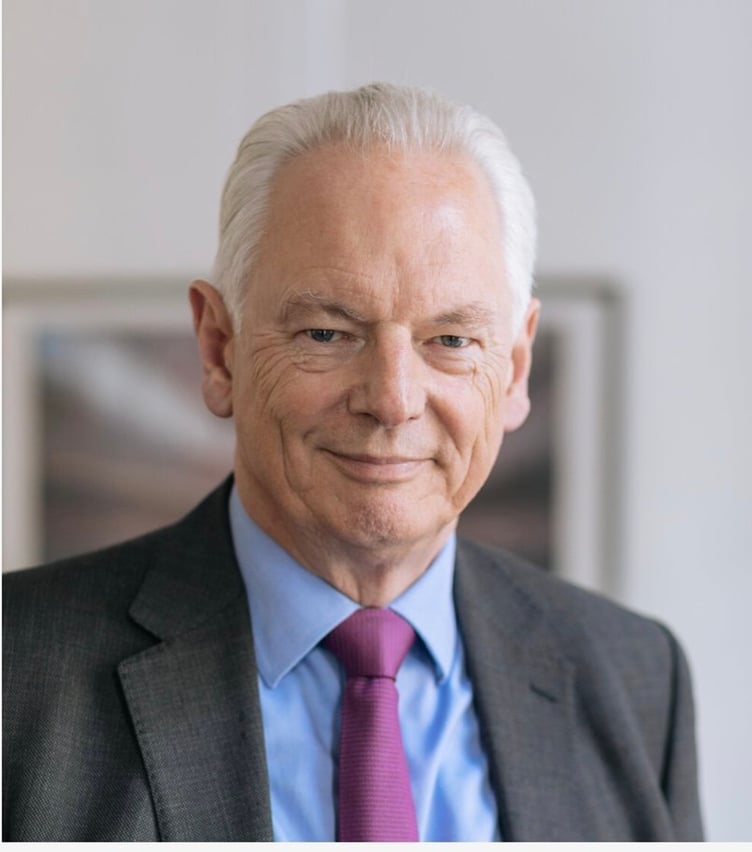
Francis Maude managed to shave billions of pounds off government running costs during his time in the Coalition government between 2010 and 2015.
And he has offered to visit the island to provide advice to the incoming government on how to reduce the size and cost of government.
As Minister for the Cabinet Office under the Tory-Lib Dem coalition, he set up the Efficiency and Reform Group (ERG) in 2010 with the aim of making government more efficient and reducing its running costs.
Explaining the challenges he faced in 2010, Lord Maude said: ‘We were running out of money.
‘The departing chief secretary to the Treasury, basically the Budget Minister, left a note for his successor saying, “I'm afraid there is no money”.
‘And my God, he was right. We had a budget deficit of something in the region of 11% of GDP, so we needed a massive fiscal consolidation programme.
‘We had to raise taxes, we had to pare back welfare spending, we had to cut back on some programmes.

.jpeg?width=209&height=140&crop=209:145,smart&quality=75)
.jpeg?width=209&height=140&crop=209:145,smart&quality=75)
‘But we also did something which very few governments have done, which is to have a serious and effective efficiency drive on the running costs of government, and that's what I led.’
Over the space of five years, the ERG saved a cumulative £52bn from the running costs of central government.
Whitehall was downsized by around 21%, procurement was reformed, legacy contracts renegotiated to get better value, the government estate rationalised and the monitoring of major projects significantly improved.
The ERG created gov.uk, the world's first single government portal, which replaced nearly 2,000 government websites with a single one.
Lord Maude said: ‘We had a big digital transformation programme where we went from being the government with the most expensive IT in the world to the UN ranking us as the best for e-government in the world.
‘That saved a lot of money as well as improving the quality of the service.
‘Most governments have scope to do these things, but very few of them actually do it.’
Lord Maude said that unless governments actively seek to reduce the size and scale of bureaucracy, it will get bigger - likening it to a jungle that needs constantly cutting back.
He said: ‘The jungle grows back very quickly.
‘In Whitehall, I oversaw a downsizing of some 21% like-for-like in the space of five years. It plateaued for a year after I left, and then it went up, and the angle of increase was exactly the same as the angle of decrease in my time.
‘And there was no cabinet meeting where the cabinet said “yes, what we really want is a bigger civil service”. It just incrementally grew.
‘You have to keep trimming - and that's what serious businesses do. They don't say “we've now reached peak efficiency, we can sit back”.’
In the Isle of Man, the government headcount is just under 8,000 - nearly 20% of the working population.
Government spending is budgeted at around £1.47bn in the current year, of which more than £600m goes on wages, including employer pension and NI contributions. This is for an island with a population of 85,000.
Successive Manx administrations may have identified similar options for making savings and efficiencies, but Lord Maude said reforms have to be driven from the centre.
He said: ‘I was Minister for the Cabinet Office at the centre of government, physically next door to 10 Downing Street, and with the full backing of the Prime Minister.
‘I was myself a senior figure in politics. I've been around for a long time. I was experienced, and I knew this was going to be my last role in government. I didn't mind who I annoyed along the way.
‘You have to make these things happen. They don't happen spontaneously, and the governance around it is absolutely crucial.’
So what opposition did he face?
‘Not a huge amount really,’ he said.
‘I mean a lot of civil servants really liked it.
‘They may not have welcomed every single thing we did, but the fact that we were doing things that made their lives easier, like improving the quality of the technology they were using, was pretty popular.
‘We had a very open dialogue with the leadership of the key unions. We were doing some quite difficult things because of the fiscal crisis. We started off with a pay freeze for the first three years or so.
‘We reformed the civil service redundancy scheme, which was absurdly overgenerous. We reformed public sector pensions to make them more affordable. They were still very generous.
‘At the same time, we were downsizing the civil service, and everyone assumed morale in the civil service would go through the floor, but it didn't. If anything, it slightly improved.
‘I remember one civil servant at a public event I was speaking at, saying “There's so much bureaucracy in the way we work that it makes my life harder. I just want to do the thing I'm paid to do”.
‘There are ways of doing this that engage with people and tap into frustrations that civil servants themselves have.
‘We had some voluntary redundancy schemes. We had a recruitment freeze.
‘In my own department, I had a rule that whenever any vacancy cropped up, whether someone's promoted, moves job, retires, whatever, that vacancy doesn't get filled unless I personally approved it.
‘That was a good discipline, because it meant I saw what was going on.
‘Why do you need to fill that vacancy? Is there a way of doing this differently?
‘After we'd downsized by 21% the civil service wasn't doing any less than it had been. If anything, it was doing rather more and much more efficiently and much more productively.’
Lord Maude said the ERG team had prepared carefully, with many of its ideas coming from business.
‘The one thing we did that was very innovative was in digital. We were ahead of the curve.’
He said there had been a tendency for people to claim AI was going to solve everything.
But he said: ‘AI won't solve anything unless the government gets the basics right and has the will to follow it through.’
Since leaving government 10 years ago, Lord Maude has been working with other administrations across the world to help them improve their financial performance.
And he has offered to provide advice to the next Council of Ministers.
He said: ‘After the election. If the incoming government wanted to talk about some of this, I'd be happy to hop over to the island and have a chat.’
Although Lord Maude comes from the right of centre of British politics, the Thatcherite former Tory MP insisted: ‘There's no politics in this at all. This is about just doing things well.
‘When the Labour government came in two years ago in the UK, a number of Ministers reached out to me specifically to ask advice.’