
A court this week heard evidence against a man accused of driving on closed roads during the Festival of Motoring practices in the summer.
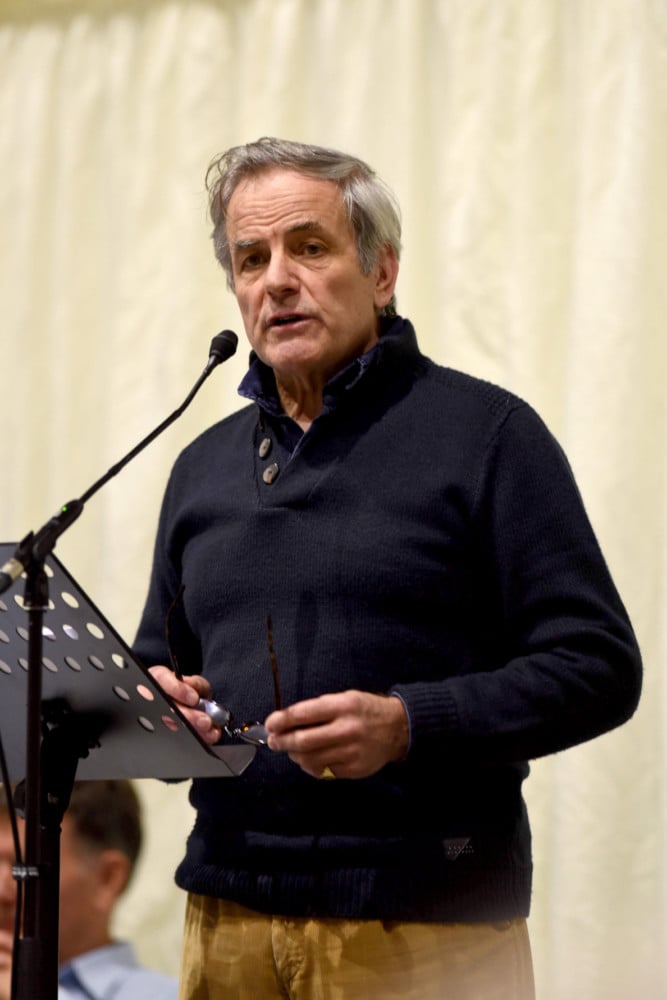
The trial of Robin Bromley-Martin, aged 67, of St Jude’s, began on Monday.
The offence is alleged to have been committed on August 20 at the junction of Ballacrye Road and the main road, which is part of the TT course, and near the Curraghs Wildlife Park in Ballaugh.
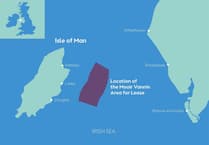
Prosecuting advocate Rachael Braidwood questioned the witnesses on behalf of the Crown while Jim Travers is defending Mr Bromley-Martin, who is one of the businessmen behind the £100m Ramsey Marina project to develop a 400-berth marina, an extended breakwater, a five-star hotel, piazza with bars and restaurants, and housing scheme between the south harbour wall and Queen’s Pier.
.jpeg?width=209&height=140&crop=209:145,smart&quality=75)
On Monday, evidence was heard from clerk of the course Gary Thompson and marshals David Parker, Jonathan Yardley, Russell Lee and Ashley Bates.
Mr Thompson told the court that normal procedure is for vehicles still on the road after the closure time to be asked to leave the course at the next available turn off point. On August 20 the roads closed at 6pm but no practices took place due to the weather.
Mr Travers asked Mr Thompson: ’At 6pm isn’t it virtually a given that certain members of the public will still be on the course?’ to which Mr Thompson said: ’Yes.’
A radio conversation was played in which marshals said that Mr Bromley-Martin had driven past Ballacrye Road on the main road before the barriers had been put in place. They subsequently sent a message for him to be pulled off the course at the Wildlife Park.
However, Mr Bates, who was on duty there, said that he waved a red flag at Mr Bromley-Martin and pointed for him to turn into the car park, but instead he performed a U-turn and went back in the direction of Ballacrye Road as Mr Bates shouted: ’No no no no’ at him.
Mr Yardley, who was on duty at the Ballacrye Road and main road junction, said that Mr Bromley-Martin had then driven towards him at speed before braking and turning off the road to go onto Ballacrye Road without stopping when Mr Lee removed barriers to make space for him.
The radio transmission from Mr Bromley-Martin first going through the junction to him exiting the course lasted one minute and 27 seconds.
Mr Travers queried the fact that Mr Bates said he was waving the flag in a figure of eight motion, saying that it could have been construed by someone not familiar with the flag procedures as signalling for him to make a U-turn.
He also queried why Mr Yardley, at the end of the radio transmission, was heard to say: ’He’s now turned off going down Ballacrye Road so no worries,’ and had not mentioned the car coming at him at speed.
Mr Yardley said that it was not something he considered professional to communicate over the radio.
On Tuesday, evidence was heard from police inspector Karl Breadner, the head of communications at the Department of Home Affairs, Mark Bradley, and the officer in charge of the case, Constable Mark Hempsall.
Constable Hempsall said that Mr Bromley-Martin had ignored him when he told him he was under arrest at his home and tried to walk away from him.
Mr Travers said that a police post on Facebook stating that the roads were now closed had not gone up until 6.15pm.
The trial had been scheduled to last two days and was expected to end on Tuesday.
However, by the end of Tuesday’s session, proceedings had not reached their conclusion so the case was adjourned by Deputy High Bailiff Louise Byrne until 10am on Monday, January 27.