

Parents are suffering from a serious lack of nursery provision for children aged up to two.
Some of the problems in this area can be traced back to the 2012 decision to axe pre-schools.
Education Minister Graham Cregeen said his department was still dealing with effects of the previous administration’s controversial decision to close the 11 state-run pre-schools in 2012 when Peter Karran was the minister.
’We are now trying to catch up from a very rushed and ill-thought-out policy,’ he admitted when he was quizzed by Tynwald’s social affairs policy review committee.
.jpg?width=209&height=140&crop=209:145,smart&quality=75)
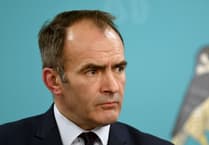


Education chiefs have now teamed up with other government departments to try to solve the problem, amid fears the lack of places is having an economic impact because it is preventing some parents from returning to work.
The Tynwald committee heard that a joined-up early years strategy was being worked on, alongside the Education Bill - but also an admission that new legislation was behind schedule.
Mr Cregeen said the Education Bill would aim to address some of the issues, but the department still needed to obtain more information. He said the bill should have been brought in under the last administration but was not prioritised.
Work had already begun to draw up a more effective strategy, he added.
’In the last year all the departments are working better together, he said. ’We are working up this strategy. It is a positive measure.’
Chrissy Callaghan, the Department of Education, Sport and Culture’s improvement adviser for early years, said a survey had been carried out to find out the views of parents on early years provision.
There were currently 1,577 child day care places available in the island, she said, but that figure would reduce to 1,497, with the decision of Isle of Man Children’s Centre to close two nurseries.
Twelve providers, with a maximum of 126 places, had provision for children under two.
The survey revealed that only 3% of parents of children up to the age of two found it very easy to find provision and 15% fairly easy. At the other end, 26% found it fairly difficult and 42% found it very difficult.
By contrast, in the three to four years range, 47% of parents found it fairly easy to find provision and 21% found it very easy, with only 3% finding it very difficult.
’What we are seeing is the younger the age of the child, the harder it is to find the provision,’ said Mrs Callaghan. ’Also, there is a lack of provision out there for those children, particularly in the 0-2 age band.’
The main reasons were due to a lack of spaces and also the cost of paying for any provision.
There had been a hope that the pre-school voucher scheme, introduced to assist parents of three and four-year-olds after the closure of the state pre-schools, might have had a knock-on effect in assisting parents to meet the costs of provision for younger siblings, as well as help them to find that provision, but it had not had appeared to have done so to any great effect.
The voucher scheme offers a universal credit of £1,700 per school year, to help meet the cost of pre-school provision. It is available for the parents of a child who has their fourth birthday in that year.
Committee chairman David Cretney MLC said feedback from providers suggested a major cost issue was staffing, particularly with the rules stipulating how many children are allowed per child.
There should be one staff member to three children for those aged up to two - reducing to one to two if the provision is not on the ground floor. The ratio increases to one to eight for the older age groups in nursery.
Mrs Callaghan said the department would remain strongly against the relaxation of any ratios in terms of the number of children per carer.
’It is about safety of children and adequacy of care,’ she said.
Dudley Butt, the former MLC who quit the Department of Education and Children over the pre-school decision, said he was not surprised at the problems being encountered in other areas. While he believes the nursery market for children up to two was one for the private sector, market forces influenced by the pre-school situation could have affected the younger age groups.
’It was forecast that any reduction of pre-school education would disadvantage children and it is turning out to be the case,’ he said. ’The best way to have done it would have been to gradually expand pre-school education.’
He still advocates pre-school education being brought back within the state, or at least regulated by the Department of Education, Sport and Culture, to make sure every provider is regulated to the highest educational standard.
Former education minister Peter Karran has insisted he has no regrets on the decision to close state-run pre-schools in 2012.
The former Onchan MHK said that if the government of the day had followed through with the voucher scheme he wanted in place, it would have improved things for a larger number of children.
’The only regret I have was that I was naïve enough to think we could work together as a team in with the Council of Ministers in bringing about changes that needed to be done,’ he said.
Responding to the criticism made of the decision to close the 11 state-run pre-schools, Mr Karran argued that at the time, the information he was given was that only 40% of the children in the three-four-year age range could access that provision.
In addition, a number of schools needed extra provision to support pupils who had English as an additional language.
He also argued that it was impractical for working parents, anyway, as pre-school sessions were for two-and-a-half hours.
’A mother working full-time couldn’t do it,’ he said. ’It was alright for people who didn’t work.’
He added: ’There was no prospect of actually getting a pre-school facility into the most deprived areas in the island, which was important.’
He said that the main problem in the aftermath occurred because the voucher scheme that was brought in initially was not generous enough and, for that, he blamed the Council of Ministers.
’We had agreed a more generous scheme than what came in,’ he said.
’At the end of the day, the government was more interested in trying to compromise than actually address the issue.
’If they would have followed through on what was promised and done what they were supposed to do - and weren’t more interested in having a swipe at me - there would have been much improved access to pre-school facilities.’
He said the voucher scheme he wanted to introduce was blocked because of ’petty politics’.
Mr Karran, who founded the Liberal Vannin Party, said Allan Bell’s administration effectively set him up for a fall, just as Howard Quayle had done with his successor at the helm of the party, Kate Beecroft, who was forced to resign as health minister.
’At the end of the day, the government was more interested in trying to compromise than actually addressing the issue,’ said Mr Karran.
’They have just done the same with Kate.’
Mr Karran, who was sacked as education minister for opposing government policy on investing in Pinewood Studios, said that, despite being a ’proud leftie’, he had to recognise, both then and now, that sometimes it was better to turn to the private sector to provide services.
Comments
This article has no comments yet. Be the first to leave a comment.