

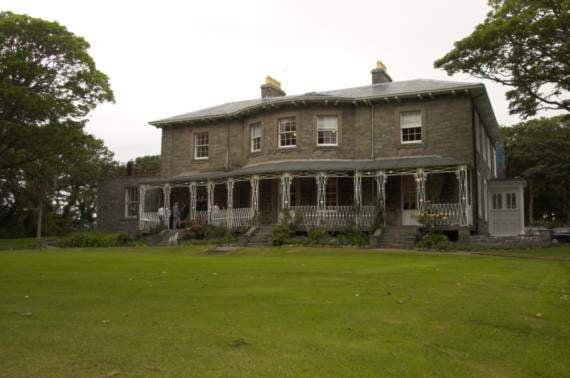
Plans for Castletown’s landmark building, Lorne House, to be used as an educational/visitor centre have been approved by planners.
The Georgian house, built in 1828, was once home to the Lieutenant Governor.
The proposal (17/00685/C) by Roy and Sue Tilleard provoked a number of objections from residents living nearby concerned principally about the increase in traffic and impact on the tranquillity of the area.
One objector, who has lived on the promenade for 53 years, said they found the plan ’thoroughly distasteful’ given that Mr Tilleard’s Callow’s Yard development had ’completely ruined’ the centre of the town.



They were not granted interested party status, and neither was a supporter of the plan, who hopes to hold his wedding reception there.
The Department of Infrastructure’s highways division was worried that it would ’significantly increase’ traffic and requested a traffic statement on access and the junction of the property’s driveway with Douglas Street.
Cornerstone Architects, on behalf of Mr and Mrs Tilleard, said public access will be restricted to normal daytime hours except when functions are held.
Noise is ’unlikely to exceed that of a normal domestic enjoyment’, they said.
They pointed out that businesses employing more than 20 people operated from there until 2012.
There had also been functions with more than 150 visitors and car parking has never been an issue, they said.
Castletown Commissioners supported the plan and said this is a ’significant’ building in the history of the town and bringing it back into public use ’should be applauded’.
Planners weighed up whether the proposed change of use ’would have any adverse impact on the character and importance of the building itself along with its setting, taking into account the acknowledged importance of the building and its Registered status.’
They also considered whether the site could accommodate the respective change in traffic and parking levels and whether the proposed use would have any adverse impact on those in neighbouring property.
Supporting the application, they concluded: ’The site can accommodate at least 20 spaces and as the arch (on the driveway) prevents coaches from entering all of the site.
’It is certainly the case that the amount of traffic generated by the proposed use, would, in total be less than that if the building remained as an office which is a previous lawful use.
’It is also the case that if there is insufficient parking space within the site - and it is not accepted that this is the case - those visiting the site for a limited time are more likely to park outside of the site than someone coming to the site on a regular and frequent basis.
’This will result in less impact on those living near to the site.’
They said vehicles coming into the site are unlikely to enter and leave at the same time.
Planners acknowledged ’it is important where buildings are identified as of architectural or historical importance, that uses may be found for them that generate income to support their future maintenance.’
They added: ’The fact that one of the objectors recalls visiting the site to dance, reflects the fact that one of its former uses was to accommodate visitors for various functions.’
Comments
This article has no comments yet. Be the first to leave a comment.