.JPG?width=94&height=94&crop=1:1,smart&quality=75)


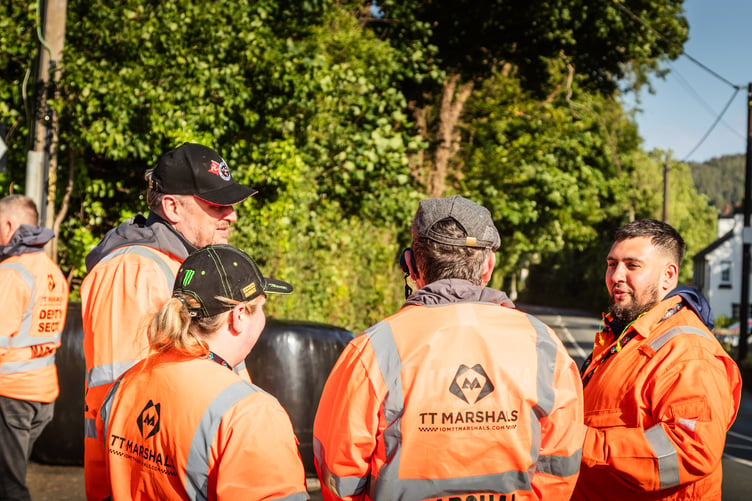
Around 50 more marshals are still needed for this year’s Manx Grand Prix, with organisers warning that numbers remain ‘very tight’ despite being three per cent higher than at the same point last year.
A minimum of 582 marshals are needed every day to run the event, according to TT Marshals chairman Andy Priestley.
Mr Priestley said the current numbers are below the requirement for Sunday, although Monday and Tuesday are ‘looking better’.
‘We are actually three per cent up from where we were at this point last year, but we're still very tight on numbers,’ he said.
He added that some volunteers preferred to wait and see whether they were needed before signing up, which ‘makes things difficult’.
‘What they do is say “I'll sign up if you need me”, but from a planning point of view it's not ideal,’ he added. ‘We need to know as soon as possible how many people we are going to commit.’
The 582 figure is the same minimum requirement as for the TT, but the Manx Grand Prix does not benefit from the same influx of visitors as the TT.
Organisers also have to balance the number of experienced marshals with novices, as new volunteers cannot be placed on their own.
Marshals are the first line of communication with riders during racing, helping to keep competitors and spectators safe.
They can use flags to warn riders about hazards such as oil or other debris on the course and may be involved in responding to incidents.

Mr Priestley said that while incidents were statistically unlikely for individual marshals, anyone involved in a significant incident would be supported through a network put in place by the organisers.
He said around 94,000 hours of marshalling go into the TT and Manx Grand Prix, with most incidents being minor.
‘If you are involved in a significant incident, you will be supported,’ Mr Priestley added. ‘You will be spoken to, and there is a support network in place.’
Anyone who has not marshalled before can register through the marshals’ website and complete two training modules, each lasting around 20 minutes. The training then remains valid for three years.
New volunteers can then select the sessions they are able to attend, with some people taking part in just two or three sessions and others completing many more.
Novice marshals are paired with experienced, qualified marshals who show them what to do. They can remain at novice level for up to 10 sessions before undertaking further training to progress to an IMC (Incident Management Course) marshal.
Mr Priestley said the organisation tried to accommodate people by placing them at locations close to where they were staying or living, although volunteers could sometimes be asked to move to cover gaps.
He urged anyone intending to marshal at the Manx Grand Prix who had not yet signed on to do so as soon as possible.
‘We can answer any questions,’ he said. ‘There are some fantastic people out there that will show you the ropes and look after you.’
To find out more or sign up, you can visit https://www.iomttmarshals.com/ or call 01624 618191.