


The Government has said assisted dying will not be introduced until all practical, clinical and safeguarding arrangements are in place, following a landmark step towards changing the law.
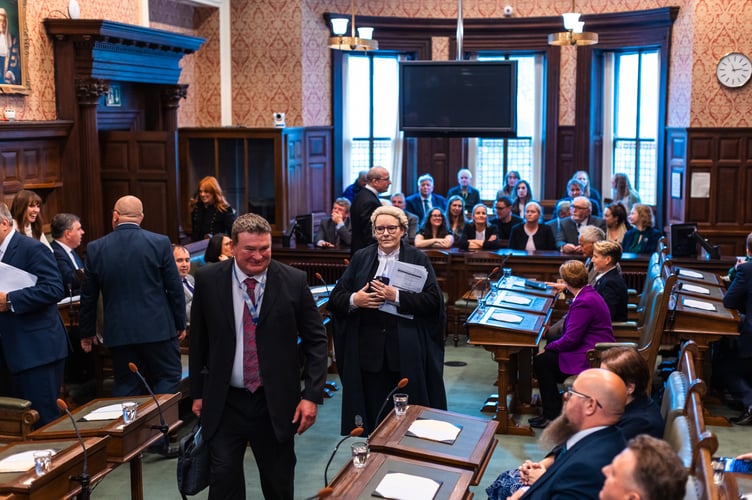
The Assisted Dying Act received Royal Assent on October 16, with the announcement confirmed by Tynwald President Juan Watterson during Tuesday’s sitting.
However, no implementation date has been agreed, and the Department of Health and Social Care says the service will not begin until it is confident it is ready.
The department will now establish a formal policy and implementation programme, covering everything from training healthcare professionals and managing medicines safely to safeguarding procedures and independent oversight.
It will also assess how assisted dying arrangements would operate alongside existing health and care services, as well as the financial and practical implications for the Island.
Some of the work depends on other legislation being in force first. The Government says assisted dying cannot begin until specific provisions of the Capacity Act are implemented, which is currently expected by April 2028.
In a statement, the Government described Royal Assent as a significant and sensitive moment for the island, but stressed that it marked the beginning of a careful process rather than the end of one.
It said: ‘The service will not begin until government is confident it is genuinely ready.’
The department added that the work would involve listening to people affected by the legislation, drawing on clinical, legal and safeguarding expertise, and keeping Tynwald informed about decisions still to be made.
Assisted dying will allow a terminally ill person to choose, in specific circumstances and subject to strict safeguards, to end their life with medical assistance.




The Bill was introduced by former Ramsey MHK Dr Alex Allinson and passed by Tynwald in March 2025.
Its progress was subsequently delayed after the Ministry of Justice raised concerns about its compatibility with the European Convention on Human Rights.
Tynwald approved amendments in June, including provisions confirming that a person could withdraw their request for assisted dying at any stage.
Supporters say law offers choice and dignity
Dr Allinson said the granting of Royal Assent marked an important step forward, but acknowledged that substantial work remained before the legislation could be implemented.
He said: ‘The announcement of Royal Assent marks an important step forward for our Island.
‘There is considerable further work to be done to draw up codes of practice and guidelines with healthcare professionals and provide holistic education and support for all those involved.
‘Key to improving choice and dignity for those facing a terminal illness is investment in palliative care and expanding the choices available for the people of our island and their families.’

The campaign group Dignity in Dying welcomed the announcement.
Its chief executive, Sarah Wootton, said: ‘Today is a historic and deeply emotional day for the Isle of Man, and above all for the families who made it happen.
‘Dying Manx people now have the reassurance that, if their suffering becomes unbearable, they will not be abandoned to pain, fear or desperate alternatives.’
Campaigner Sue Biggerstaff also welcomed the development, speaking about her partner Simon, who had motor neurone disease.
She said: ‘Nobody should have to watch someone they love die like that, and nobody should have to die like that.”
Ms Biggerstaff said Simon would have been eligible under the law and would have wanted the choice.
She added: ‘It’s too late for him, but it isn’t too late for the next family.
‘Knowing that no one else on this island will be forced to go through what Simon went through means everything to me.’
She thanked Dr Allinson, members of Tynwald who had listened to campaigners and those who had supported the campaign outside the parliament building.
‘We did it, Simon,’ she said.

Opponents raise concerns over safeguards
However, the legislation continues to face opposition from Manx Duty of Care (ManxDOC), which said it was deeply disappointed by the granting of Royal Assent and called for the Act to be repealed.
The group has argued that the legislation breaches the European Convention on Human Rights, the Isle of Man NHS Act and the United Nations Convention on the Rights of Persons with Disabilities.
Those are the group’s stated legal objections, rather than a finding that the Act has been ruled unlawful.
ManxDOC has also questioned whether the amendments made during the Bill’s passage provide sufficient protection, and raised concerns about how assisted dying would be implemented alongside existing healthcare services.
The Isle of Man Medical Society also reiterated its opposition, saying 74% of doctors on the Island opposed assisted dying.
It raised concerns about potential risks to vulnerable patients, the safety of the medications used, and the possible impact on Manx Care and other healthcare services.
The society also called for full protection for healthcare workers who conscientiously object to participating in or facilitating assisted dying.
How does the Isle of Man compare with elsewhere?
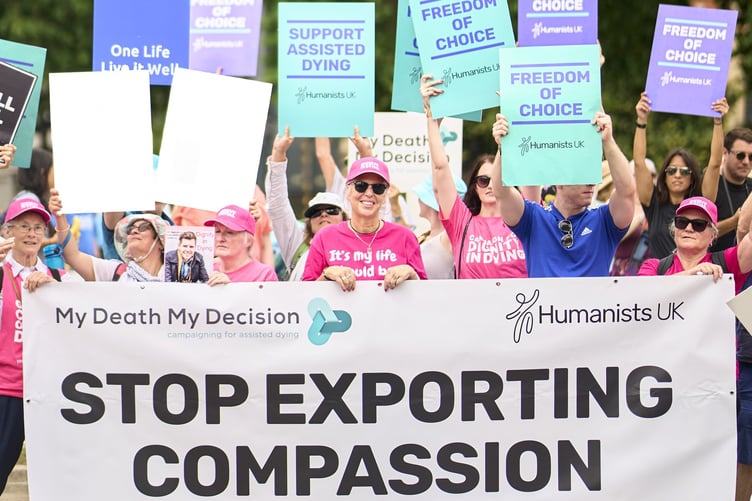
The Isle of Man has taken a different path from the UK, where assisted dying remains illegal.
In September, MPs rejected a Bill to legalise it in England and Wales by 286 votes to 270.
Scotland’s proposed legislation was also rejected in 2026, while assisted suicide remains illegal in Northern Ireland.
Jersey has also passed an assisted dying law, which received Royal Assent in July.
Its service is expected to launch no earlier than September 2027.
The Isle of Man’s legislation has now received Royal Assent, but it will not be implemented until the necessary safeguards and arrangements are in place.
The Government’s implementation programme is expected to address issues including clinical guidance, professional training, the safe handling of medicines, oversight and the relationship between assisted dying and other health services.
No start date has been set, and Royal Assent does not mean the service is immediately available.
The next phase will involve developing the detailed rules and arrangements needed to put the legislation into practice, with the Government saying it will take the time necessary to get those measures right.