Bird watchers can count themselves lucky to see one rarity at a time.
But when four turn up at once, it’s certain to cause more than a flutter of excitement.
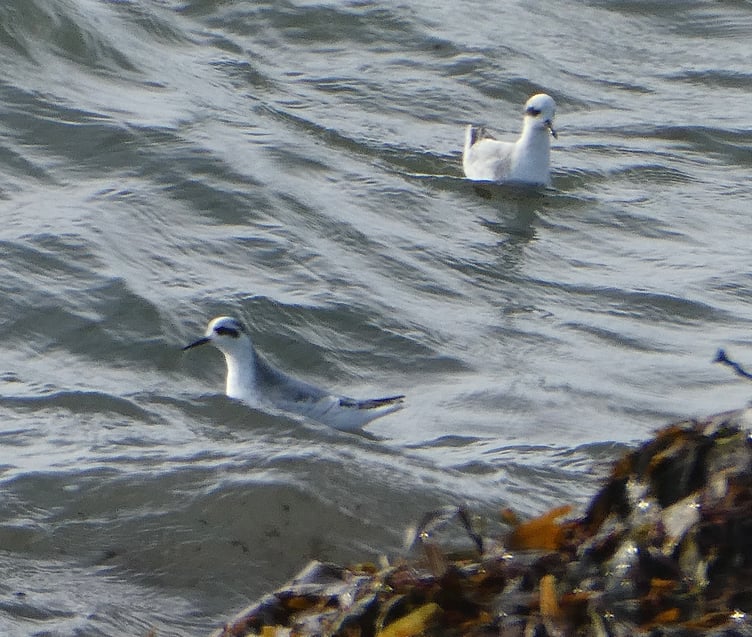
That was the case this week when four grey phalaropes were spotted surfing the waves at Strandhall, at the bottom of Fisher’s Hill, Rushen.
This tiny species is rare a winter visitor to the British Isles, whose sightings on the coast often follow storms.
It’s no coincidence then that the sighting of the phalaropes followed the island being battered by Storm Boelo and Storm Austen.
But it was a surprise to see so many of them - and that they chose to hang around days after the storms had passed.
Four were seen as late as Thursday but numbers had dropped to three, and perhaps two, by the following day.
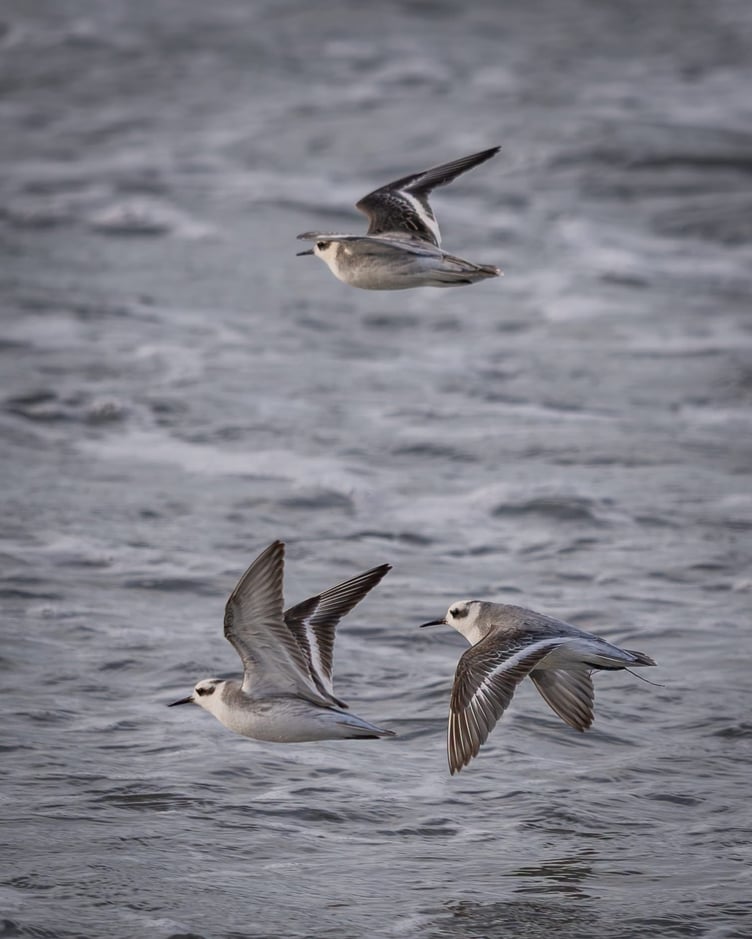
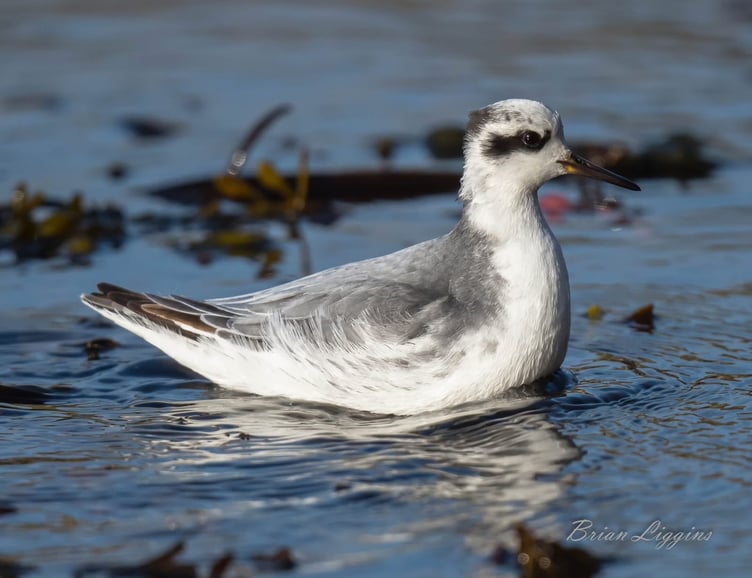



Grey phalaropes breed in the Arctic and their closest breeding ground to the British Isles is in Iceland.
Like all phalaropes they exhibit a curious gender role reversal. Females are larger and more colourful and it is the males that incubates the eggs.
In summer the females in particular have striking breeding plumage with chestnut-red belly, breast and cheeks, and a black crown - giving them their North American name of red phalarope.
But those seen in Britain are invariably in their muted winter plumage of white and light grey with a black eye patch.
Normally around 200 of these tiny birds, measuring just 20-22cm, are seen off the British coast each year but over the last week more than 700 have been noted.
In winter, they feed off marine plankton picked from the sea's surface.
The last sighting of a grey phalarope was a single one at Sandwick, Langness, at the end of August last year.