

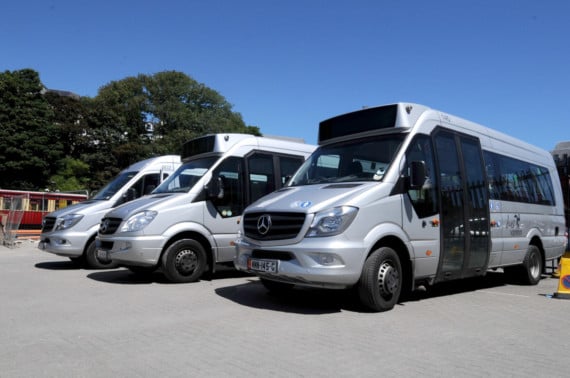
The average annual fuel bill for the island’s buses is more than £1.4m.
The figure was revealed in a written answer to Tynwald from Infrastructure Minister Ray Harmer.
Mr Harmer had been asked by Daphne Caine (Garff) how much Bus Vannin spends on fuel and how many miles it covers per year, what the average life span of a bus is in the island and the annual cost of operating an electric bus.
This followed Mrs Caine’s questions during the April Tynwald sitting regarding clean energy buses which are detailed in this week’s Manx Independent.
.jpg?width=209&height=140&crop=209:145,smart&quality=75)

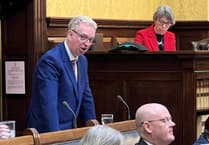

The island’s buses run on diesel which costs ’just over £1.4m’, while Mr Harmer acknowledged the developments in electric buses, he added that most of those currently in service are in urban areas, while the island has wider needs for its service with longer, often faster, journeys.
He added: ’One of our manufacturers has started production of electric buses this year and they estimate that the earliest they expect to be able to provide a vehicle for a trial on island is at the end of 2021.
’Therefore at this stage we cannot estimate accurately the operating cost of an electric bus as there isn’t one available for us to evaluate.’
compare
However, it will be possible for Bus Vannin to compare electric bus costs to the current diesel costs when that trial occurs.
Other factors in the viability of electric buses will be increased capital costs, an increase in the number of buses required and therefore increased garage space needed while maintenance costs will also have to be explored.
Mr Harmer added: ’The operational life of a bus depends on the environment that it is used in. In the case of the Isle of Man, we have reduced the number of buses from 90 to 68 but now run each individual bus much harder.
’The department’s business case, which was endorsed by the SAVE report produced by independent experts, promotes a first life with us of between 8 to 10 years.
’At this point maintenance costs far exceed the depreciation of a new bus.
’The manufacturer’s warranty on the frame of the bus varies from between 8 to 12 years and with relatively light use, the operational life is 15 years.’
The minister also highlighted that the life expectancy of modern buses is less than that of buses from 25 years ago due to ’reliability issues in the electronics which control key items such as engine management’.
Comments
This article has no comments yet. Be the first to leave a comment.