
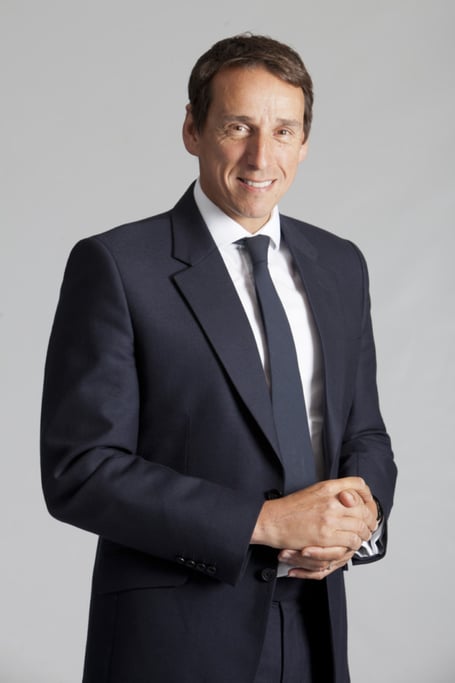
Russell Collister, chief investment officer at FIM Capital casts some light on some current concerns for investors.
In his acclaimed science fiction novel Snow Crash, author Neal Stephenson created the ’Metaverse’, a virtual reality urban landscape viewed through 3D goggles.
In the Metaverse, status is determined by technical acumen and the ability to communicate via high quality IT equipment, all paid for in the real world.
The Metaverse is so developed that some individuals (’Gargoyles’) spend their entire lives there, pausing only to eat pizzas, the staple diet of the average Los Angeles resident, where the story is loosely based.
-(1).jpeg?width=209&height=140&crop=209:145,smart&quality=75) Why are roads still icy after gritting? Isle of Man winter treatment explained
Why are roads still icy after gritting? Isle of Man winter treatment explained Airport had ‘no option’ but to close as safety concerns explained after disruption
 Live updates as schools and airport shut amid icy conditions across Isle of Man
 Decision on Isle of Man schools opening to be made in the morning
As a novel, Snow Crash can be a bit of a slog at times.
What kept me going was the knowledge that it was first published in the very early 1990s.
This was an era when mastery of Space Invaders still counted for something, when CDs had only just overtaken cassettes as a medium for listening to music and nobody had ever heard of Google (Google Earth was allegedly modelled on the Metaverse).
Fast forward (nearly) 30 years and I present you with Fortnite, a video gaming phenomenon played by over 100 million and (like the Metaverse) almost free of charge.
In Snow Crash, use of electronic currency (sounding uncannily like Bitcoin) is encouraged because of hyperinflation.
In Fortnite, players can upgrade their characters by spending ’V-Bucks’ (paid for in hard currency). This is not fiction. All of this is happening now.
Even if it is not (yet) a perfect comparison, it still begs the question, what else did Neal Stephenson predict and how worried should we be?
One forecast in the novel is that governments will almost entirely cede power and territory to big corporations.
Whilst, to those fed up with Brexit and Trump, this sounds like a result, be careful what you wish for.
The unedifying spectacle of MPs braying at each other in Parliament is cringe worthy, but it still epitomises open debate, the sort of which is too frequently absent in boardrooms (and leads to some appalling examples of corporate mismanagement).
As investment managers, we are concerned by long-term trends because we manage portfolios where drawdown of income or capital may not occur for 50 years or more.
At the very least, the role of an investment manager should be to preserve the value of a portfolio after allowing for inflation.
Do no harm, as the medical profession would say.
However, we are continually being pushed in another direction. The demand to de-risk our lives and to put everything into a #safespace crosses over into portfolio management, where returns are measured in weeks and stocks are sold off at the first sign of trouble (of which, right now, there is plenty).
Controlling risk is part of the reason why there has been an unprecedented rise in the number of investment funds launched over the last few years.
Funds can anaesthetise the pain of very short-term market movements simply because of their sheer diversity and size.
At FIM Capital, we often use funds to target a market sector or region as part of an actively managed portfolio.
They are typically well regulated, sensibly managed and easy to buy and sell.
They also come at a cost, hence the recent growth in popularity of passive index-trackers.
These ’passives’ also disguise the short-term movement of individual stocks (up or down) by mirroring an index or market sector, but with all of the passion of Amazon’s virtual assistant, Alexa or Apple’s Siri. Irrespective of the glossy wrapper, equity markets are still risky, and at the very least, volatile. The only ’safe space’ for entirely risk free mandates are 10-year bonds issued by major governments. In the US, 10-year bond yields are around 2.8% (current real return +0.5%), in the UK, 1.3% (real return -0.9%). Anything more than this implies taking on risk of some magnitude, passive or active.
The behaviour of equity markets (and politicians) in 2018 has made us all wish at some point that we could slip on some 3D goggles and immerse ourselves into the Metaverse.
The recent volatility feels worse because it has been so rare of late and has accelerated at the end of the year, a time when market makers are usually gently pushing prices higher, turning off their screens and heading out to a bar.
The market appears, therefore, to be suggesting that we are facing a recession in 2019. Yet this is not the message we are hearing from those companies with whom we have spent some time of late.
From their perspective, order books are healthy, demand is strong and they are surprised that the market suggests otherwise. Like Snow Crash, it is often hard to separate one world from the other, the real from the unreal, and even harder to make sense of it all. Markets often feel disconnected from reality and now is one of those times.
Expect to read copious commentaries of doom as we move through this first quarter of 2019.
These authors are your friends. Yields are up, share prices are down, the real world is still turning. What are you going to do?
The views and opinions expressed in this article are those of the author and do not necessarily reflect the official policy or position of FIM Capital Limited.
Russell Collister of FIM Capital
Comments
This article has no comments yet. Be the first to leave a comment.