
The downturn in the Manx economy from Covid-19 is expected to be harder than the 2008 global recession.
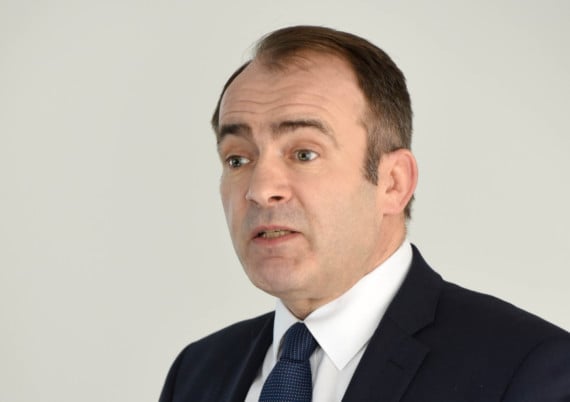
Treasury Minister Alfred Cannan, launching his economic recovery plan yesterday (Wednesday) said that a full recovery may take until the first quarter of next year at the earliest.
In a presentation to industry leaders given at the Manx Museum yesterday, Mr Cannan said there are encouraging signs that our economy is holding up well compared to the bleak outlook earlier in the pandemic, but we should not be complacent.
He said: ’There is still a long way to go in fighting this pandemic and we must keep focused on the positive steps needed to stabilise our economy but also seek opportunities to build for a better future.’


He described the recovery plan as a platform for an economic fightback towards a green, digital and safe future.
He said: ’It has been an extraordinary chapter in the Isle of Man’s history.
’A period in our lives which has brought unprecedented challenges and required an unprecedented response.
’Yet, in many ways, the work has only just begun and how we tackle and, ultimately, recover from the Covid-19 pandemic will shape our very future.’
At his budget update in July, Mr Cannan unveiled a £100m economic recovery fund to protect jobs, secure investment and encourage growth as part of the island’s financial fightback from coronavirus.
An economic recovery group chaired by Mr Cannan and Enterprise Minister Laurence Skelly is leading the co-ordinated response.
The group has met on three occasions since July and is focusing its efforts on protecting jobs, stabilising the economy and investing in our future.
Its immediate focus is a six to 12 month stimulus programme.
Mr Cannan said this programme will secure backing for thousands of employees, provide retraining and employment opportunities, accelerate investment in digital, speed up broadband and accelerate climate change commitments.
The government will also increase spending on its capital programme to deliver vital national infrastructure schemes.
Further ahead, a five to 10 year economic plan will be developed.
Covid has resulted in double-digit drops in percentages of GDP for many leading economies.
The Isle of Man is not immune from the economic shock, despite having a shorter lockdown period and fewer cases per capita than some of our neighbours.
Registered unemployment rose significantly during lockdown to a peak of 1,350. It currently stands at 881, down 36% on that April high.
With the scaling back of support schemes, some currently in receipt of MERA or salary support may be unable to return to work, leading to an increase in the jobless figure.
Payments of MERA had fallen from a peak of 1,951 to 919 when the scheme ended on September 20, with £5.9m in total paid out.
Salary support reduced from a peak of 10,910 to 2,153 with further significant reduction expected with the scheme closed to all sectors except travel and tourism where it has been extended to March 31.
Total payments have been £41m.
During the health crisis , 14,688 received government support - that’s 35% of the working population.
Sectors in our economy whose business model focused on or adapted to digital fared reasonably well throughout lockdown, with financial services and e-gaming, representing 50% of the economy, able to continue operating and keeping people in jobs.
Tourism, catering and entertainment continue to be the hardest hit and unemployment in these sectors is currently at highest risk.
Mr Cannan said these sectors need dedicated government support to stimulate domestic spend in the ’out of season’ months of October to February.
While the island has not seen, as the UK has, long-established businesses making significant redundancies, it must remain alive to the risk that difficult economic conditions are ahead, warned Mr Cannan.
Government revenues have also been impacted with the budget update setting out scenarios of revenue losses ranging from £120m to £191m.
Nineteen initiatives are approved, underway or in formation stages in the economic recovery plan with £12.1m funding allocated in addition to business support schemes.
Part of the six to 12 month recovery programme aims to create up to 1,000 training, education and work placement opportunities.
Some £0.9m will be spent on creating up to 1,600 extra education opportunities at UCM.
And £1m a year will be allocated for contingency funding to support up to 60 more students in higher education.
A further £1.75m will launch a restart scheme to create 120 new jobs for long-term unemployed.
There will be £1m allocated to a new-look town and village regeneration scheme.
National fibre broadband will be brought forward with a £1.4m injection. And £0.55m is earmarked for developing the legislative framework for a medicinal cannabis sector.