

Amid a strong stock market over the past year, one major disappointment has been British Telecom, or BT Group as it’s now known.
This column discussed BT in early 2017 when problems emerged at the Italian unit of its Global Services division, at which time the stock fell 15% in one day.
It has fallen further since, and the share price reached a new nadir a month ago when the company issued a profit warning at the time of its finals, stating that revenues would fall by 2% in 2018/19, and there would be no profit growth for two years.
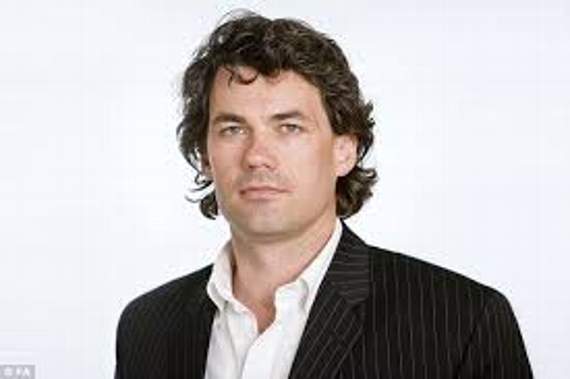
Last Friday the incumbent CEO of the past five years, Gavin Patterson, was asked to stand down.


.png?width=209&height=140&crop=209:145,smart&quality=75)

There will be a new CEO in place by the second half.
Shareholders are frankly fed up with the BT story.
At the final results announcement the chairman, Jan du Plessis, appeared to be sticking with Patterson. However, just a month later it seems he has changed his mind
A story in the Financial Times on June 4 suggested that this was likely, so Friday’s announcement was looking inevitable.
Under Mr Patterson the company has arguably become a bit of a ‘headless chicken’, not really certain of where its true direction lay.
In August 2013, it launched BT Sport and bought some of the Premiership and European football rights.
Then in October 2014 it bought the mobile telephone network EE, having been out of mobile for nearly 15 years.
The problems for BT really started in early 2016 when the regulator, the government, and various media outlets (particularly the BBC) started putting huge pressure on the company over its broadband spending and investment.
It looked at one point as if BT would be forced to make BT Openreach (the division that owns the main UK fixed line network) a completely separate company.
That would have caused problems, as Openreach provides 40% of BT’s profits.
With hindsight, BT has misjudged the mood on what is an appropriate broadband speed.
Essentially, fast broadband has gone in recent years from being a Want (something desirable but not essential) to being a Need (a basic requirement).
Initially, BT made great strides increasing DSL download speeds without spending huge money.
But the next steps to increase speed – G.fast and FTTP (Fibure to the Premises) – do require heavy spending.
G.fast increases speed from the basic 80 Megabits per second provided by DSL to 300 Mbps, while FTTP increases the speed further to 1 Gbps (one Gigabit – which is very fast).
The UK lags Continental countries such as Spain in terms of FTTP rollout.
The regulator would clearly like BT to be spending a lot more on its fast broadband investment to raise the UK to similar levels.
Thus, the future of broadband investment becomes less about one company’s allocation of capital, and more about structural considerations of the country’s future competitiveness.
As a result of all this, the rhetoric on broadband investment hasn’t relented, and if anything has increased.
As if this wasn’t bad enough, BT also has to think about 5G investment spending (next generation mobile spending), after it bought the mobile network EE.
And it is forking out £900m a year on TV rights.
All this comes against the background of spending squeezes on its public sector-facing units, and broadband price cuts insisted on by the regulator.
Some brokers see a distinct possibility that the dividend will have to be cut in a couple of years time, as the pressures of investment spend and pension funding bite (oh Yes, the pension deficit - that’s another issue the company faces!)
Finally, in the next two years BT is undertaking a massive restructuring with 13,000 redundancies, aimed at generating £1.5bn in cost savings.
There will be a lot on the next chief executive’s plate.
In terms of finding one it is early days, but given the huge issues the company faces it will probably be an outsider.
Bloomberg has tipped Liv Garfield, currently CEO of Severn Trent.
As a former head of Openreach she will understand many of the dilemmas BT faces.
The opinions stated are those of the author and should not be taken as investment advice. Any recommendations may not be suitable for all, so please contact your financial adviser for further guidance. The value of investments can go down as well as up.
Comments
This article has no comments yet. Be the first to leave a comment.