
Government must be brave and fearless in making tough decisions as the island continues to attract people and businesses to settle here.
And everyone living here, from leading business people to the army of thousands of people who keep the island ticking, has the capacity to be an ambassador for the Isle of Man.
Well-known Manx people such as Sam Barks, currently starring in Pretty Woman on Broadway, could be featured in lifesize cut-outs welcoming visitors at the airport.
And prominent government figures such as chief minister Howard Quayle should not be afraid of ‘flying the flag’ by staying in the same hotels as captains of industry and world leaders.

.jpeg?width=209&height=140&crop=209:145,smart&quality=75)


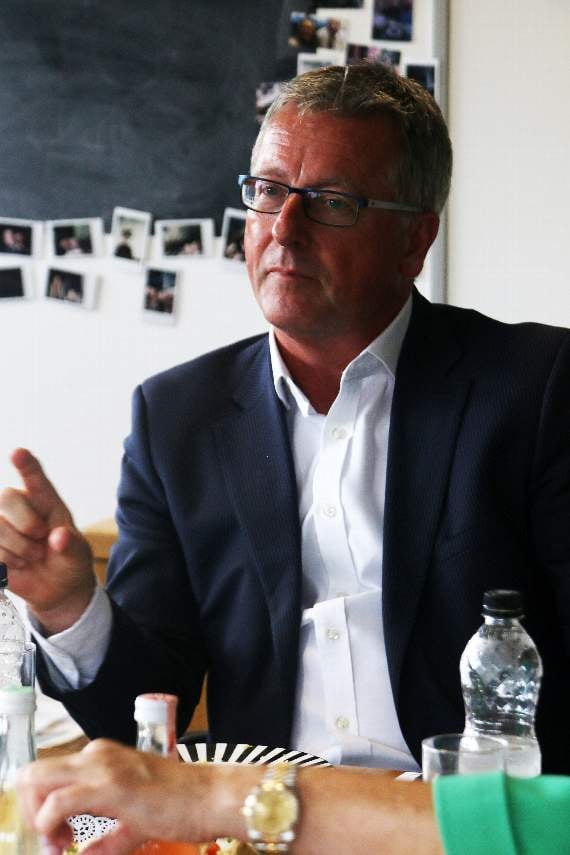
These were some of the points made by a group of prominent business figures gathered for the first of a series of Topical Talks.
The event was sponsored by Manx Telecom who also sponsor Business News.
A wide ranging discussion took place and the message was a positive one in which there was a willingness in the panel to back the government.
Trudi Williamson MBE, deputy chairman of Isle of Man Newspapers chaired the lunchtime discussion.
She got the ball rolling by saying: ‘A key issue for the island is getting the right people to move here and getting the skill base here.
‘There are all sorts of initiatives going on showing the island as a vibrant working place.’
And to illustrate a point that opportunities should be grasped she referred to the popular Channel 4 show Countdown earlier in the same week in which sports broadcaster John Inverdale extolled the virtues of the World Tin Bath Races at Castletown.
Trudi said this should lead to an invitation being sent to Inverdale to attend the tin bath races ‘and then go to the nationals [UK newspapers] about it.
‘Because it would be a big story and getting people aware of how we can keep putting the Isle of Man on the map.’
She added the recent Audi promotional event in the island was ‘fantastic’ publicity for the island.
She said people are interested in and following the Year of Our Island initiative along with the Destination Isle of Man special supplements introduced in the papers.
Trudi said it was important ‘to rev up what we think is the momentum already to get people in.’
Joanna Crookall of Ramsey Crookall said: ‘It is very important that everybody is on board with this because it is too easy to be negative.’
She referred to Manx Crabs where people dwelled on the negative and tried to pull people down that were actually trying to “do” and “achieve”.
What we need to portray most of all is the fact that everyone is trying to do their bit and so be positive and encourage innovation and support initiatives that are happening.
She said taking a positive slant on opportunities for the island was ‘absolutely crucial.’
The advent of social media meant everyone felt they were part of what was going on.
Chris Allen from the Triumph Group said: ‘We take a lot of things for granted on the island. Would you have thought we would get good publicity from the Tin Bath races? Probably not.
‘You have to look at the island from a visitors’ perspective as well.
‘Look at it through a different pair of eyes.
‘There are things we do here that are a bit quirky but there are plenty of things that people would find interesting.’
Positive mood
David Bell from Expol believes there is a positive mood in the island. He said: ‘I think there’s a good feeling about at the moment.
‘For example, if you look at the promenade scheme, the government acquistion of the Steam Packet, these are really positive things.
‘It’s a good starting point and I believe the Isle of Man had a lot of catch-up to do.’
Mr Bell is also a director of a new recruitment agency, the meeting was told, and he said the signs externally were that people wanted to come to the island to live and work because of the ‘quality of life here.’
He added: ‘There is much more awareness of quality of life,it’s not just all about salary.’
Chris Allen said he thought the island was not promoting biosphere enough ‘because that is something that could be massive and we are not playing that card as strong enough as we should do.
‘And then there is the work life balance associated with world class businesses in the Isle of Man.
‘We talk about it being a nice place to live but people will only come if there are good jobs as well.
‘We take our businesses for granted , there are blue chip companies here that people may not be aware of.’
Gary Lamb, chief executive of Manx Telecom, said: ‘We have thousands of ambassadors living and working in the island.
‘And we need people to understand that we have fantastic businesses here, so when they go off island and talk to other people they are promoting the island.
‘When I go to the City of London which is quite regularly, some people don’t know anything about the Isle of Man and some of the fantastic businesses that we have here.
‘And you just have to keep replaying that positive message.’
David Craine of Browne Craine & Co said communication was key and getting the positive messages out.
Mr Craine said: ‘I really applaud what the Year of our Island initiative is doing. It is fantastic because it is getting our culture out to people here.
‘I don’t see an awful lot of promotions outside of the Isle of Man and that is what we are looking for.
‘How do we get it out there, that this is such a special place?’
Deb Byron from Hansard Gobal asked: ‘Where’s the plan?’
agencies
Stephen Bradley MBE, who is the chairman of the new business executive agency of the Department for Enteroprise said: ‘I think the plan has to come centrally to start with.’
He said the new agencies, which have been featured prominently in Business News, recognised the need to grow the working population and it was not just about promotion, it was about product.
The new finance, digital, business and visit Isle of Man agencies are private/public executive agencies within the Department for Enterprise.
Fifty people from the private and public sectors have come on board to join the new agencies.
Mr Bradley agreed there were some underlying issues that presented barriers to business coming here.
Manx Telecom’s Gary Lamb asked if we understand why people decide to come to the island or in fact decide not to come to the island and has there been any sort of research on this.
Mr Bradley said there were 90 ‘live leads’ of businesses wanting to come to the island and he had been working through them all.
The forum discussed the different ‘barriers’ and Deb Byron, who is a member of the new digital agency, raised the difficulties some businesses have in opening bank accounts here in the island.
She said: ‘The offshore market is seen in the the Isle of Man as being riskier than the onshore market.’
Chris Allen, who is also the president of the island’s Chamber of Commerce, as well as running manufacturing company Triumph, raised a question.
He asked: ‘Do we really know who we are targeting?
He explained he had been to a meeting at the Department for Enterprise looking at promoting the island and it had been suggested the island uses its heritage more, such as the Vikings and the horse trams.
But Mr Allen pointed out: ‘The young guys that were there were saying that would turn all the youngsters off.
‘So we have to be clear about what messages we are putting out.’
‘Do they want to be coming to work here in a Victorian society when really they are after electronic connectivitity and all the latest technology.
‘And if that is the group we want to target and to come here to live and work, as we are trying to grow the working population, you want the younger people, don’t you?
‘So I think we have to be clearer on strategy from an island point of view, and I’m not so sure we are.’
Trudi Williamson pointed out that in this the ‘Year of Our Island’ she wondered how many thousands of items of post leave the island every day.?She said: ‘I don’t know why we don’t have envelopes with the logo on for Year of our Island.’
Gary Lamb suggested companies put logos for the Year of Our Island on the bottom of their emails that they send out across the world.
Trudi replied: ‘How powerful that would be’
Understand
Gary Lamb said however that people would have to understand what the message was.
He said: ‘It would be OK to put a message out there but people have to understand what that means.
‘It would have to be a very simple message that indicates what Year of Our Island means otherwise it will mean nothing to anybody.’
He added the message had to be understood by everybody and not just the people running companies, if they were to be ambassadors for the island.
David Craine suggested that it needed someone of the same stature as former island resident Jeremy Clarkson to promote the island.
Mr Craine suggested that an island ‘ambassador’ should be someone with international appeal.
Trudi suggested there could be lifesize cut-outs of island personalities such as Sam Barks. ‘Why not? She could be dressed in her Les Miserables outfit.
‘We could have the cyclists such as Mark Cavendish helping to welcome visitors to our island. We could have lots of very famous people, maybe lifesize cut-outs of 10 to 20 people just in that corridor at the airport.
‘There are a lot more famous people than you would think.’
Gary Lamb pointed out sports brands and companies such as PokerStars that have succeeded in using famous people to promote their brands and products.
Mrs Williamson said it would be ‘incredibly valuable’ for ambassadors to promote the island.
‘You could not pay for that space in national coverage.’
Gary Lamb said: ‘But we still need to be explaining to people in the island the message of why it is great to live in the Isle of Man.
‘And it should be almost a script that if you continue to put it out to them then it becomes part of their thinking and when they go and see their friends or people in relation to their business, for instance, they will talk about the Isle of Man. Because we have 85,000 people here.’
David Craine made the point: ‘We have to have the infrastructure in place before we can brag about what what we have here.’
Stephen Bradley said to encourage start-up companies here ‘you have to have a compelling proposition.’
There was the removing of barriers such as electricity costs, to fast and cheap internet and to make office spaces more relevant to the economy.
Joined up
But Mr Bradley stressed that in the Department for Enterprise he saw a ‘new energy, with joined up thinking.’
And it was a case of bringing all the government departments into that joined-up thinking.
‘That is critical, it is being on message.’
Trudi Williamson made a general observation about letters that are sent to students asking them to repay their debts after they graduate.
She said it would be a good opportunity for the education authority to ‘spell out the opportunitites that might be available in the island for jobs that would suit graduates. They could list, for example, openings in the JobCentre that might be of interest.
Trudi said: ‘It is a great opportunity for joined-up thinking.’
She added: As Gary Lamb has pointed out, if we can make people think they are ambassadors for the Isle of Man then maybe the people posting those letters to students would then have thought about the opportunties available rather than saying just how much is owed.’
Stephen Bradley said the new executive agencies were being encouraged to ‘step outside their own little pods.’
Deb Byron said the government departments such as education would have to be on board with ideas such as the one suggested by Trudi Williamson about pointing university graduates in the direction of opportunities in the island.
Stephen Bradley pointed out that the head of the college was on the business agency board.
He said he could see the start of a culture change ‘to a more creative approach to problems and a more flexible approach’.
Mr Bradley went on to say he ‘could see no appetite at all for the single legal entity.’
Mr Lamb said: ‘We all have to be on the same page, that’s the way to do it.’
Dave Bell from Expol said: ‘I think in some respects we had the same conversation 10 years ago, it doesn’t change. So how do we make the change?’
He added the power of social media was ‘immense.’
He pointed to the recent visit by singer Gary Barlow and the great publicity value of photos that Barlow put on Instagram of his visit here.
Deb Byron said images and messages on social media such as pictures of dolphins in the bay or drone footage around the island all had their part to play
Gary Lamb asked if there was a social media strategy within government.
Stephen Bradley said there was a ‘significantly sized PR department within government.’
But members of the panel including Deb Byron argued they did not particularly see any messages coming out and that more should be done.
Gary Lamb suggested that social media is actually driven by residents in the island.
He said: ‘I say it again, that if you arm people with the right message about things such as the Isle of Man brand then island residents will do the work for you.’
‘It is about sending the right messages out that will attract people to the island.’
Stephen Bradley said it was important the new executive agencies were embraced and supported.
He said ‘What Mark Lewin, chief executive, and his team have done is to create different models to create economic development.’
He praised the Chamber of Commmerce’s concierge scheme and said it had to be supported.
Business News has reported the Chamber of Commerce will be offering a Concierge Service with support from the Department for Enterprise’s Business Development Team. Utilising the strength of Chamber’s business network, the service will help to enhance the positive impression that business people are given when they visit the island with a view to relocate or launch or a start-up. The service will also provide practical assistance and advice about all aspects of relocation to the island.]
publicity value
Chamber president Chris Allen told the panel that it was important to pick up on the publicity value of companies that come and settle here.
Trudi Williamson explained that Isle of Man Newspapers’ next special ‘Destination Isle of Man’ supplement would concentrate on families.
She said: ‘In TT week we concentrated on skills and the supplement before that was about young entrepreneurs.’
She added youngsters really embraced the special broadsheet supplement because they had not seen anything like it before.
Within an hour of the paper coming out there had been thousands of ‘shares’ on social media, which, she said,was valuable publicity for the island.
The next supplement on families will look at families that have settled here .
And details would be sent back to the Department for Enterprise and the case studies would be used and shared out.
Trudi added that for the Awards for Excellence the message was also going out well on social media.
Gary Lamb said Manx Telecom had successfully been using a concierge service of its own for years.
Mr Lamb said the telecommunications company spent a lot of time working with people and companies putting the case for them to come to the island.
He stressed: ‘There are lots of ideas here on the island.
‘But we have got to be able to execute them [the ideas].
‘The government need to find a way to work with the private sector, gather the ideas and work in partnership to deliver.’
And carrying on Mr Lamb’s point, Chris Allen said: ‘We all have the same interests, now let’s work together.’
Mr Allen said there is also a role within media to get the positive messages out.
He claimed: ‘We seem to relish in negative aspects of decisions that government makes whereas we should be applauding success more.
‘I think the government are afraid to take brave decisions because of the potential for public outrage.
‘In some cases you have got to take a punt.’?
cohesion
Deb Byron said that with the current crop of MHKS there appeared to be more cohesion and positivity.
‘That is fantastic.
‘So there is more of an environment where risk taking is tolerated.’
She felt there should be more positive stories coming out from the government to be published in the media.
Chris Allen said some ‘positive sensationalism’ would make a change instead of negativity in his opinion.
Trudi said people want local news and positivity is very strong in the newspapers.
‘We tend to remember things that are negative.’
She said: ‘Media, such as the papers is really the messenger. Newspapers are merely reporting what is happening.’
Trudi maintained that people still wanted to hear good news and local news.
Stephen Bradley praised Department for Enterprise minister Laurence Skelly and chief executive Mark Lewin.
He said: ‘I think they have been very brave in suggesting something that has been different [the executive agencies] and we can get behind that.
‘It may not be perfect and certainly I have seen some of its shortcomings, but I can see it is a lot better than the last 20 years.’
Chris Allen said the agency structure was a ‘bold move and I’m hoping the government will let the agency structure be brave. That’s what they need to do.’
For example he referred to the Enterprise Development Fund. ‘Fantastic, let’s use some money to encourage entrepreneurial start ups and let us use the money to encourage some business opportunity.
‘But the government implementation of it is very risk averse because they don’t want to be seen gambling with taxpayers’ money.
‘Therefore the execution is wrong.’
Chris Allen said the concierge service being offered by the Chamber of Commerce was positive.
‘We could then use feedback from those businesses that we have helped to understand where we are going wrong or what we need to do better.’
Deb Byron talked of businesses that might have been here two or three years but found it difficult to grow.
She said: ‘In goverment there is a a lot of focus on getting them here but they then don’t have the resource to look after them.
‘So it is a bit backwards looking.’
Chris Allen said there was still work needed to get the companies here in the first place.
Trudi said: ‘I think the difference to three years ago is that we are all looking up again.’
David Bell said: ‘We tend to talk ourselves down.’
Trudi said: ‘From 2008 to 2012 we were all looking down. What we are doing today is saying: ‘‘This is the way forward and OK there may be some things we need to improve.’’
‘I think we are all learning to work together.’
Chris Allen replied: ‘That is a really good point.’
He pointed to the manufacturing sector. He said it used to be ‘very cliquey’ and companies saw another firm down the road as a competitor.
‘Ultimately when we all got together through a chamber committee we realised we were not actually competing.
‘We got our heads together and designed the new apprenticeship scheme, for example.
‘So, as a community we can work together.’ And he stressed companies needed to showcase the good work they do.
Trudi said in the last 10 years or so she had seen that people wanted to celebrate success and excellence.
David Bell argued that by their very nature Manx people are reserved ‘but I think they dearly want to assist going forward.’
Chris Allen said: ‘We as a business community need to support the agencies. They are going to trip,they are going to stumble and we have to stick by our guns that this is the right thing to do otherwise we will be throwing it on the pile of an experiment that did not work.’
Gary Lamb said: ‘What is encouraging is that the government seems to be braver than it has ever been before. Things like the Steam Packet, it is a brave move.’
hotel
Chris Allen told of something ‘that really stood out for me.’ He explained how he travelled to London as part of the Commonwealth Business Forum earlier this year. He said he flew to London City airport with the chief minister Howard Quayle.
‘The chief minister booked himself in at the Premier Inn just outside Westminster.
‘All the other business leaders stayed at the five star hotel, even the chief minister of Lesotho.’
Mr Allen said doing that makes us look like a Third World country.
Mr Allen said there is a concern that the electorate would accuse him of wasting taxpayers’ money.
Gary Lamb argued that the chief minister staying in a budget hotel ‘does not set a great example’ in the context of the fact he was attending a top-level Commonwealth event in London.
Chris Allen said: ‘He [Mr Quayle] missed the opportunity for the chance meeting on the stairs, or at the breakfast table. ‘It’s not like he has to be extravagant with a limo or anything like that. It is just the chance to be staying in the same place as other business people.’ Gary Lamb said there would have been great value in the long term from staying in the same hotel as the other leaders.
Comments
This article has no comments yet. Be the first to leave a comment.