

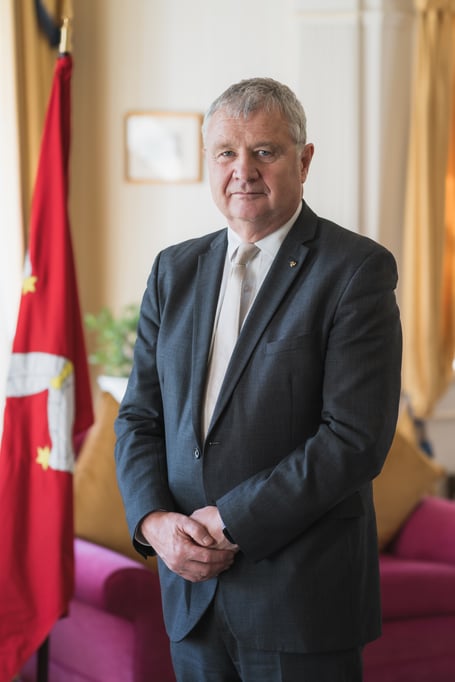
Chris Thomas has been officially appointed as the Isle of Man’s new Chief Minister after defeating Kirrie Jenkins in a House of Keys vote, bringing a significant day in Manx politics to a close.
Mr Thomas was presented with his warrant by the Lieutenant Governor, Sir John Lorimer, during a ceremony at Government House on Tuesday afternoon, October 13.
The Douglas Central MHK secured 16 votes to Mrs Jenkins’ six, with two ballots ruled invalid, following a morning of speeches and questions from fellow MHKs.
The result was subsequently confirmed in a further vote, with all members backing Mr Thomas except Mrs Jenkins and Stephen Broad, giving the new Chief Minister a 22-2 majority.
Mr Thomas succeeds Alfred Cannan, who led the island’s government for five years.
Speaking after his appointment, Mr Thomas said: ‘It is an honour to be appointed as the island’s Ard-Shirveishagh and I thank colleagues in the House of Keys who have put their faith in me to lead the island’s government.
‘I am mindful, however, that I am the first among equals. My priority is to deliver a smaller, smarter and smoother government that focuses on the real challenges facing the Isle of Man and gets things done for the people we serve.’
His immediate task is to form his Council of Ministers and begin setting out the priorities for the new administration.
How the day unfolded
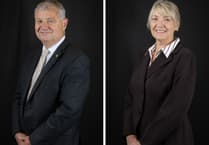
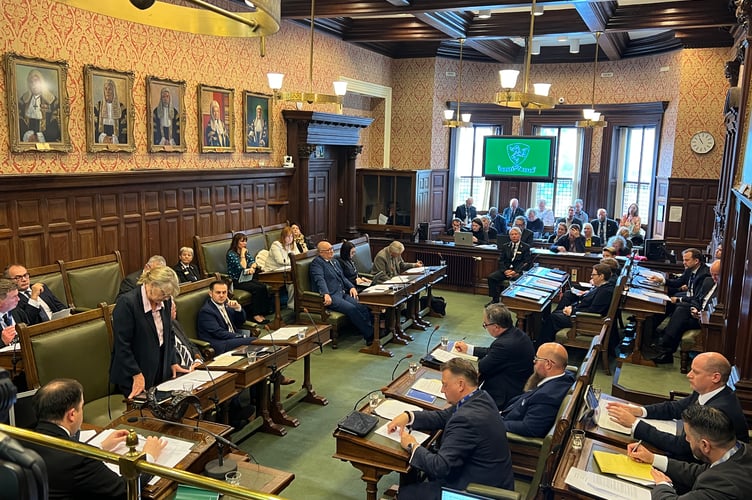
Proceedings began at the House of Keys at 10am, with both candidates setting out their visions for the island before facing questions from MHKs.
Mrs Jenkins, the newly elected member for Arbory, Castletown and Malew, said she had stood for election because she believed the island needed a change in its approach to government.
She stressed the importance of rebuilding public confidence, taking responsibility and delivering results.
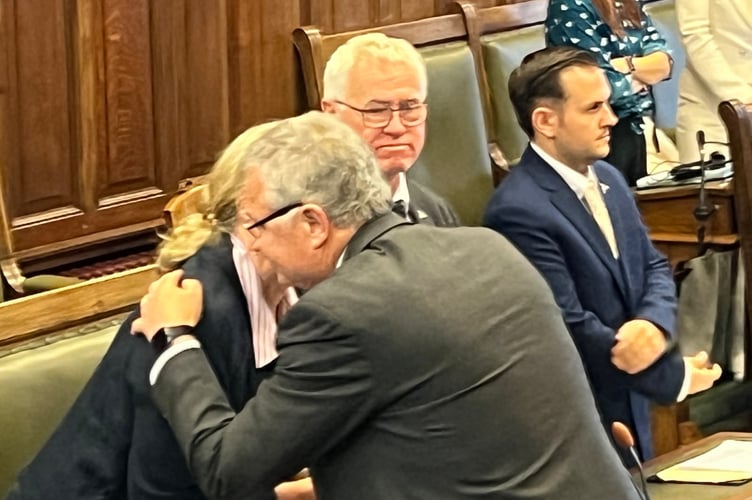
‘The public rightly expects more than warm words,’ she told the House in her opening statement, in which she was visibly emotional.
She also pledged to work constructively with her opponent if she was unsuccessful.
Mr Thomas opened by highlighting his political experience and the importance of bringing members together.
He spoke about finding common ground and listening to different viewpoints, saying he could put together and lead a ‘blended Council of Ministers’ to help deliver a better Isle of Man.
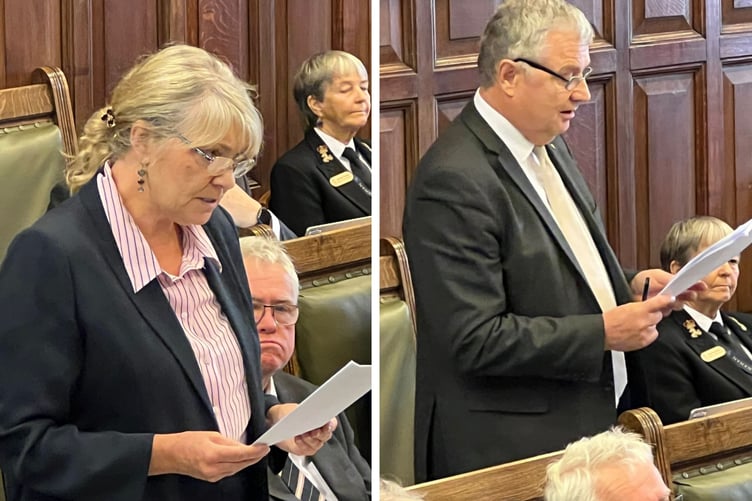
The candidates then faced 18 questions from MHKs, covering issues including economic growth, later-life care, the behaviour of politicians and the Island’s energy future.
Both agreed that standards of behaviour among Tynwald members needed to improve, while stressing the importance of scrutiny and accountability.
Economic growth was another prominent theme, with Mrs Jenkins proposing that a minister should be responsible for co-ordinating efforts to boost the economy.
Mr Thomas called for renewed relationships with airlines and the Isle of Man Steam Packet Company.
Later-life care also featured, with both candidates discussing how to establish a financially sustainable system.
Mr Thomas said there was no simple solution to the cost of nursing home and residential care, and that Government needed to use the information already available to develop a plan. He favoured a sustainable, ring-fenced funding model, while acknowledging that detailed financial modelling was required.
Mrs Jenkins called for a fair system based on individual need and said Government should examine existing work rather than commission the same research again.
Despite housing being a prominent issue during the election campaign, it did not feature directly in the questions put to the two candidates.
Offshore wind energy also emerged as a potentially challenging issue for the incoming administration, with the proposed Mooir Vannin wind farm raising questions about public consent and how major decisions should be made.
In response to a question from Joney Faragher, Mr Thomas offered a succinct description of his preferred approach to decision-making: ‘Evidence-based policy making, not policy-based evidence making.’
Following the questions, both candidates delivered their closing statements before MHKs cast their votes.
Who voted for who?
Chris Thomas was elected the Isle of Man’s new Chief Minister at 12.03pm after defeating Kirrie Jenkins by 16 votes to six.
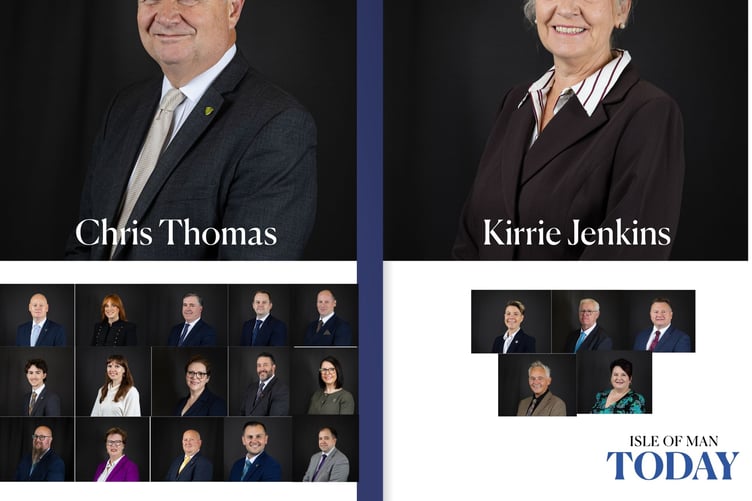
Mr Thomas received votes from Rob Callister, Claire Christian, Damian Ciappelli, James Cochrane, Robert Cowell, Daniel Davison, Joney Faragher, Dr Rachel Glover, Mark Kemp, Sarah Maltby, Juan McGuinness, Jane Poole-Wilson, Andy Saunders, Peter Shimmin, Speaker David Ashford and Mr Thomas himself.
Mrs Jenkins received votes from Katrina Baptist, Stephen Broad, Michael Crowe, Richard Henthorn, Vicki Hewison and herself.
Former Chief Minister Alfred Cannan and Jason Moorhouse’s votes were ruled invalid.
In the subsequent confirmation vote, all MHKs voted for Mr Thomas except Mrs Jenkins and Mr Broad.
Speaking to Media Isle of Man after his victory, Mr Thomas said he had been confident he would secure enough support to become Chief Minister.
He said he wanted to form his Council of Ministers as soon as possible and had received strong support for the existing Health and Home Affairs Ministers, Claire Christian and Jane Poole-Wilson, to remain in their positions.
However, the final ministerial line-up has yet to be announced.
Mr Thomas had told MHKs he could envisage five newly elected members becoming Ministers, but stressed that appointing the right people to the right jobs was more important than the number of new faces.
Speaking afterwards, he said: ‘It could be five, it could be three, it could be two.’
He also confirmed that Mrs Jenkins would be invited to join his Council of Ministers.
Mrs Jenkins secured 1,839 votes in September’s General Election, the second-highest individual total across the island.
Had she won the leadership contest, she would have become the island’s first female Chief Minister and the first newly elected MHK to take the top job without having previously served a term in the House of Keys.
Despite the defeat, she has said she remains optimistic about the new Government.
Reaction from MHKs and political figures
Onchan MHK Rob Callister, who had previously put himself forward for Chief Minister before withdrawing his bid after failing to secure sufficient support, congratulated Mr Thomas and said he believed the island had elected the ‘right’ person for the job.
He also praised Mrs Jenkins’s ‘phenomenal campaign’, describing it as remarkable that she had put herself forward after entering the House of Keys only weeks earlier.
Mr Callister said politicians now needed to put aside their differences and deliver the changes voters had called for.
Newly elected Ramsey MHK Juan McGuinness, who voted for Mr Thomas, said experience and confidence in delivery had been the deciding factors behind his choice.
He acknowledged that there was common ground between the two candidates but said the Island needed a Government capable of getting to work quickly, making decisions and delivering progress.
Former Chief Minister Alf Cannan also issued a statement thanking constituents in Ayre and Michael for their support.
He said that support had allowed him to fulfil the roles of Treasury Minister and Chief Minister over the past ten years, adding that he now wanted to focus on his election commitments and improving his constituency.
Former Onchan MHK Peter Karran offered a more critical assessment of the political system, warning that he feared the island could see ‘an increasing amount of the freedom to flourish for the few to fleece the rest of us’ and that social advances could be lost.
Mr Karran, who served in the House of Keys from 1985 to 2016 and was Minister for Education and Children from 2011 to 2012, described the system of government as an ‘institutional corrupt system’.
Political commentator Alistair Ramsay said Mr Thomas had won on experience but warned that the new Chief Minister needed to demonstrate a ‘genuinely fresh approach’ to the economy, housing and Government spending.
He said people could quickly become disillusioned if they did not see early signs of a change in direction.
Mr Ramsay urged Mr Thomas to establish clear national priorities, set a timetable for tackling them and keep the public informed about progress.
He also praised Mrs Jenkins, saying she had established herself as ‘a member to watch for the future’.
Former Rushen MHK and Infrastructure Minister Michelle Haywood also congratulated Mr Thomas, publishing a tongue-in-cheek review of ministerial offices as the new administration prepares to take shape.
What happens next?
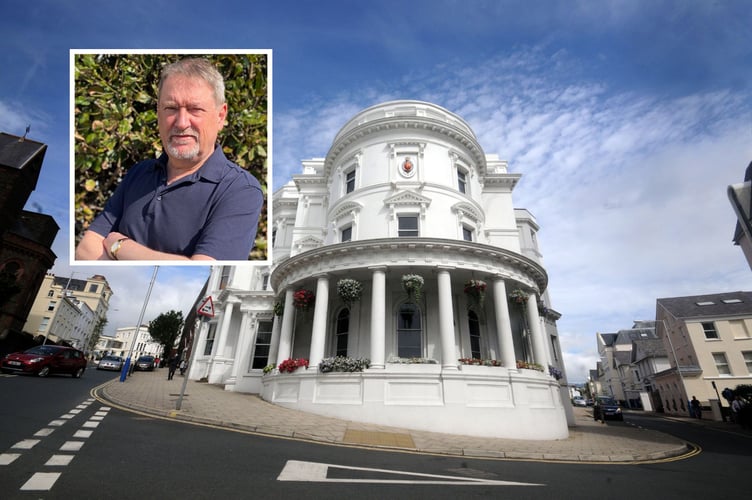
The focus now turns to the Council of Ministers, the island’s highest-level decision-making body, which comprises the Chief Minister and up to nine other Ministers.
It sets policy, provides leadership across Government departments and considers major issues, legislation and the annual Budget.
Following the General Election, the new administration must also develop a five-year programme for Government, setting out its priorities and how it intends to achieve them.
Mr Thomas has said he wants to get his team in place quickly, with the task of turning his pledge for a ‘smaller, smarter and smoother government’ into action now beginning in earnest.