
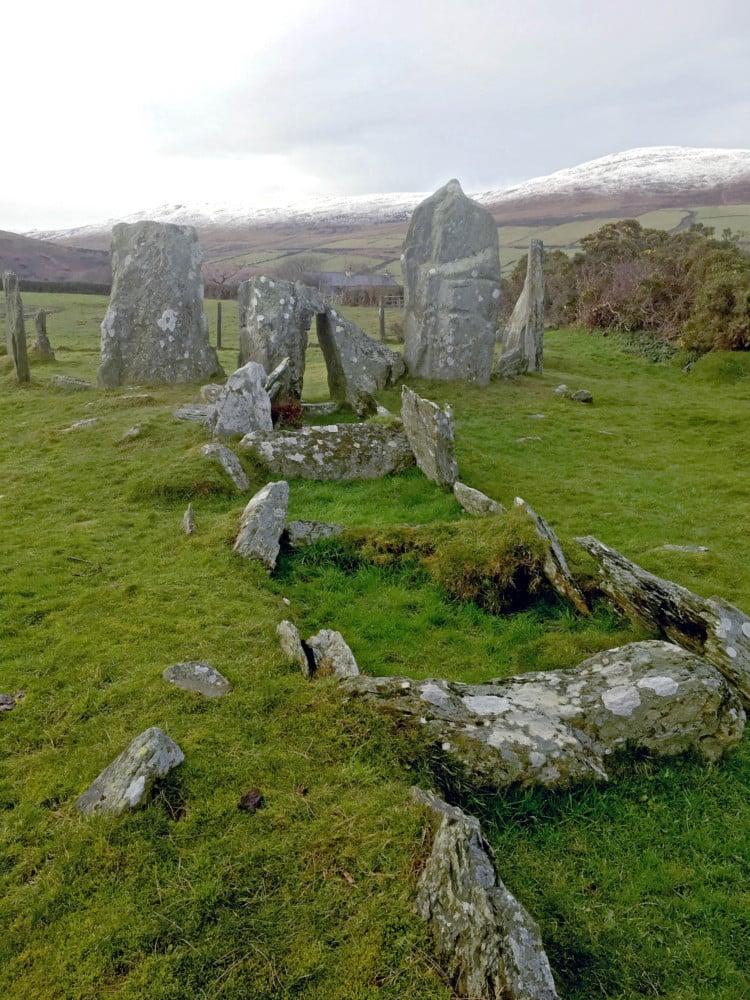
A popular walking destination in the island has been named as one of the Best Archaeological Walks in the UK.
Cornaa, located in the north of the island, was one of the five places regarded as a great historical place to stretch your legs by The Guardian newspaper.
Author of the piece published on Saturday (February 16), Gillian Millar, said: ’This gentle walk from the wooded Ballaglass Glen down to a secret cove offers a chance to slow down, tread softly and enjoy one of the least-explored places in the British Isles.’
Other places named alongside Cornaa included: Strata Florida, Ceredigion, in Wales; Seaford, East Sussex; Cardross, Argyll and Bute, in Scotland and Dartmoor in Devon.
.jpg?width=209&height=140&crop=209:145,smart&quality=75)



The article suggests that visitors should start at Ballaglass Glen car park and make their way down to the beach.
’Following the Cornaa River on its serpentine path through the glen, we’re walking in the footsteps of a huge sheet of ice, a glacier that spread down from Scotland during the ice ages of the last 2.5 million years,’ the piece reads.
’Keep an eye out for large solitary rocks, known as "erratics" (because they don’t fit in here), which were carried in sheets of ice. When the ice melted, they were left behind, leaving a little piece of Scotland on Manx soil.’
A ’short diversion’ to the ancient stones of Cashtal yn Ard, meaning Castle of the Heights, is also recommended in the piece.
The Neolithic burial site, which dates back to about 2000 BC, provides ’stunning views’ of Maughold and across the sea to the Lake District - depending on the weather. It is explained that the origins of the site have never been fully understood, but it is believed that it was a communal burial place for chieftains and their families.
The ’medium’ grade walk is said to take about two hours over the three-and-a-half mile distance. Mini plunge pools, along the route were also suggested to be good places for a dip before walking back to the start again.
Comments
This article has no comments yet. Be the first to leave a comment.