
The Isle of Man has a rich history of traditional folk music, dance and tales. Manx music officer Chloe Woolley takes a look at some of the stories that lie behind some of the best-known songs.
Self-sufficiency was the way of life in rural areas in days gone by and the diet was simple and seasonal.
Farmers, fishermen and crofters followed the flow of the seasons, celebrating calendar customs and other significant occasions, just as their forebears had done.
Down the centuries, food, music and sometimes dance became inextricably linked.
.jpg?width=209&height=140&crop=209:145,smart&quality=75)
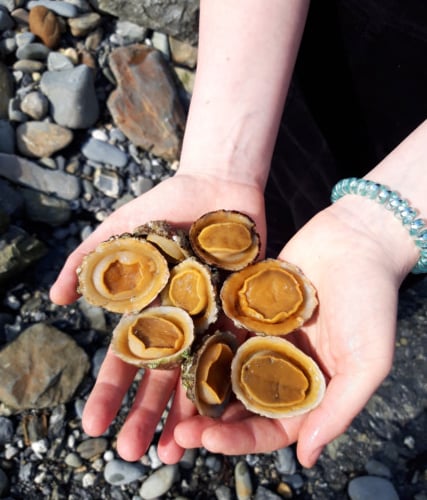
There was the curious tradition of visiting the beach after sunrise on Good Friday to prise flitters or limpets from the rocks.
They were baked in their shells over a fire made from mychurachan (flotsam and jetsam) and eaten with barley cake and milk. The remnants were thrown into the sea while a charm or prayer was recited and the party would then perform a processional dance, stamping out the embers of the fire.
The Flitter Dance was collected by Mona Douglas in the 1930s, and it is still widely performed today.
On Oie’ll Vreeshey, or Bridget’s Eve, in February, the woman of the house would sing an ’Invocation to St Bridget’, offering her a meal and a bed for the night.
A successful harvest was celebrated with the Mheillea dance, followed by a lavish supper of broth and herring pie for all the workers.
At Hop Tu Naa there was bonnag dipped in milk, as described in the song, and a traditional supper of mashed potatoes, parsnips and fish.
Young women also made Soddag Valloo, or dumb cake, from flour, soot and eggshells.
It was eaten in silence while walking backwards and, if lucky, they would dream of their future husbands.
Wedding celebrations involved an abundance of music, dancing and feasting.
The traditional dish was broth, eaten from wooden bowls called ’piggins’ and supped with mussel shells called ’sligs’, followed by a lavish spread of fowls and cold meats and plenty of ’jough’, or ale.
WH Gill’s song, ’A Manx Wedding’ describes the scene:
’For eatin’ and drinkin’ there’s heaps of binjean, And milk for the women, and jough for the men. And custards and jellies from Mrs Cregeen.’
As the evening wore on, the traditional dance ’Peter O’Tavy’ saw the wedding guests’ sobriety tested as they attempted to sing, dance and balance on one leg!
Births were associated with ’Arran as Caashtey’ (bread and cheese), stemming from the custom of keeping a dollan (round tray) of oatcakes and cheese in the room where the mother was confined, presumably for visitors to partake, or perhaps to appease the fairies.
The mother would rock the baby to a traditional lullaby such as Arrane y Chlean or Smuggler’s Lullaby.
Other food is elevated above the ordinary in Manx songs such as ’Ta’* Grine Veg Oarn’ (Little piece of barley), ’Cur dty Vainney’ (Give your milk) and the corn milling song, ’Arrane ny Bleih’.
Our articles tie in with free tuition films of Manx tunes for finger-style guitar with sheet music and TAB aimed at players of all ages and levels.
The arrangements, including this month’s release of "Flitter Dance" are demonstrated by guitarist Pete Lumb on the LEARN page of manxmusic.com or through www.culturevannin.im
by Chloe Woolley
Director of Manx music
culturevannin.im
Comments
This article has no comments yet. Be the first to leave a comment.