
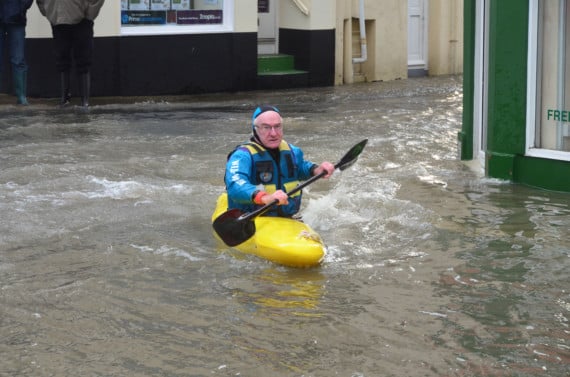
We are likely to see more extreme weather events in the Isle of Man in the coming decades.
That’s according to the Met Office, in response to a landmark report released by the Intergovernmental Panel on Climate Change (IPCC).
The IPCC is the United Nations’ body for assessing the science related to climate change.
Its latest report, released earlier this week, is the first major review of the science of climate change since 2013.
.jpeg?width=209&height=140&crop=209:145,smart&quality=75)

.jpeg?width=209&height=140&crop=209:145,smart&quality=75)
Its release comes against the back-drop of extreme wildfires in Italy, Turkey and the Greek island of Evia, and less than three months before a key climate summit in Glasgow known as COP26.
The landmark study warns of increasingly extreme heatwaves, droughts and flooding, and a key temperature limit being broken in just over a decade.
UN Secretary General António Guterres described the report as ’a code red for humanity,’ saying: ’The alarm bells are deafening, and the evidence is irrefutable: greenhouseâ??gas emissions from fossil-fuel burning and deforestation are choking our planet and putting billions of people at immediate risk.
’Global heating is affecting every region on Earth, with many of the changes becoming irreversible.’
When asked about the impact the findings could have for the island, Adrian Cowin, senior meteorological officer for the D0I said: ’On the Isle of Man we’ve already seen that average temperatures have been slowly rising above the long-term means over the last few decades, by about 1 Celsius.
’Average annual rainfall in the last 20 to 30 years has increased slightly in comparison to the previous 20 and 30-year statistical periods.
’However, there’s not yet been any clear trend in the intensity or frequency of extreme weather events in the island.
’But all climate model scenarios indicate that warmer oceans and a warmer atmosphere will hold more energy, which will manifest itself by causing an increase in heavy rainfall events.’
He summarised: ’In a nutshell, it’s likely that we’ll see more extreme weather events more often in the next few decades as well as the impacts of rising sea levels on coastal communities and infrastructure.
’Equally, there’s an increased risk of a few more periods of drought and summer heatwaves, or winter cold snaps.’
Comments
This article has no comments yet. Be the first to leave a comment.