
A farmer has been told he must remove obstructions from a heathland track.
Henry Bridson lost his appeal against an order served on him by the Department of Infrastructure.
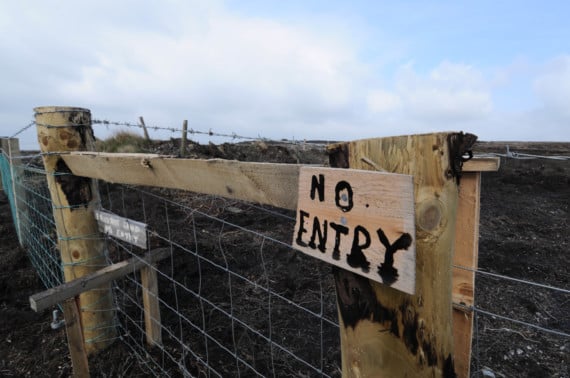
Mr Bridson erected earthbanks, fences and signs on the track on Dalby Mountain in an effort to prevent it being used by walkers and trial bikers.
He insisted it was not a public right of way but was being used as such as an alternative to the nearby Sound Road, which had become waterlogged and muddy in places, making it impassable for vehicles.



.jpeg?width=209&height=140&crop=209:145,smart&quality=75)
But Deemster John Needham ruled that track is a highway and the obstructions placed upon it are unlawful.
The signs and barbed wire remain in place but a path has now been cleared through the middle of the earthbanks.
The Deemster also criticised the DoI for failing to properly maintain the Sound Road, a byway to Glen Maye.
And he said he expected the department to fulfil its statutory duties to manage the track properly to ensure as far as possible that it doesn’t widen further onto the heather heathland.
He said he was minded not to award costs to either party due to the mixed messages that seem to have been given to the appellant before the matter came to court, the lack of proper management of the Sound Road, and the fact that the notice used in this case was not the best way to resolve issues ’where matters have been far from certain’.
The track in question begins on the east side of the A27, north of the car park for Eary Cushlin. Its starting point borders the northern side of a moorland nature reserve owned by Manx Wildlife Trust. Some 400m up the track it turns to the north and a short distance on a fence and earth bank obstruction had been installed.
’It is a formidable obstruction of obvious recent origin and the appellant accepted he had installed this barrier in or around early 2017,’ said the Deemster.
Further along the track more fencing and another earth bank had been installed. Mr Bridson had put signs up at both barriers indicating ’Private Land No Entry’.
’The lack of maintenance or action to keep Sound Road passable by vehicles aggrieves the appellant as he believes that lack of action has meant that the track has been mistakenly used instead,’ said the Deemster.
The DoI said the Sound Road had only ever been signed as a ’footpath’ and had been passable only on foot for a very long time.
In his judgment, Deemster Needham found that the track was a long established route that had existed since at least 1962.
Use of the track had caused deep ruts which meant users took alternative parallel courses across the land, widening the route.
The Deemster said the highway authority and landowners should work together to prevent the track being widened. He suggested a parallel fencing being installed between the sites of the two obstructions to prevent people straying onto the heath.
And he said he hoped agreement could be reached over any diversion around a seasonal pond to prevent harm to breeding frogs.
Comments
This article has no comments yet. Be the first to leave a comment.