


The Isle of Man Yacht Club (IOMYC) has called for greater scrutiny of the decision to end all-weather lifeboat operations at Port St Mary in 2028.
The club says many have been left feeling ‘sadness and nervousness’ after the RNLI confirmed that the station’s Trent-class all-weather lifeboat (ALB) will not be replaced when it reaches the end of its operational life in 2028.
That will leave the station operating only its D-class inshore lifeboat (ILB), with all-weather cover for the south of the island provided by lifeboats based in Peel and Ramsey.
In a statement posted on social media, the club said: ‘We rarely comment on matters beyond club business, but after careful consideration, we feel the need to express our concern regarding this decision.
‘The IOMYC strongly shares the views of local supporters who have expressed both sadness and nervousness at the loss of a permanently based ALB in Port St Mary.
‘On social media a former Port St Mary crew member described the reduction in local all-weather capability as "fundamentally flawed", arguing that lifeboats responding from elsewhere could take longer to arrive in "serious sea conditions", increasing risk.
‘The IOMYC enjoys a close and positive relationship with the volunteers of Port St Mary RNLI. The professionalism, commitment and courage of these highly trained volunteers, who answer the call at any hour to save lives at sea, command our deepest respect.
‘The waters around Langness, the Calf of Man, Chicken Rock and the southern approaches are widely recognised as some of the most challenging around our coastline.
‘We have witnessed, on countless occasions the Port St Mary ALB launch into challenging and hostile sea conditions. Given the differing capabilities of ALBs and ILBs, it is reasonable to conclude that there will be incidents where an ALB is the more appropriate asset to meet the rescue requirement.
‘The issue is not whether rescue cover will continue to exist. The question is whether the same level of response capability, resilience and speed of attendance can be maintained for incidents occurring in southern waters, when the only permanently based ALB in the area is removed.
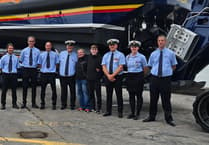


‘We believe a change of this degree warrants greater transparency regarding the operational modelling, response-time analysis and risk assessments that underpin it.’
The club said the planned withdrawal raised concerns about safety at sea, adding that decisions affecting those using Manx waters deserved open discussion, public understanding and appropriate scrutiny.
The RNLI confirmed earlier this month that Port St Mary’s current lifeboat, Henry Heys Duckworth, would remain an important part of its lifesaving capability until its withdrawal.
The decision forms part of the RNLI’s long-term Lifeboat Fleet Strategy, which aims to ensure the charity has appropriate lifeboats in the right locations to respond to changing demands on its lifesaving service.
The changes will also see Douglas receive a new Coastal Lifeboat, with its allocation confirmed by the RNLI, while work continues to identify suitable shore facilities for the vessel.
Comments
We've recently changed our login process. If you have an account for commenting, you will need to re-register on the login window.
This article has no comments yet. Be the first to leave a comment.