
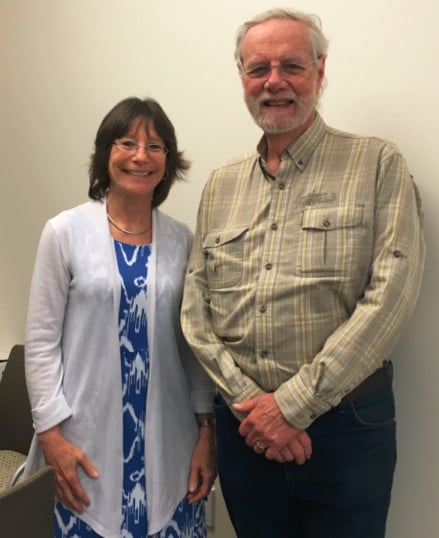
M.E. sufferers and their families will learn about the latest research into the illness following a visit to the island by a woman who heads up the fund raising side of an organisation dedicated to finding a cure.
Myalgic Encephalomyelitis - also called Chronic Fatigue Syndrome - affects an estimated 350 people in the Isle of Man and has been described as one of the last major diseases in the world that isn’t fully understood.
The visitor from California is Linda Tannenbaum,.
She has been invited to the island by the M.E Support (IoM) Group.

.png?width=209&height=140&crop=209:145,smart&quality=75)

During a three-day visit she will be making a powerpoint presentation to members of Tynwald, chatting with local victims of M.E. and addressing a public meeting in Onchan Methodist Church at 7.30pm on May 24.
The title of her talk is ’M.E: A Major Health Crisis.’
Celia Marshall, chair of the support group, said: ’Our aim is to raise awareness of the illness, as well as the challenges facing sufferers. When we heard that Linda was attending a conference in London we invited her to come over to the Island so we could use her enormous experience to help us highlight the plight of this totally neglected group of sufferers.’
Mrs Tannenbaum and world renowned geneticist Dr Ron Davis, professor of biochemistry and genetics at Stanford University, established ’The End M.E/CFS Project’ with the former responsible for fund raising and the latter directing research.
Several other eminent scientists are also involved. It has been estimated that there are between 836,000 and 2.5 million sufferers in America alone.
Linda Tannenbaum - who will be accompanied to the island by her husband - left a successful independent clinical laboratory, which she had set up and run for more than 21 years, in order to dedicate herself full time to the venture.
She and Dr Davis each have a child who suffers from M.E.
During her visit she will also have talks with Health Minister Kate Beecroft MHK and Noble’s Hospital medical director Jugnu Mahajan.
Mrs Marshall said: ’We currently have the use of an occupational therapist three hours a week which is obviously not sufficient for 350 sufferers. We will be using Linda’s visit to press for additional resources to be devoted to the treatment of M.E.’
The M.E Support Group will also be taking part in #Missing Millions, a global awareness event, on May 12.
The group is organising a display of shoes belonging to people with M.E. to highlight the fact that their owners, because of the disease, are missing from society and not able to get out and about.
The display will take place between noon and 2pm on the spiral staircase in Legislative Buildings, Finch Road, Douglas.
There are also plans for a number of government and local authority buildings to be illuminated blue on the day to draw attention to the event.
Comments
This article has no comments yet. Be the first to leave a comment.