

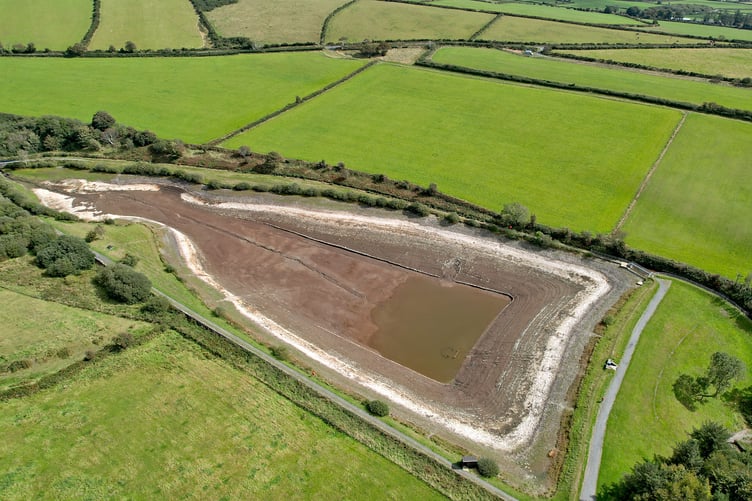
Manx Utilities (MU) has admitted some small fish died during the draining of the Clypse Reservoir.
It is not clear how many fish perished but MU says over-pumping resulted in the incident, during which smaller fish died within the sediment.
The admission was made following a Freedom of Information (FOI) request which asked what impact the draining of the Clypse has had on wildlife and fish in particular.
Earlier this year, Manx Utilities found one of the two critical valves at the reservoir failed to operate during a routine inspection.
.jpg?width=209&height=140&crop=209:145,smart&quality=75) Motorists warned of disruption as 'abnormal load' set to travel across island
Motorists warned of disruption as 'abnormal load' set to travel across island Fascinating insight into life of the island's resident dolphin pair
 'Black ice' warning as emergency services receive multiple reports from motorists
 Concern as children use AI to create offensive and potentially indecent images
Further investigations revealed a fault in the submerged valving system and confirmed that both valves would need to be replaced.
Because the valves are located underwater, the reservoir had to be fully drained to allow access for the work.
The work has now largely been completed but the Clypse will not be completely filled again until the spring of 2026.
However, MU has now admitted some fish died during draining of the Clypse.
In its reply to the FOI, the MU said: ‘We liaised with Department of Environment, Food and Agriculture (DEFA) Fisheries to ensure the impact on stocked trout in the reservoir was minimised.
‘Draining the reservoir was the only viable option to carry out the essential works and an environmental impact assessment was undertaken to assess the potential impact on wildlife.
‘In early July, DEFA ceased stocking the reservoir with fish. Anglers continued fishing until the end of August when fishing was prohibited due to safety concerns related to the steep and slippery reservoir banks.
‘Following several meetings with DEFA prior to draining, MU anticipated that as water levels dropped, the majority of the remaining fish would migrate from Clypse to the adjacent Kerrowdhoo impounding reservoir via the interconnecting pipework.’
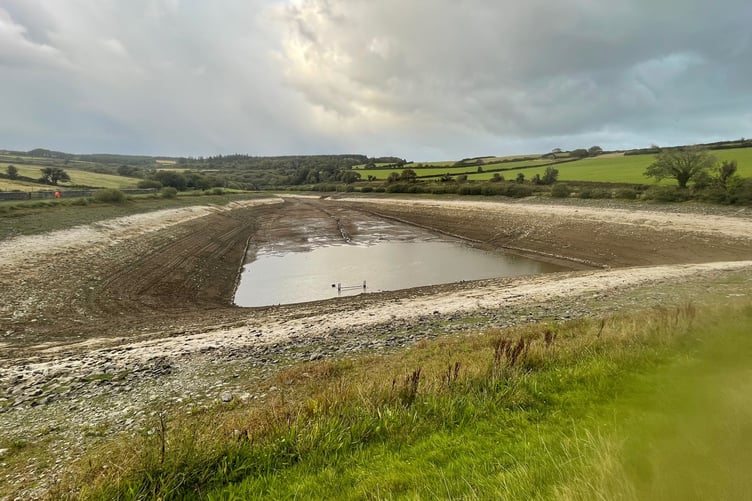
Full-scale draining of the Clypse began in mid-August.
By mid-September, the reservoir had been drained as far as the pipework allowed.
A spokesperson for MU added: ‘Daily inspections indicated no signs of fish distress during this process, and it was assumed that the fish population had migrated to Kerrowdhoo as expected.
‘When valve replacement works commenced on October 20 the remaining water had to be pumped out. A small number of distressed fish were observed and DEFA’s Inland Fisheries Division was informed and attended the site.
The incident report, supplied as part of the FOI response, provided more details.
It says: ‘While over-pumping the remaining water from the already nearly drained reservoir, several fish were noticed in the water. At that point water was cloudy with all the disturbed sediments causing death to smaller fish.
‘DEFA was informed and requested to attend the site. It should be noted that DEFA was kept informed about the reservoir being drained prior to draining and then throughout.
‘DEFA's Fisheries team rescued the live larger in size fish and took them off site, presumably to Kerrowdhoo impounding reservoir. Smaller fish could not have been rescued.
‘We have spoken to DEFA and they concur that nothing else could have been done to save the last few fish.’