
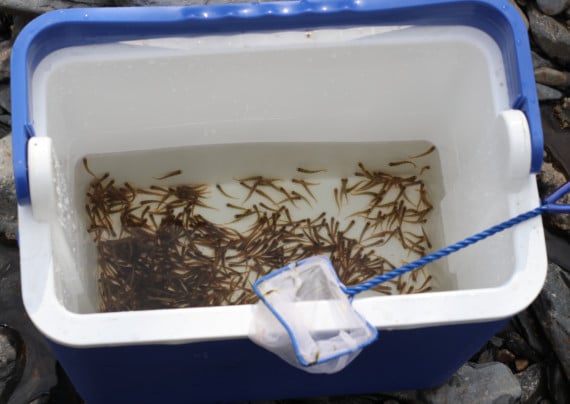
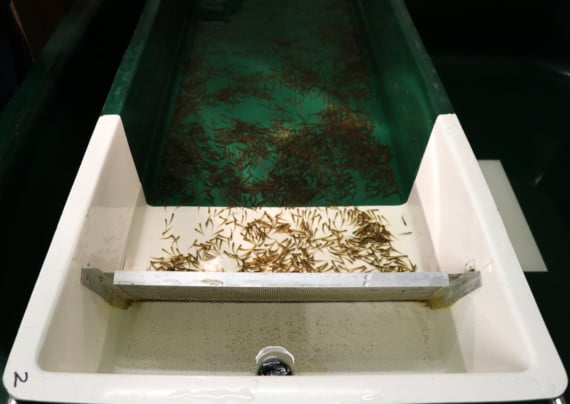
The Inland Fisheries team have this week introduced 18,000 salmon fry to Sulby River. Reporter Jess Ward gets an insight into the big day for the team who have helped raise the fish from eggs.
On a clear, sunny morning in the upper reaches of the Sulby River, thousands of young salmon fry are carefully released back into the wild.
It’s all part of the supportive breeding project to encourage more Atlantic salmon back into this area.
Inland fishing officers John Ward, Brian Walmsley and Malcolm Wood carefully kept to the Covid-19 social distancing rules while working on the river, the longest in the island.

.png?width=209&height=140&crop=209:145,smart&quality=75)

Construction of the Sulby dam, which was completed in 1982, led to a dramatic decrease in fish numbers in the glen, due to a change in water quality.
Since then, there has been slow, but steady rise in salmon returning to the river.
When Atlantic salmon return from the sea to spawn, they tend to go to the same stretch of water where they hatched.
The challenge for the island’s Inland Fisheries team has been encouraging the fish to make the most of the great nursery habitat to be found in Sulby Glen, rather than staying in the lower parts of the river where the salmon are more densely populated.
As part of the process to improve this, they have been using a hatchery in Laxey - a fitting location with the place name deriving from the old Norse ’Laxa’ meaning ’Salmon River’.
This year’s brood was collected from four female salmon, which had been caught from the Sulby River in mid-November along with two males.
When a female salmon deposits her eggs, she digs into the river bed using her tail then lays her eggs in the trough while a male fertilises them.
The eggs are covered in gravel with a few flicks of the salmon’s tail, making a nest called a ’redd’.
Each redd contains 500 to 1,200 eggs or even more depending on the size of the female.
Not all eggs are fertilised and it is said that only 20 out of 100 eggs laid in the wild actually live to the alevin stage - which is the second stage in a salmon’s life, when its yolk sac is still attached.
Once a salmon’s yolk sac is absorbed, the fry swim out of the redd to look for food.
At the hatchery, the team monitored the eggs closely, having placed them into an incubator when they reach the alevin stage. The boxes are filled with plastic pieces, mimicking a natural redd.
Here they absorb their yolk sacs in a peaceful and controlled environment for four to six weeks.
Residents are urged to take care of the island’s river systems and not disturb the stream bed during October to June, as the eggs and young fish are particularly vulnerable at this stage in their life cycle.
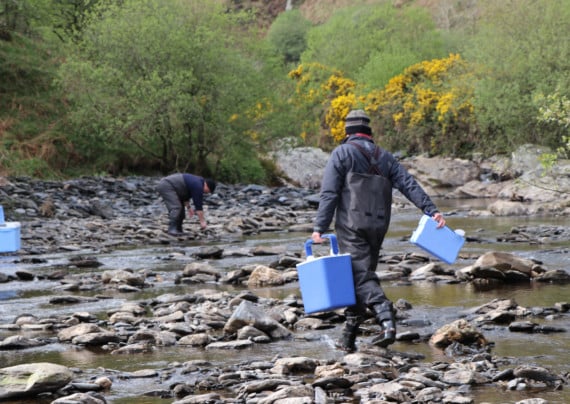
When the time comes to releasing them, they are placed into cooler bins where they are transported to the river.
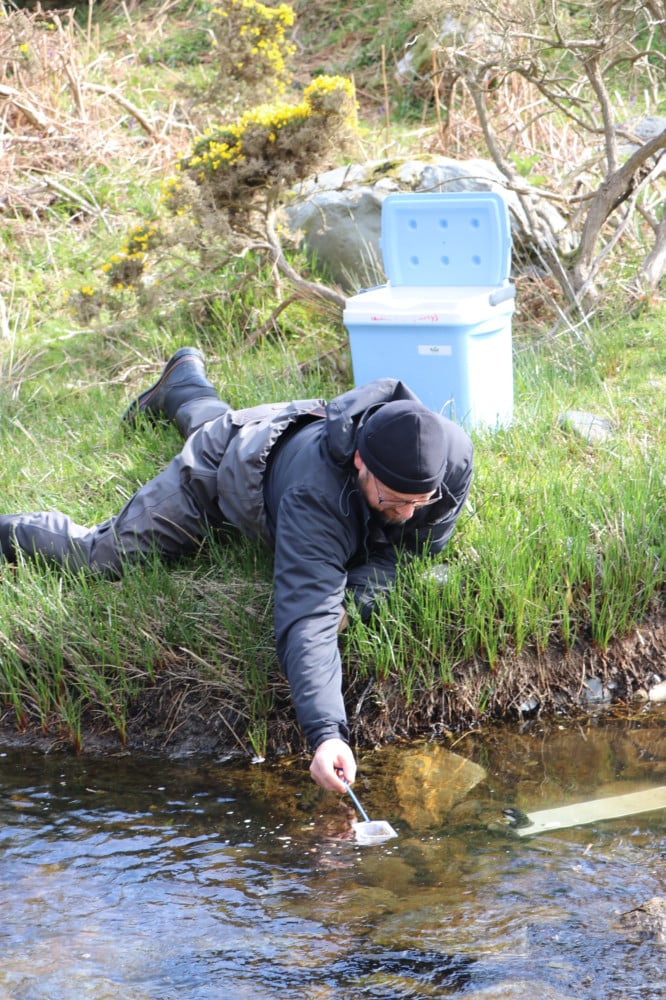
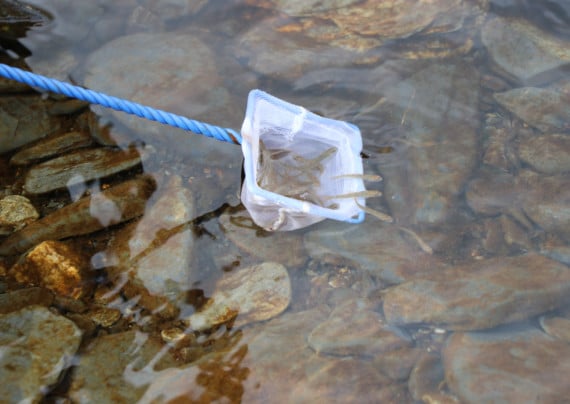
Here the fisheries officers use nets to carefully place them at suitable sections along the upper regions of the river.
I’m told that where they place them is strategic - ensuring this is done in shallower areas out of the way of predators lurking around waiting for a tasty bite.
Predators include big fish, such as adult brown trout.
Although life in the river is a bit safer for salmon when they become adults, a big test of survival comes when they are out at sea where they feast on invertebrates and types of fish.
Salmon can be a real treat for predators such as seals, other fish, birds, whales, dolphins and of course humans.
It is unknown where Manx salmon migrate to due to a lack of funding for tag research, but it could be as far as Norway.
Wading through the deeper parts of Sulby River to avoid disturbing any fry, we see a good sign - numbers of naturally spawned fry in the shallow areas, most of which are presumed to be brown trout. Due to coronavirus restrictions, the fisheries officers have had to make more trips to release the salmon, as the usual bigger cooler boxes need two people to carry them at a time.
Find out more about the team’s work by searching ’DEFA - Fisheries’ on Facebook.
Comments
This article has no comments yet. Be the first to leave a comment.