

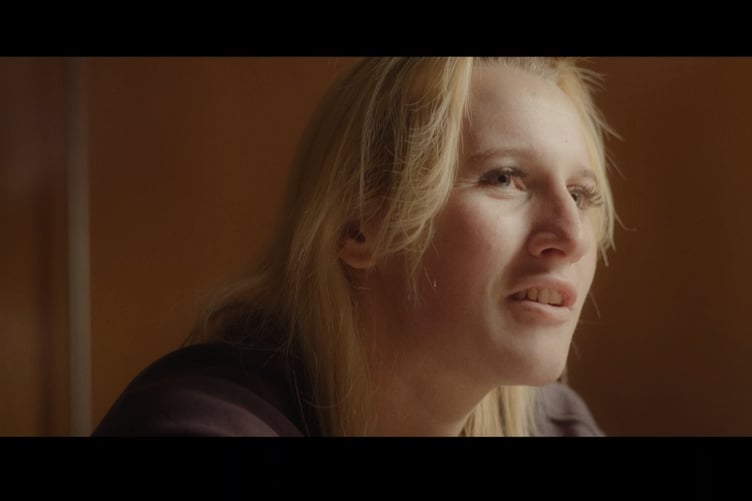
A woman says she was sent to the Isle of Man as a young girl to transport drugs after being exploited by a criminal gang.
The individual, identified only as ‘Holly’, made the claims during a new BBC documentary examining the criminal exploitation of children.
‘Britain’s Forgotten Girls’ explores the experiences of four women - Christine, Annie, Holly and Violet - who were groomed and exploited by criminal gangs during their childhoods.
The hour-long documentary follows their experiences from when they were first groomed through to the lasting impact on their lives.
Holly says she was recruited into a drug gang in Manchester after repeatedly running away from care.
She said she was sexually and criminally exploited between the ages of 12 and 16, with the abuse taking place alongside her being forced to sell drugs.
Holly recalled spending time in Manchester’s Piccadilly Gardens, where she met people who she said exploited her.
She said: ‘This is where I met a lot of people, who were using me for sex or drugs.’
Holly described how older men involved in the gang initially made her feel wanted and gave her a sense of belonging.
‘These people were around me and even though they were males, it made me feel like I was wanted,’ she said.
‘And that I had a family and that people actually wanted me, in reality, it was all just a mask.’
As part of her criminal exploitation, Holly said she was sent to various locations to transport drugs.
Among the destinations she specifically named was the Isle of Man.
She said: ‘After a while of me being involved in this drug gang, I was sent to places like the Isle of Man, Newcastle, Wales, London, even down to Scarborough to run drugs.’
Holly said she was around 14 at the time and would travel to unfamiliar places, where she would either meet someone or be collected and taken to an address.
‘I was made to give these drugs to people, but sometimes people would get very aggressive, and the situations you end up in is horrible,’ she said.
The documentary also details Holly’s experiences of sexual violence and her attempts to seek help from authorities.
On one occasion, she managed to escape from a property where she had been restrained and reached a railway station, where she contacted police.
Holly said she was left questioning why she was not being protected after officers appeared dismissive of her account.
She was later arrested while on her way to meet someone she was due to deliver drugs to.
Holly was found carrying eight wraps of crack cocaine and four wraps of heroin.
She recalled being told by a judge that she was going to be detained for her own safety, as well as because of what she had done.
Holly said she struggled to understand why she was being punished for offences she had been coerced into committing.
The documentary also examines the National Referral Mechanism (NRM), which is designed to identify and protect victims of trafficking and exploitation who have been forced to commit crimes.
It states that, in one county lines rescue service, just six of 160 girls and young women supported had an NRM referral in place.
The programme warns that without being identified as victims, exploited children can be arrested, charged and convicted for offences their abusers forced them to commit.
Holly has since experienced significant mental health difficulties but has gone on to work at the University of Sheffield, researching child criminal exploitation and the care system.
She said: ‘I found a job that actually gives me the motivation to do anything in life.’
Holly describes her work as giving her ‘actually a voice’ and allowing her to tell others in similar circumstances that they are not alone.
The documentary also explores the scale of child exploitation in rural areas and the challenges faced by vulnerable young people moved between different locations.
* ‘Britain’s Forgotten Girls’ is now available to watch on BBC iPlayer.