

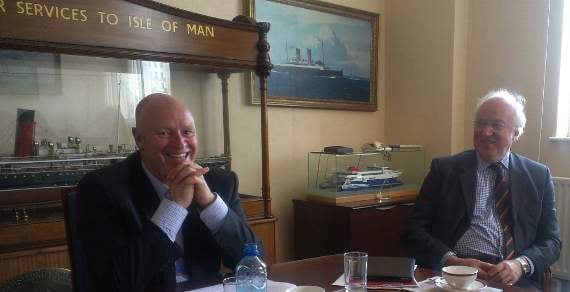
Steam Packet bosses have expressed their ‘surprise and disappointment’ that the Council of Ministers voted to reject their offer for a new strategic sea services agreement.
And they have warned that if Tynwald does not approve the offer at this week’s sitting, they will have ‘no alternative’ but to withdraw it - and any other agreements made on the basis that a deal would have been done.
That means, for example, the Steam Packet could stop chartering the MV Arrow freight vessel during the TT and perhaps refuse to use the government’s proposed new landing stage in Liverpool.
Steam Packet chairman Robert Quayle has written to Infrastructure Minister Ray Harmer calling on Tynwald to vote ‘yes’ or ‘no’ to the offer and not just ‘note it’.

.JPG?width=209&height=140&crop=209:145,smart&quality=75)
.jpeg?width=209&height=140&crop=209:145,smart&quality=75)
He wrote: ‘The text of your motion and the accompanying report has been received by the company with considerable surprise and disappointment.
‘We feel the company’s position had been misrepresented. You have indicted the department’s decision was “finely balanced”. It would be unfortunate if that balance was adversely affected by some misunderstandings or misinterpretations.’
The offer includes a pledge to invest of £170m in a new fleet, facilities and fare initiatives.
Mr Harmer insisted there has been no negotiation and rejecting the offer would allow that to begin.
But Mr Quayle said talks had been going on for more than a year which had resulted in a revised ‘best and final’ offer being submitted in March.
He wrote: ‘Since January 2016, the terms of that offer have been exhaustively discussed with your department, other agencies of government, interested third parties such as TravelWatch and the Chamber of Commerce and various consultants.’
Ministers are concerned at the length of the agreement of 25 years, and at the proposed fleet configuration, saying two smaller vessels would be better than a larger one and a fast craft.
Mr Quayle said the issue about the make-up of the fleet was ‘never raised during the prolonged negotiation period’.
The Steam Packet chairman also disputed the figures outlined in a consultant’s report, which he claimed ‘seriously understates’ the costs of delivering elements of the offer.
He wrote: ‘The cost of new vessel investment is £51m, not the Oxera estimate of £12m. Oxera suggest that having a back-up vessel is somehow a net financial benefit to the company. The actual predicted cost is £37m.’
Mr Quayle said the uplifts in the value of the company from a new sea services agreement was ‘very much less than the £89m predicted’.
He told Mr Harmer: ‘Had the company been given the opportunity to challenge these highly contentious Oxera conclusions at the time, we believe your department might have reach a different conclusion.’
Mr Quayle added: ‘If Tynwald declines to approve the offer, the company regrets it will have no alternative but to withdraw the present offer terms and any other agreements predication on the introduction of the SSSA.’
He denied that without a new agreement fares could be raised and services cut as these were closely regulated in the user agreement.
The user agreement refers to the exclusive use of the government-owned linkspan at Douglas.
But Mr Quayle told iomtoday said: ‘One thing the government seems to have overlooked is the fact that we also own a linkspan.
‘We will be 196-years-old in 2026 and we are not going to go away.
‘We will continue to operate using our own link span and that could affect the attractiveness of the route for other operators.
Comments
This article has no comments yet. Be the first to leave a comment.